Chinese brain chip helps paralyzed man write and hold objects again
USD 21,75
Popular
Six years ago, 39-year-old Dong Hui from China's Henan province was left paralyzed below the neck after a car accident. Following implantation of a brain chip and 11 months of rehabilitation, he has regained the ability to grasp objects and write — the implant surgery itself took only about 90 minutes.
"I couldn't believe I could write again. I was so excited I missed a stroke in my own name," he told MIT Technology Review.
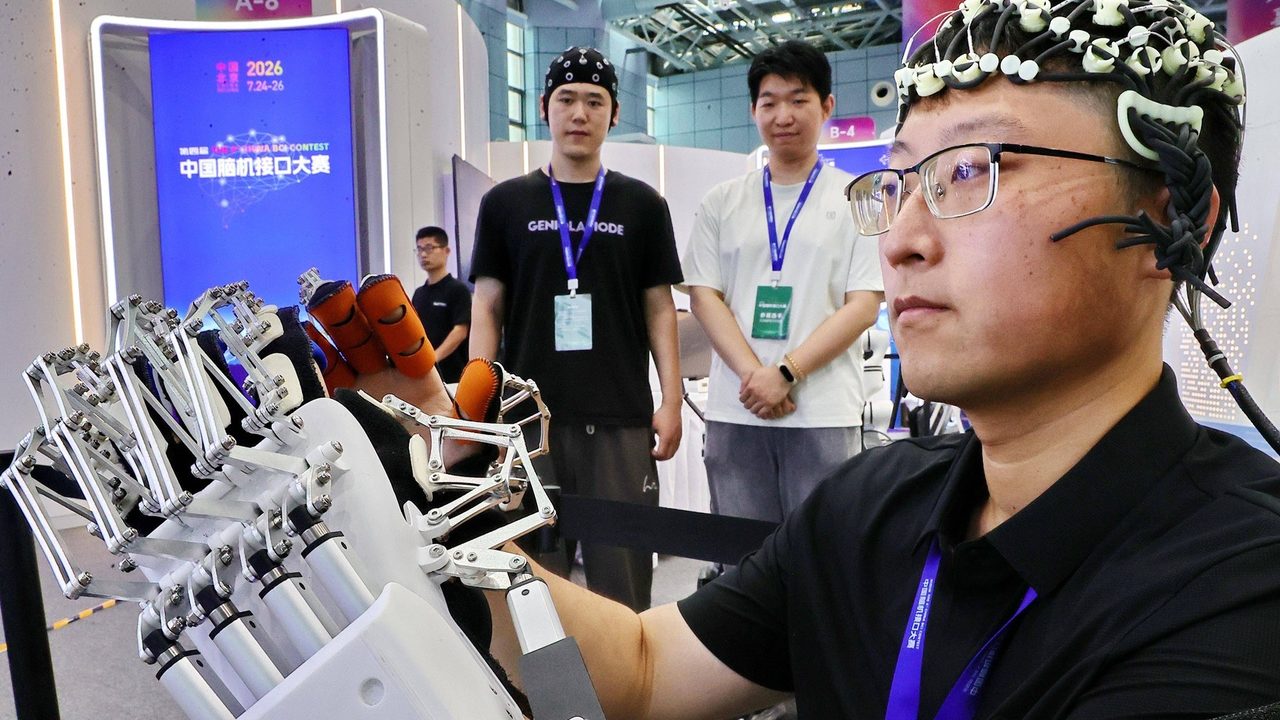
A key part of his treatment was a robotic glove controlled by brain signals, which he used every day to train his hand movements. The device isn't meant to permanently replace the limb's function but to help rebuild neural pathways — by the ninth day of training, he was already able to hold a ball even without the glove. "It felt like a real miracle," he recalls.
The technology is still in its early stages. So far, results only show that some patients regain a degree of independent movement after treatment, but it remains unclear whether they'll be able to go years without assistive devices. The goal of the project, called NEO, isn't to permanently replace arm movement but to restore neural pathways through rehabilitation — meaning the chip doesn't necessarily have to stay in a patient's head for life.
The device was developed by Shanghai-based Neuracle Technology together with Tsinghua University. The coin-sized implant is placed under the skull, on the membrane covering the brain, above the region responsible for movement. This is a less invasive approach than some Neuralink implants, which are inserted deeper into brain tissue. This method reduces the risk of bleeding and damage, and appears to have made the regulatory approval process easier.
The implant wirelessly transmits recorded neural signals to a computer, which converts them into commands for the rehabilitation glove. The device is intended for people aged 18 to 60 with paralysis caused by spinal cord injury. According to Reuters, the injury must have occurred at least a year prior, and the patient's condition must have been stable for at least six months before treatment begins.
Companies like Neuralink, Synchron and Blackrock Neurotech have been testing brain implants for years. What's new here isn't the technology itself, but its transition from labs into real-world medical practice — NEO is the first invasive implant of its kind to be approved for widespread use in patients.
Chinese authorities have designated brain-computer interfaces as a strategic industry of the future, alongside quantum technology and humanoid robotics. Shortly after the device was approved, the state began adding the implant to its medical insurance system, paving the way for broader use in hospitals.
Experts say a combination of government support, accelerated regulatory approval, and large-scale clinical trials has allowed China to get ahead of the West — a combination that could speed up the adoption of such technologies in everyday medical practice. According to Reuters, brain-computer interface systems could become widely available in China within the next three to five years.
For investors and tech companies, this year marks more than just a milestone in neurotechnology — it signals the emergence of a new market at the intersection of medicine, artificial intelligence, and electronics. American company Neuralink remains the best-known brand in the field, but it's China that is writing the first chapter of the brain chip's commercial story.
Source: novinky.cz