Drought grips Czechia: Orlík stops releasing water, Klenice river almost dried up
USD 21,75
Popular
Drought conditions are intensifying across Czechia: a ban on surface water abstraction has been introduced on the Klenice river near Mladá Boleslav, while Orlík, the country's largest reservoir on the Vltava, has seen no water release at all for several days running. The news was reported by the Elbe River Basin Authority and the Mladá Boleslav municipal office on their website.
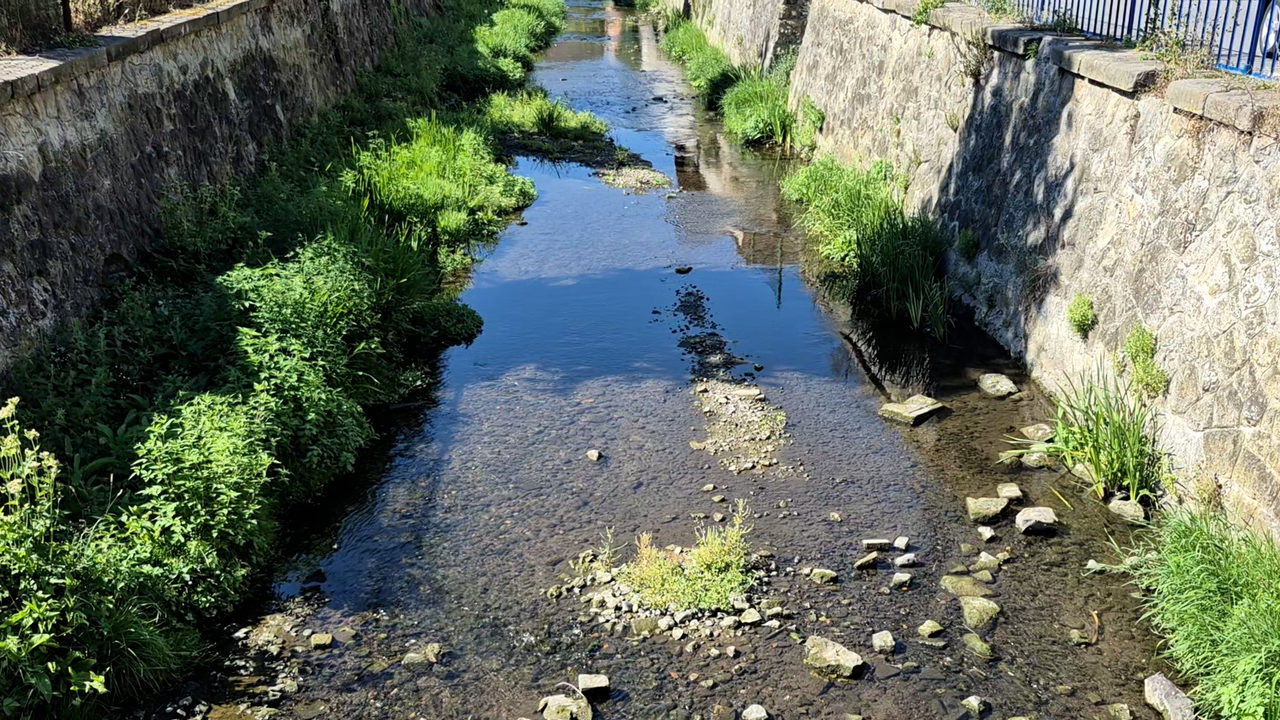
The water level in the Klenice has dropped so low that ducks are more likely to be walking on the riverbed than swimming, while fish are crowding into the last remaining puddles, at risk of dying from lack of water. At the time the ban was introduced, the flow rate of the Klenice at the measuring station in Mladá Boleslav stood at just 64 litres per second — a threshold the water authority officially classifies as drought.
Fines for illegal water abstraction
Anyone caught taking water from the Klenice or its tributaries faces a fine of up to 50,000 crowns for individuals and up to 100,000 crowns for companies. The river flows through several villages as well as along an allotment garden colony on the outskirts of Mladá Boleslav. According to the authority, throughout the second half of July the flow rate held at only around 50% of the long-term average, and no improvement is expected.
Orlík stops releasing water
Critically low readings are also being recorded in the Vltava basin. Earlier this week, the Vltava River Basin Authority warned that if the water level at the Orlík dam drops to 334.60 metres above sea level, water release will be halted entirely — which would in turn cause levels to drop at the Slapy reservoir further downstream.
On Saturday around noon, the water level at Orlík stood at just over 337.4 metres — 20 centimetres lower than on Friday. According to data from the Vltava River Basin Authority's website, no water was released from Orlík at all overnight and into Saturday morning.
Pavlína Mertlová, spokesperson for the Vltava River Basin Authority, explained that the situation is not yet an emergency: releases are still being managed according to power plants' peak-hour demand, though Saturday's pause was longer than usual. "The level is falling every day because inflow is extremely low. If nothing changes and there's no heavy rain, releases from Orlík will stop completely by the end of August," she predicted.
Even wastewater helps
The water shortage combined with the heat is causing mass fish deaths. "The prolonged drought is sharply worsening water quality and negatively affecting aquatic organisms and the river's ability to self-purify," said municipal spokesperson Pavel Šubrt. The situation is made worse by the fact that sewage flows into the river: during heavy rain, a mixture of rainwater and wastewater, along with all its pollutants, ends up in the river. Yet under current conditions, water managers are simply relieved that anything is flowing through the riverbed at all.
According to the Elbe River Basin Authority, the Klenice belongs to a category of small watercourses that suffer the most from drought. Paradoxically, in situations like this, the discharge of wastewater below settlements can sometimes play a positive role — at least helping maintain some water level in the channel.
Drinking water — no restrictions
Given forecasts of continued low flow rates, the threat to fish and other aquatic life, and an unfavourable hydrological outlook, the Mladá Boleslav municipal office has introduced a ban on surface water abstraction. According to Marek Jílemnický, head of the water and construction supervision department, the aim of the measure is to stabilise or improve the hydrological situation on the Klenice.
The ban does not apply to water abstraction for public drinking water supply — the water authority has not registered any such abstraction points along this stretch of the river. A similar ban has been in place since the start of August in the Kraslice area of the Ore Mountains (Krušné hory) — covering the Svatava and Rotava rivers, the Bublavský, Hraniční and Stříbrný streams, and local water bodies. Watering gardens, lawns and sports grounds, washing cars and filling pools are all prohibited.
Read also: 8 best places to swim near Prague: lakes, quarries and beaches within an hour of the capital
Source: novinky.cz