US company with no layoffs: how Gund grows 18% a year, every year
USD 21,74
Popular
The Gund Co., a family-owned American company based in St. Louis, has grown an average of 18 percent a year for ten years running and has never laid off an employee. Its chief executive, Steve Gund, puts caring for people ahead of short-term profit, and hundreds of executives have come to learn from him, an American business publication reports.
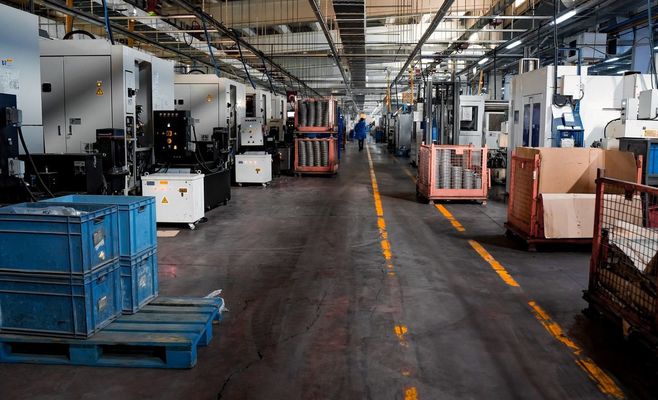
Gund is the third generation of his family to lead the firm. It recycles and manufactures insulation materials for demanding industrial conditions, including energy, aviation and aerospace. The company employs 1,300 people, and its annual revenue is approaching $400 million. Its clients include General Electric and Rockwell Automation. It was founded in 1951 by the current CEO's grandfather, Ed Gund, a former candy salesman. “It may sound overly idealistic, but it pays off,” says Gund, 55.
How the firm came to its no-layoff pledge
In the early 1990s, Steve joined the firm full time with his older brother Rich, now the chairman and chief operating officer. Revenue was then $2.7 million, and nine of the 20 employees were family members. Steve compares the atmosphere to a noisy restaurant kitchen where people are constantly shouting.
As the company grew, the family made a promise not to lay people off. Steve's father, Paul, believed that telling hardworking employees they had lost their jobs because of management's mistakes was a management failure. In 2009 he launched an employee stock ownership plan (ESOP) for American workers; by last year, employees owned 30 percent of the company through it.
What finally convinced Steve to bet on people was a conversation in 2015 with Bob Chapman, head of the family-owned company Barry-Wehmiller. The board had just demanded a return to growth of 15 percent a year. Steve, a devout Catholic, admitted that he saw more meaning in helping those in need than in running an industrial business. Chapman replied that instead of handing out blankets, it was better to give people jobs. Creating jobs that let people live fuller lives became Steve's new motivation.
Red cards and discipline
The model requires trade-offs: the company keeps only as many workers as it needs, so that it can also ride out weak periods. Employees write their worries and problems on red cards right on the shop floor, and once someone starts working on a problem, the card turns yellow. The firm's results are posted in meeting rooms, and improvement suggestions go up on large boards. Work is judged in three areas: care for people, for customers and for the business itself.
The twelve-step method is built, in Gund's words, on “parental care” for employees. Managers regularly walk the shop floor (a so-called Gemba walk) and ask what is working and what could be better. Everyone, from line worker to manager, draws up a development plan. A worker's starting pay averages $55,000 to $65,000 a year, not counting overtime and profit sharing. Margins have doubled in ten years.
This year the company put tens of millions of dollars into buying back shares from the ESOP. The goal is to launch a similar system in every country where it operates, including China.
How the imitators are doing
Executives from more than 200 companies have visited the plant, but few have managed to repeat the method. Many try three steps and give up, Steve says, often because the CEO hands the project to HR. Changing a culture takes two to three years.
Gund himself admits there is room to improve. Turnover is highest among first-year hires, although for American employees overall it is below 10 percent. Managers complain that overtime shifts are hard to fill, and the company is growing faster than it can train new leaders.
Don Taylor, head of Ohio-based Welty Enterprises, and his son Michael want to start with one division and teach managers to do shop-floor walks. Posting results everywhere will be harder: the company's employees work in 26 states, mostly on construction sites. After a visit, the family-owned Cambridge Air Solutions created a single safety and quality system. Chief operating officer Meg Brown said the first step took several months.
Deidre Jonas, 33, started 16 years ago as a cleaner — one of four cleaning jobs she juggled as a single mother. She was noticed and offered a job on a machine, then moved to reception, to customer service, and now leads meetings with employees at other plants. “Nobody in my family ever even dreamed of the dreams and ambitions I have today,” she says.
“We work in the very center of heavy industry,” Steve says. “If we can do it, anyone can.”
Around Prague guide on the topic: Минимальная и средняя зарплата в Чехии 2026
Around Prague, based on reporting by seznamzpravy.cz