Head of Supreme Audit Office: "We won't ease up on inspections, even if I have to man reception myself"
USD 21,69
Popular
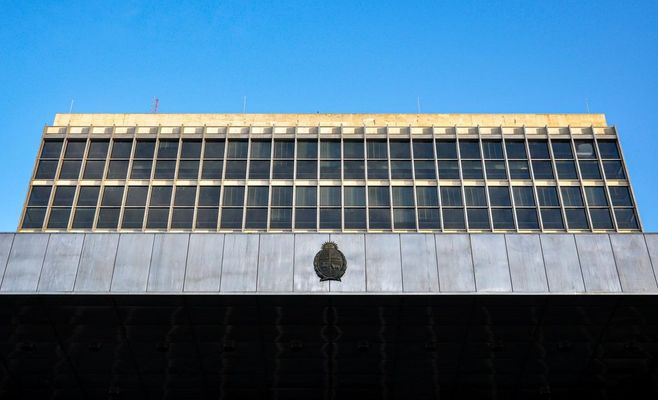
Miloslav Kala, President of the Czech Republic's Supreme Audit Office (NKÚ), has said his institution will not lower its standards when auditing government spending — even if, following a decision by Andrej Babiš's government, officials end up having to staff the front desk themselves. Starting in 2026, the NKÚ will lose the police security it previously received through the Ministry of Finance.
In its annual report on last year's state budget execution, the NKÚ noted that the Czech economy grew faster than the EU average, but public debt rose significantly as well. According to Kala, budget deficits running into the hundreds of billions of crowns have become a routine feature of Czech public finances, while a great deal of spending fails to deliver proportionate results.
Subsidies without results
The state's subsidy policy came in for particular criticism. In Kala's assessment, Czechia hasn't simply failed to learn how to use European funds effectively — it doesn't actually want to, because the incentive system is fundamentally flawed. As an example, he pointed to sidewalk construction projects in municipalities: the state covers 85% of project costs from EU funds and tops it up with another 5% from the national budget, leaving mayors with 90% of the financing already secured. According to the NKÚ's calculations, such projects consume between one and two billion crowns annually, with more than three thousand projects carried out in nearly half of the country's six thousand municipalities.
A similar pattern emerges with railways: Czechia has 1,569 station buildings, many of which stand empty after being renovated. Between 2018 and 2022, nearly 9 billion crowns were spent on their reconstruction, while — according to the NKÚ — 80% of rail traffic runs on just 20% of the track network, which remains overloaded and in need of expansion.
Innovation stalling, reforms forgotten
Kala also flagged failures in the innovation sector: despite the funds allocated, Czechia has been unable to climb out of the "moderate innovator" category into a higher tier, while more successful countries, he noted, keep pulling further ahead. He attributes this to a lack of clear goal-setting: authorities announce funding allocations but never specify what they actually aim to achieve. Over the past decade, the state has accumulated roughly 300 different high-level strategies without ever settling on real priorities.
As a telling example of inefficiency, the NKÚ chief cited support for at-risk children: over nine years, three government bodies spent nearly 90 billion crowns on this area, yet a half-billion-crown project meant to transform the system and move children out of institutional care has produced little in the way of tangible results.
A row over the NKÚ's own security
Kala reserved particular indignation for the decision to scrap the office's security detail. According to him, no one gave any advance warning — the decision was pushed through the eKLEP process right before the summer holidays, without any discussion or chance to prepare. Organizing a tender for new security services worth several million crowns before the end of the year is simply not feasible. "I assure everyone we'll manage, even if I have to sit at the front desk myself on January 1," Kala said, stressing that the intensity of audits will not suffer as a result.
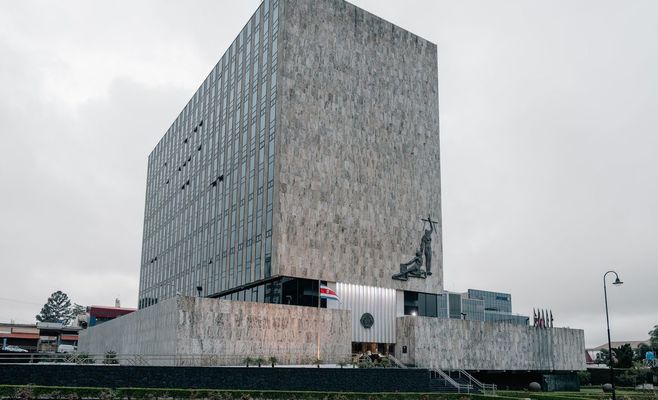
The Interior Minister assured him there was no political motive behind the decision, and that he himself had merely signed documents prepared for him. Kala also pointed out that the NKÚ building houses the Chamber of Deputies' archive and library and is classified as a high-security facility.
Kala also commented separately on the European Commission's position, which found Prime Minister Andrej Babiš's steps to resolve his conflict of interest insufficient. According to the NKÚ chief, this finding will inevitably be taken into account in future audits of EU fund usage, regardless of who is involved.
Source: seznamzpravy.cz