Off Oman's Coast, a Tanker from Russia's "Shadow Fleet" Has Been Leaking for a Month — Environmentalists Fear Disaster
USD 21,81
Popular
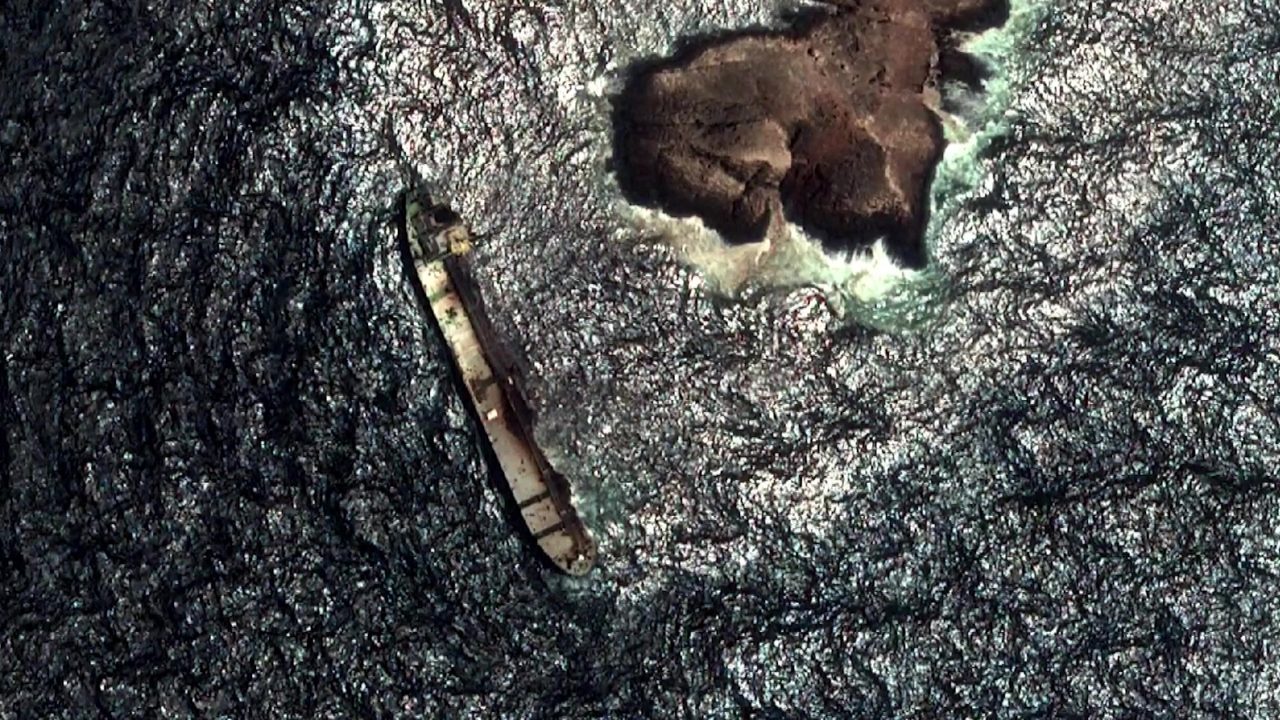
For more than a month, a damaged tanker carrying Russian oil has been stranded on a reef near Al Qibliyah Island, part of Oman's Hallaniyat archipelago. According to Reuters and SkyTruth, an organization specializing in satellite environmental monitoring, the vessel is still leaking, and both authorities and environmentalists fear a large-scale ecological disaster.
SkyTruth head John Amos told the agency that the situation should come as no surprise: warnings about the threat of a major oil spill had been issued for weeks, yet no action was taken. According to him, the ship ran aground on the rocky shore of a small island and has remained stationary there ever since.
Explosions on Board and Loss of Control
The tanker's crew first reported problems on 8 June, when the ship was near the Yemeni port of Mukalla. According to two maritime security sources cited by Reuters, an explosion occurred on board. Maritime security firm Vanguard confirmed last week that the vessel was damaged by three explosions of unknown origin. Water then began flooding the tanker, and its engine and rudder failed.
The tanker last transmitted an identification signal on 11 June, when it was still off the coast of Yemen. According to AFP, the vessel — the Caroline Bezengi — loaded roughly one million barrels of oil, or around 159 million liters, at Russia's Sheskharis terminal in Novorossiysk on the Black Sea on 11 May.
Oil Slick Nearing the Shore
The spill has spread across the waters between the Hallaniyat Islands and the coast of Oman's Dhofar province. According to Omani authorities, whose assessment is based partly on satellite imagery, in some areas the oil is as close as seven kilometers from land.
Greenpeace and the Dutch peace organization PAX first reported the leak late last week, but Omani officials only publicly addressed the scale of the problem on Monday. Analysis of satellite images and shipping data showed that oil continued leaking from the 274-meter tanker as recently as late July.
Amos said the available satellite data show no sign that any operation to stabilize the vessel or pump out the remaining cargo has taken place in more than two months. "We haven't detected any activity from other vessels that might have arrived to prevent a catastrophic leak," the expert noted. He added that a salvage operation of this kind requires an experienced maritime company with specialized equipment.
Growing Risk of Tank Rupture
Amos warns that the volume of spilled oil could rise sharply. He describes the rupture of one of the cargo tanks as the worst-case scenario: according to his information, five of the tanker's six tanks were filled with Russian oil. If even one of them bursts, about 38 million liters of oil could enter the water. An even more dangerous scenario, he says, would be if the ship cannot be secured and begins to break apart further.
The Caroline Bezengi is under EU and UK sanctions and belongs to Russia's so-called "shadow fleet" — a network of tankers Moscow uses to export oil in defiance of Western sanctions imposed after its full-scale invasion of Ukraine. Many of the fleet's vessels are old and in poor technical condition. "Every one of these loaded tankers is potentially a ticking time bomb," Amos stressed.
A Unique Ecosystem at Risk
In 2025, Oman declared the area around the Hallaniyat Islands a nature reserve. The archipelago is a vital zone of marine biodiversity, home to coral reefs, nesting grounds for sea turtles and birds, and rare marine mammals — including an isolated population of Arabian Sea humpback whales.
"Oil in the water is toxic and effectively poisonous to most marine organisms," Amos warned. He said the spill could immediately affect dolphins and other cetaceans, as well as damage organisms lower in the food chain, disrupting their reproduction. Volatile oil components evaporate to form toxic vapors above the slick, while heavier fractions can sink to the seabed and remain in sediment for years or even decades — as has happened in past major oil disasters. "This spill is affecting both the air above the surface and the water below it — and all of this is happening inside a protected marine area," the expert concluded.
Read also: Prague Metro: map and tickets
Source: seznamzpravy.cz