ANO may win the Czech Senate election but will not get a majority

USD 21,75
Popular
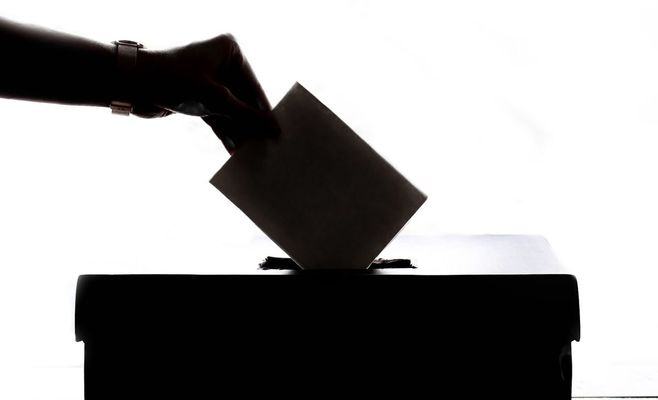
The ANO party may well win the Senate election in terms of seats, but neither it nor the ruling coalition will manage to win a majority in the upper house of parliament. That is the conclusion of the author of an opinion column on the Seznam Zprávy website. In 2018 ANO won one seat in the Senate, in 2020 also one, in 2022 three, and two years ago already eight.
Why ANO can grow stronger
According to the author, results in the districts voting this year are hard to predict. In 2008 the Social Democrats took 23 seats there, six years ago STAN won 11 and the Spolu coalition (ODS, the Christian Democrats and TOP 09) another ten. But the Spolu coalition no longer exists, so ANO could come out ahead in the number of seats. It is defending only one seat, won in autumn 2020, and will almost certainly strengthen its position. ANO currently has 12 senators, with three more in its caucus, while a majority is 41 seats. SPD has no chance under the two-round majoritarian system, and the Motorists have decided not to run.
The author's conclusion: after October 2026 the governing coalition will not have a majority in the Senate. The opposition slogan “We won't give the Senate to Babiš” sounds impressive, but it warns against something that will not happen. Still, that will not help the opposition much: the Senate will be able to send laws back, and the Chamber of Deputies will simply vote on them again, as long as the ruling coalition keeps its discipline.
Why the Senate is needed at all
The author considers the Senate a very useful institution, even though Andrej Babiš once wanted to abolish it. The chamber owes its existence to Václav Klaus, who in autumn 1992, while the Constitution was being drafted, agreed to its creation — in exchange for the indirect election of the president, according to the recollections of the longest-serving deputy, Marek Benda.
Klaus later saw the power of the upper house for himself. During the years of the “opposition agreement” (1998–2002), he and Miloš Zeman wanted to change the Czech political system. ČSSD and ODS then had a constitutional majority of 49 votes in both the Senate and the Chamber of Deputies. But in spring 1999 ODS senator Václav Benda, elected in 1996 in Prague 1, died, and businessman Václav Fischer won the by-election. The constitutional majority vanished, and the Constitution could not be rewritten in a way that would squeeze out the smaller parties. The parties tried to do this through an ordinary electoral law instead, but the Constitutional Court struck it down.
Since then, the author says, the Senate has been like a fire extinguisher: it hangs in the corridor for years, and when a fire breaks out, it turns out to be very handy. He gives the example of Hungary, with its single-chamber parliament, which Babiš also recently wanted. The current steps by Péter Magyar's constitutional majority look harsh, but they are a response to 16 years of Viktor Orbán's rule, who, the author believes, “stole” Hungary thanks to such a parliament. Analyst Martin Ehl described it as an attempt to turn fish soup back into an aquarium.
The Czech Republic has seen no such upheavals since 1993. The only important change to the Constitution was the direct election of the president in 2012, which most of those involved in the decision regret today. Thanks to the Senate and the elections by thirds, much — though not everything — can be stopped. The Senate confirms Constitutional Court judges, and all three most recent presidents — Klaus, Zeman and Pavel — have learned that this is not a formality. Changing the electoral law requires the consent of both the Chamber of Deputies and the Senate.
The author urges everyone who can vote in this year's Senate election to go to the polls. He is going himself and sees at least three candidates in his district thanks to whom the Senate will remain a “fire extinguisher at the ready.”
Source: seznamzpravy.cz