Prague Ambulance Service: Cannabis-candy poisonings up 2.5 times, one patient wanted to jump off a bridge
USD 21,65
Popular
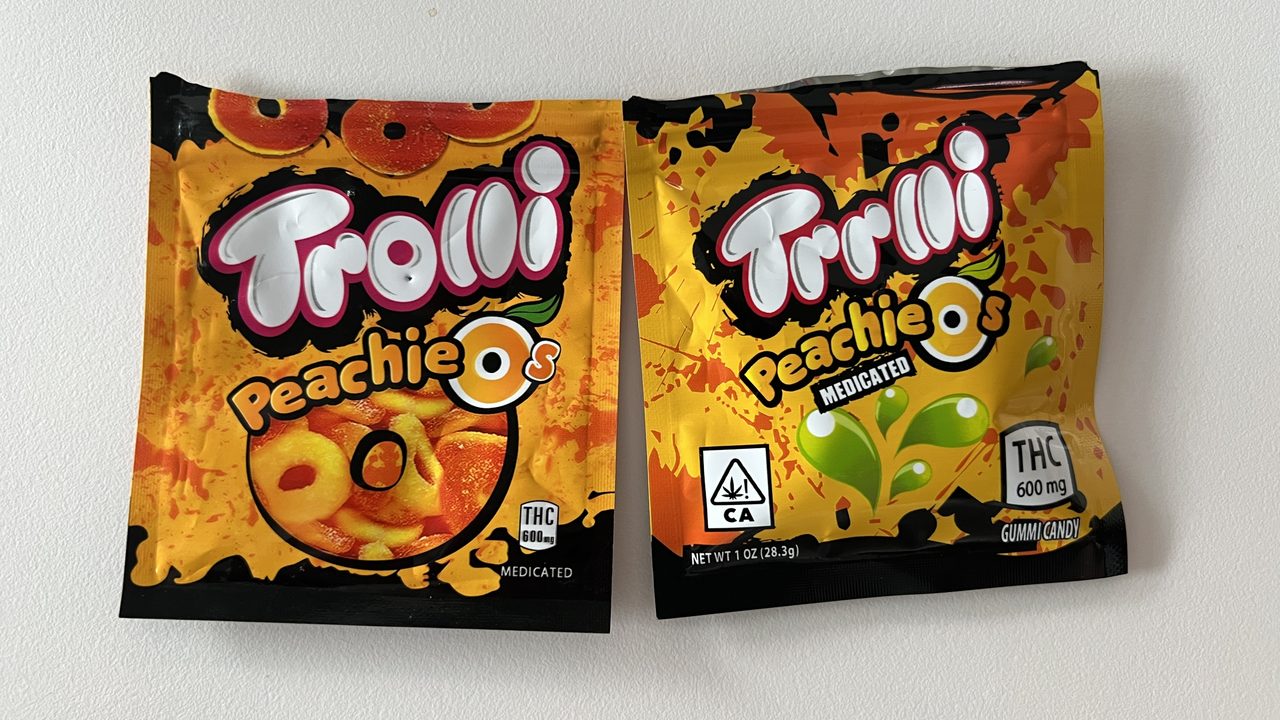
Prague's emergency medical service is reporting a sharp rise in call-outs to people poisoned by THC and other cannabinoids found in candies, jellies, chocolates and other sweets sold openly in ordinary Prague shops as "garden decor" or "aromatic sticks." This was revealed by Prague ambulance doctor Kateřina Veselá in an interview with Seznam Zprávy.
According to her, over the past week the service recorded 22 call-outs for poisoning by synthetic and semi-synthetic cannabinoids — an average of four cases a day. Comparing the same periods in 2023–2024 and 2025–2026, the increase is roughly 2.5-fold. "We knew the number of cases was growing, but even I didn't expect the difference to be this significant," the doctor admitted.
Tourists have no idea they're at risk
Most call-outs happen in central Prague and surrounding districts, where large numbers of foreign tourists are found — and they make up the majority of those affected. However, cases are being reported across the city: in flats, short-term rentals such as Airbnb, and on the streets.
The problem, Veselá says, is that tourists often have no idea they are doing anything risky at all. Products and shop displays are labeled "100% legal," so buyers assume they're purchasing an ordinary, legal item. Formally, though, the product may be marked as a "decorative item" or "aromatic stick," with the warning that it is not meant for consumption printed in tiny letters — in Czech only, meaning a foreigner simply cannot read it.
The doctor gave an example: a young female tourist bought a product called "Aroma Stick," which looked like a rolled cigarette. The fine print on the packaging stated it was meant for scenting a room and contained THC, not for smoking. She smoked it anyway and suffered severe poisoning — vomiting, confusion, disorientation; she failed to recognize her friend or her surroundings.
A patient wanted to jump off a bridge
Symptoms of poisoning range from mild confusion to deep sedation and loss of consciousness, and can include anxiety, panic attacks, and disturbances in heart rhythm and breathing. A separate, serious danger is physical injury: under the influence of these substances, people lose coordination and the ability to judge risk.
"I had a patient who, under the influence of one of these substances, wanted to jump off a bridge," Veselá said. She noted that the danger comes not only from the poisoning itself, but from the person's behavior and the situations they end up in while under the drug's effect.
Such products pose a particular danger to children: the doctor recalled a case involving a foreign family that had bought a product featuring SpongeBob SquarePants — the parents knew about the THC listed on the packaging, but their small child only saw a favorite cartoon character. In another case, a mother unknowingly gave her children sweets that looked like ordinary cookies.
Legality depends on lab analysis
According to the State Agricultural and Food Inspection Authority, simply printing "THC" on packaging, or listing its quantity, does not automatically make a product illegal — the inspection authority must determine through laboratory testing whether the product contains THC, and how much. If an item resembles ordinary food (gummy candies, chocolate, cookies), the inspection authority treats it as a food product, and the lab results are then reviewed by the National Institute of Public Health, which decides whether the product is safe. Items deemed dangerous are not allowed to go on sale.
It's often impossible to tell from the packaging alone exactly what substance a product actually contains — the declared ingredients don't always match the real ones. When providing emergency care, ambulance staff don't rely on the exact chemical name of the substance but on the patient's clinical condition, supporting vital functions and treating specific symptoms as they appear.
Prague's ambulance service is preparing a multilingual awareness campaign about the risks of such products, aimed at both tourists and locals, since the language barrier remains one of the biggest obstacles. "Our goal isn't to shame people for what they've taken. We want them to feel safe calling for help and telling us what happened," the doctor emphasized.
Read also: Rental scams in Prague: how to spot the fraud
Source: seznamzpravy.cz