Science & Space By

Smart Floss Reads Glucose and Uric Acid From the Gunk Between Your Teeth
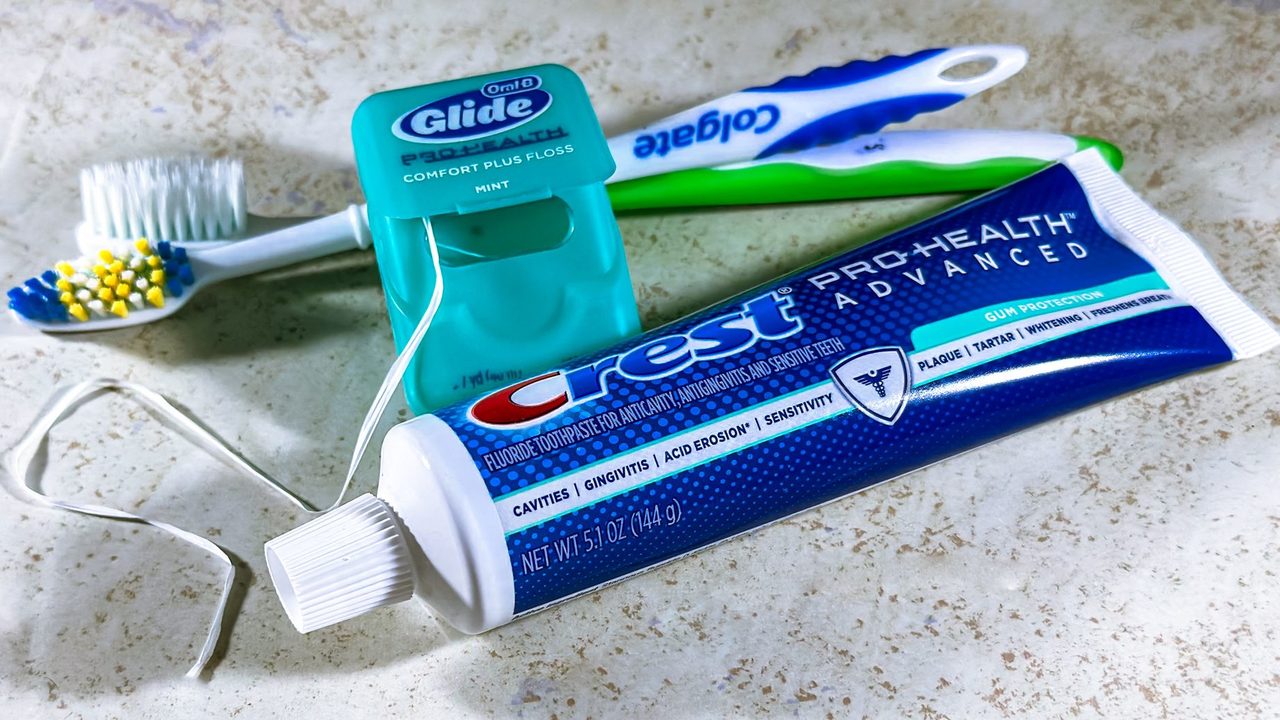
Researchers in Hong Kong have built a floss-shaped device that collects the fluid between teeth and reads sugar and uric acid levels from it. In a small early test, its glucose and uric acid readings closely tracked those from blood tests, according to ScienceAlert, which reported on the study published in Science Advances.

The same device could also estimate the depth of gum pockets, a measure dentists use when diagnosing gum disease. The team behind it says a single home tool could one day cover both oral health and metabolism.

How the smart floss works

The invention comes from a team led by biotechnologist Hnin Yin Yin Nyein at the Hong Kong University of Science and Technology. It looks like an ordinary dental flosser, but it contains a pulley system that draws fluid into a small chamber fitted with biosensors.

Within minutes of flossing, the sensors measure uric acid, glucose, hydrogen peroxide and acidity, known as pH. The results are sent wirelessly to a smartphone.

The fluid in question is not saliva. It is called gingival crevicular fluid, and it collects in the grooves around and between teeth. Because it sits close to the surface of the gums, it exchanges metabolites, proteins and inflammation markers with the bloodstream.

Scientists have tried for decades to use this fluid to study gum disease and other conditions, but the body produces only tiny amounts, and it is hard to capture. Flossing helps because it pulls some of the fluid out, which is why the team built its collector around a floss.

What the early tests found

The device was tried in preliminary trials with small groups of people. Participants included healthy volunteers as well as people with diabetes, high uric acid levels, a condition known as hyperuricemia, and poor oral health. The readouts differed for each group.

Glucose levels in the flossing fluid closely matched those in the blood, and uric acid levels were strongly correlated with blood levels. Acidity and hydrogen peroxide measurements allowed the device to reliably estimate the size of a person's gum pockets.

The findings suggest that a non-invasive flossing system could potentially rival blood tests that track glucose and uric acid.

Why it matters

Poor oral health has been linked in growing evidence to dementia, diabetes, stroke, heart disease and cancer, ScienceAlert noted. Diabetes and gum disease also affect each other, since metabolic problems can worsen gum disease and inflammation in the mouth can make it harder to control blood sugar.

The authors write that no home monitoring tool currently addresses both metabolism and oral inflammation, calling that a “critical gap” for patients with diabetes, hyperuricemia and gum disease. For people who now rely on finger-prick or blood tests, a tool built on a daily habit could eventually offer a gentler alternative, though nothing of the kind is available yet.

Limits and what comes next

The work is early, and the researchers acknowledge problems. Saliva made up nearly half of the fluid collected along with the crevicular fluid, and blood can also mix into samples. When the team tested saliva alone, it appeared to carry little information about glucose. Blood-contaminated samples may carry more, which could complicate the readings.

The team says the system was designed with clinical use in mind and calls for a future clinical trial. That trial would test whether monitoring guided by this fluid improves outcomes for patients who have both diabetes and gum disease.

Around Prague, based on reporting by ScienceAlert
Share: Telegram WhatsApp

More science news

Argon in the Air of Uranus and Neptune Could Reveal Hidden Rock Below the Ice
Uranus and Neptune have long been called “ice giants,” but a new paper proposes a way to test whether they hide large amounts of rock beneath their thick atmospheres. The idea hinges on a noble gas, a
Cygnus XL Cargo Ship Named for Jim Lovell Targets Nov. 29 Launch to Space Station
A Cygnus XL cargo spacecraft carrying about 11,000 pounds of science, supplies and equipment is targeted to launch to the International Space Station no earlier than 10:47 a.m. EST on Sunday, Nov. 29,
Australian Moths Navigate by Earth's Magnetic Field When Stars Are Hidden
Every year, masses of endangered bogong moths in Australia travel up to 1,000 kilometers (620 miles) south, and each moth makes the trip for the first and only time in its short life. A new study in N
Fossil Teeth Show Homo Erectus Survived in Chinese Rainforests Far Longer Than Thought
Fossils from two caves in southern China suggest that Homo erectus, an ancient human relative, lived in dense rainforest and survived on the Asian mainland for around 200,000 years longer than scienti
Twelve Dust Grains From Beyond Neptune Point to a Hidden Reservoir of Heavy Water
Twelve microscopic dust grains collected by a high-altitude aircraft may help explain a long-standing puzzle about how the Solar System formed. According to Universe Today, a new paper in Science Adva
Timed Bursts of Pink Noise Boosted Brain Fluid Flow During Sleep in a Small Study
Short, carefully timed bursts of pink noise made the waves of fluid that wash through the brain during sleep larger in a small experiment with healthy adults, according to ScienceAlert's report on a s

Related news

Uranus and Neptune have long been called “ice giants,” but a new paper proposes a way to test whether they hide large amounts of rock beneath their thick atmospheres. The idea hinges on a noble gas, argon, according to Universe Today, which
A Cygnus XL cargo spacecraft carrying about 11,000 pounds of science, supplies and equipment is targeted to launch to the International Space Station no earlier than 10:47 a.m. EST on Sunday, Nov. 29, NASA announced. The agency, Northrop Gr
Every year, masses of endangered bogong moths in Australia travel up to 1,000 kilometers (620 miles) south, and each moth makes the trip for the first and only time in its short life. A new study in Nature shows they are guided in part by E
Fossils from two caves in southern China suggest that Homo erectus, an ancient human relative, lived in dense rainforest and survived on the Asian mainland for around 200,000 years longer than scientists had thought, according to Scientific
Twelve microscopic dust grains collected by a high-altitude aircraft may help explain a long-standing puzzle about how the Solar System formed. According to Universe Today, a new paper in Science Advances argues that the region beyond Neptu
Short, carefully timed bursts of pink noise made the waves of fluid that wash through the brain during sleep larger in a small experiment with healthy adults, according to ScienceAlert's report on a study in Science Translational Medicine.
A radio signal that switches on every 8 minutes comes from a rare pair of stars, not from an alien civilization, according to EarthSky. Astronomers say the system, called GPM J071507-114153, pairs a white dwarf with a star similar to our su
Nvidia has stopped shipping its licensed Hopper data center chips to China, interim CEO Colette Kress said on the company's earnings call on Tuesday, Nov. 17. The company had received U.S. government approval last year to sell a version of
Large eagles in the Sahara appear to be killing olive baboons that weigh about as much as some early human ancestors, according to new research reported by Popular Science. The finding challenges the long-held view that primates above a cer
Macaulay Culkin has stepped back into the role of Kevin McCallister for a new McDonald's commercial, and the Home Alone-themed meal it promotes is due at participating U.S. restaurants on Dec. 1, according to Variety, Consequence of Sound a
Governments are rushing to restrict children's social media use, but there is little hard evidence on whether the bans help. A new research program in Britain aims to change that. Led by the health charity Wellcome, it will follow more than
NASA is asking scientists to build a computer model of how an individual astronaut’s bone marrow and immune system react to spaceflight. The agency’s BPS Digital AVATAR Challenge offers $150,000 in total prizes, with a submission deadline o