Why Up to a Billion Years of Rock Vanished From the Grand Canyon and Beyond
USD 22,23
Popular
Across the world, sedimentary rock from the Cambrian period, around 540 million years ago, sits directly on far older granite and other crystalline rock, with the layers in between missing. A new study in the journal Nature suggests the cause lies deep inside the planet, according to ScienceDaily and Space.com. Slow currents in Earth's interior may have raised and lowered whole continents, giving erosion time to strip away the rock before the land sank and was buried again.
The gap is known as the Great Unconformity. The result comes from computer simulations, and the authors say it matches geological evidence in several regions.
What is the Great Unconformity?
Normally, sediment builds up in layers over time, so older rock lies beneath younger rock. Geologists read those layers like a timeline to reconstruct ancient environments.
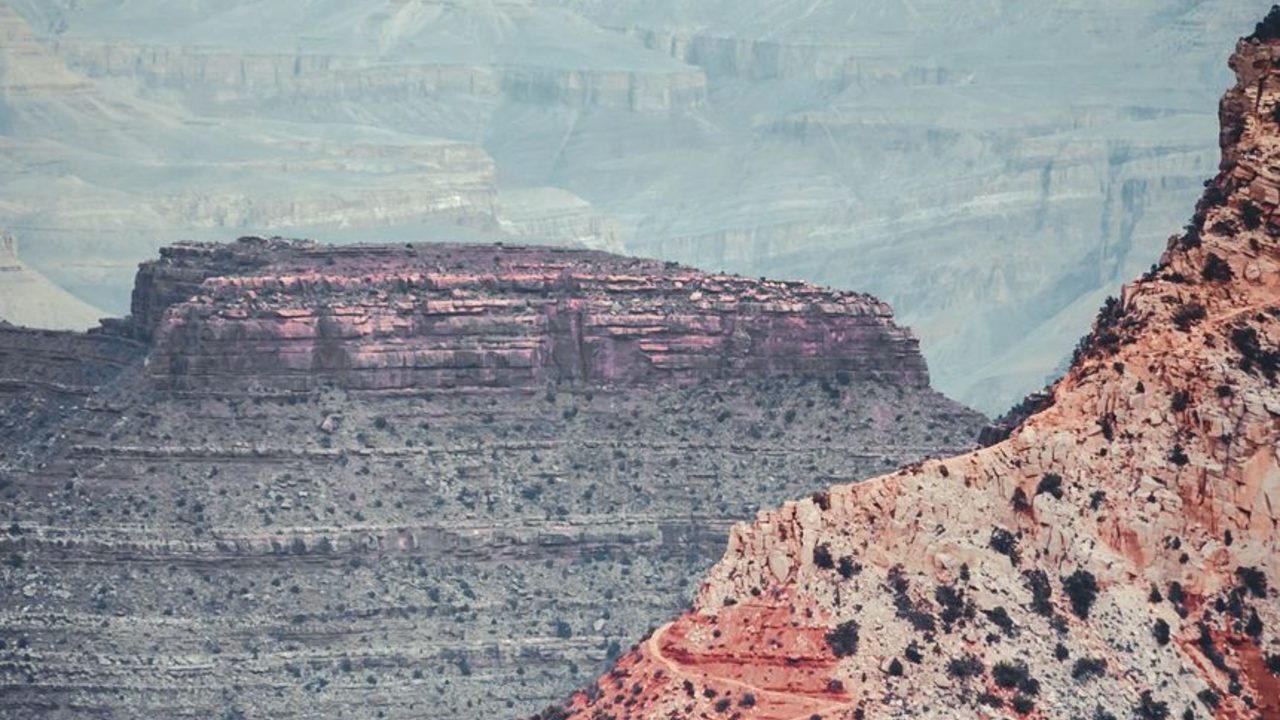
At many sites, though, that timeline has a break. One of the clearest is in the Grand Canyon, which was once part of the ancient landmass Laurentia, now North America. Similar gaps have been found in Europe, Australia, Africa and Asia. The amount of missing time varies: about 200 million years in some places and more than a billion years in others.
What did the researchers do?
The study was led by Santosh Dhungana, a PhD candidate at the University of Wollongong, with his supervisor, Associate Professor Nicolas Flament. They simulated the movement of Earth's mantle over hundreds of millions of years.
The mantle is a vast layer of hot, mostly solid rock beneath the crust. Over geological time it slowly flows in a process called mantle convection, which can push large regions of the surface up or let them subside.
ScienceDaily reported that Dhungana said many explanations for the Great Unconformity have been proposed, but few have been rigorously tested against the long-term behavior of Earth's interior. He compared the gap to a missing chunk of a book and said the researchers' work suggests “these pages weren't lost by chance.”
How could the rock have disappeared?
The simulations covered three ancient continental regions: Laurentia, Baltica, which is northern Europe, and North China. According to the models, mantle convection pushed up the old cores of these continents during the Neoproterozoic Era, roughly one billion to 540 million years ago.
While the land stayed high, water, wind and other processes could wear away rock that had formed much earlier, and the authors say this erosion could have removed hundreds of millions of years of record.
The models then show widespread sinking during the Phanerozoic eon, which covers roughly the past 540 million years. Seas advanced over the eroded surfaces and new sediment settled on top, preserving the boundary between old and young rock that can still be seen today.
Why it matters: a test against real rocks
The key support is that the simulated uplift and subsidence match where the Great Unconformity is best documented. The models predicted long-term rise followed by sinking in North America, northern Europe and North China. Space.com said the timing was consistent with geological evidence from those regions.
The finding offers an explanation for how a large part of Earth's history was lost from the rock record. It also links the surface that visitors see at the Grand Canyon to movements deep inside the planet.
This is one study based on models, so it does not settle every debate about the Great Unconformity. Earlier researchers have proposed many other explanations, and the new work suggests that deep mantle movements played a major role in shaping the record that geologists see today.
Around Prague, based on reporting by ScienceDaily, Space.com