Science & Space By

Astronaut Photo Shows Lightning, Fishing Fleets and Singapore Glowing From Orbit
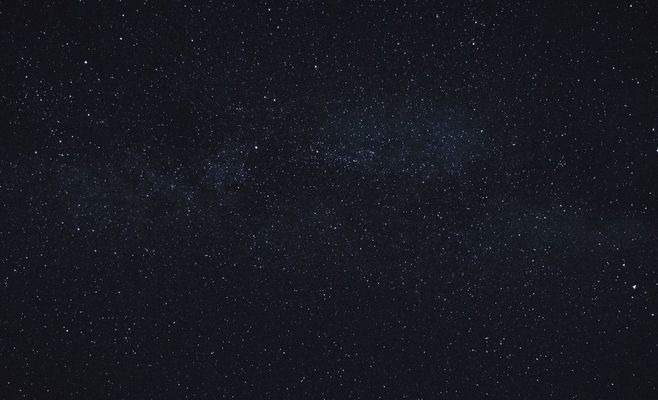
One night-time photograph from the International Space Station packs lightning, a glowing city and a fleet of fishing boats into a single frame. According to NASA's Earth Observatory, an astronaut took the image with a Nikon Z9 camera as the station passed over the South China Sea near Borneo at 14:20 UTC on Oct. 28, 2026.

The picture shows several overshooting tops bubbling up from thunderstorms, two of them lit from within by lightning flashes. These are tall, domelike bulges that rise above a storm's anvil cloud and sometimes reach into the stratosphere, a sign of strong updrafts and intense storms, NASA said.

What the picture shows

The lights of Singapore, a city-state of 6.2 million people, appear on the left side of the image. The curving Singapore Strait separates the city from the islands of Batam and Bintan to the south.

West of Singapore sits a cluster of blue lights that NASA compared to the Pleiades, also called the Seven Sisters. The agency said the lights were likely produced by fishing boats that use bright lamps to attract squid or schooling fish such as sardines or anchovies. Farther offshore to the northwest, the scattered orange points are likely gas flares, according to NASA.

NASA said the image was cropped and enhanced to improve contrast, and that lens artifacts were removed. It was taken by a member of the Expedition 75 crew and is catalogued as ISS075-E-250951.

How astronauts describe the view

NASA's write-up draws on how astronauts have described Earth at night. NASA astronaut and photographer Donald Pettit wrote in an essay for Air & Space magazine that cities looked like tendrils outlined with the glimmer of a Broadway marquee. He said the bright lights of fishing boats across dark oceans reminded him of a constellation of stars.

Sally Ride, the first American woman to fly in space, wrote in an essay for the same magazine that people on Earth see lightning from below the clouds, while astronauts see it from above. She said bolts of lightning are diffused by the clouds into bursting balls of light, and that a storm spanning hundreds of miles can look like a brigade tossing fireworks from cloud to cloud.

Many astronauts say lightning is the sight that stays with them. NASA astronaut Anil Menon called it his favorite sight from space. In a video of Earth's darkened limb that he posted on X, pinpoints of lightning flicker almost constantly. He said lightning is hard to capture and share, and that the video, shown at real speed and unchanged, is the best representation of it he has seen.

Why it matters: how much lightning there is

The photo is a reminder of how constant lightning is, even though most people only see a small part of it. NASA scientists estimate that about 2,000 thunderstorms are occurring on Earth at any one moment. Together they produce nearly 60 flashes per second, which works out to roughly 5 million flashes per day, according to NASA.

Images like this one also serve a practical purpose. The ISS Crew Earth Observations Facility and the Earth Science and Remote Sensing Unit at NASA's Johnson Space Center provide astronaut photographs, and the space station program supports the orbiting laboratory partly so that crews can take pictures of Earth of the greatest value to scientists and the public. NASA makes the images freely available online, and additional photographs taken by astronauts and cosmonauts can be browsed in the NASA/JSC Gateway to Astronaut Photography of Earth.

Where the details come from

NASA's article cites research on lightning from the Lightning Imaging Sensor and Optical Transient Detector missions, which covered the years 1995 to 2023. It also lists a 2021 study of marine light-fishing in the South China Sea and a 2023 study of boat detection in Southeast Asia from satellite data. Those references support the explanation that the blue lights are fishing vessels.

The result is a snapshot of three very different light sources, natural and human-made, captured in a few seconds from about the same vantage point where astronauts have long described the planet at night as one of the most striking views in spaceflight.

Around Prague, based on reporting by NASA
Share: Telegram WhatsApp

More science news

Hackers Hijacked a Website Testing Tool to Hit Visitors of HSBC, BBC and CNN
An attacker used a website testing tool from Optimizely to push malicious code to visitors of sites run by at least 178 organizations, including Zoom, HSBC, the BBC, Fox News and CNN, according to the
A Silver Dollar That Was Never Meant to Exist May Fetch $2 Million
One of the rarest coins in U.S. history, an 1885 silver trade dollar, is scheduled to go up for auction this week and could sell for more than $2 million, according to Popular Science. Only five of th
A Star Exploded 50 Million Light Years Away, and Astronomers Caught It Early
Astronomers have spotted a new exploding star in NGC 1433, a spiral galaxy about 50 million light years away, according to Universe Today. That is relatively close for a supernova, and because it was
Mars Rover Finds Ghostly Pale Rocks That Could Preserve Ancient Fossils
NASA’s Perseverance rover has found a cluster of unusually bright rocks on Mars that are rich in hydrated silica, a mineral that can form in watery environments and can preserve tiny fossils. Candice
After First Starship Catch, Musk Says Next Version Will Be Nearly 500 Feet Tall
SpaceX has caught the upper stage of its Starship rocket for the first time, and Elon Musk is already describing a larger successor. Space.com reported that the next-generation Starship V4 will be muc
Leonid Meteors Peak This Week, Striking the Sky at 71 km/s Beside Mars and Jupiter
The annual Leonid meteor shower reaches its peak on the night of Nov. 17-18, and the best viewing comes in the hours before dawn on Nov. 18. The Guardian and Space.com both say the shower is known les

Related news

An attacker used a website testing tool from Optimizely to push malicious code to visitors of sites run by at least 178 organizations, including Zoom, HSBC, the BBC, Fox News and CNN, according to the cybersecurity firm Report URI, as repor
One of the rarest coins in U.S. history, an 1885 silver trade dollar, is scheduled to go up for auction this week and could sell for more than $2 million, according to Popular Science. Only five of the coins are known to exist, and how they
Astronomers have spotted a new exploding star in NGC 1433, a spiral galaxy about 50 million light years away, according to Universe Today. That is relatively close for a supernova, and because it was caught early, researchers have a chance
NASA’s Perseverance rover has found a cluster of unusually bright rocks on Mars that are rich in hydrated silica, a mineral that can form in watery environments and can preserve tiny fossils. Candice Bedford, a research scientist at Purdue
SpaceX has caught the upper stage of its Starship rocket for the first time, and Elon Musk is already describing a larger successor. Space.com reported that the next-generation Starship V4 will be much longer, carry more propellant and use
The annual Leonid meteor shower reaches its peak on the night of Nov. 17-18, and the best viewing comes in the hours before dawn on Nov. 18. The Guardian and Space.com both say the shower is known less for its numbers than for bright, fast
A tiny piece of DNA that modern humans inherited from Neanderthals is tied to a slightly smaller occipital lobe, the vision-processing region at the back of the brain, and to a lower risk of schizophrenia, according to a new study in the jo
While funding cuts and delays have hit public health and climate research during President Donald Trump’s second term, artificial intelligence and quantum science have found firmer footing, Science News reported. Researchers are excited abo
Nearly every early-career mathematician who responded to a new survey says they use artificial intelligence, yet many feel uneasy about what it means for their future, Scientific American reported. Seven in 10 respondents say they are now l
Scientists now have two possible explanations for a puzzling discovery on Mars: a field of rocks made of nearly pure elemental sulfur. NASA's Curiosity rover first found them in 2024, according to ScienceAlert, and two studies published thi
Body-mass index may misclassify obesity for a meaningful share of people, according to a new international study published in Nature. ScienceAlert reported that the researchers compared BMI with a broader definition of obesity proposed by e
President Donald Trump heads to Asia this week for a trip that will end with an unprecedented three-way summit with Chinese President Xi Jinping and Russian President Vladimir Putin, according to The New York Times, The Guardian and the Hon