Astronauts Install Final of 8 New ISS Solar Arrays After Power Glitch
USD 21,65
Popular
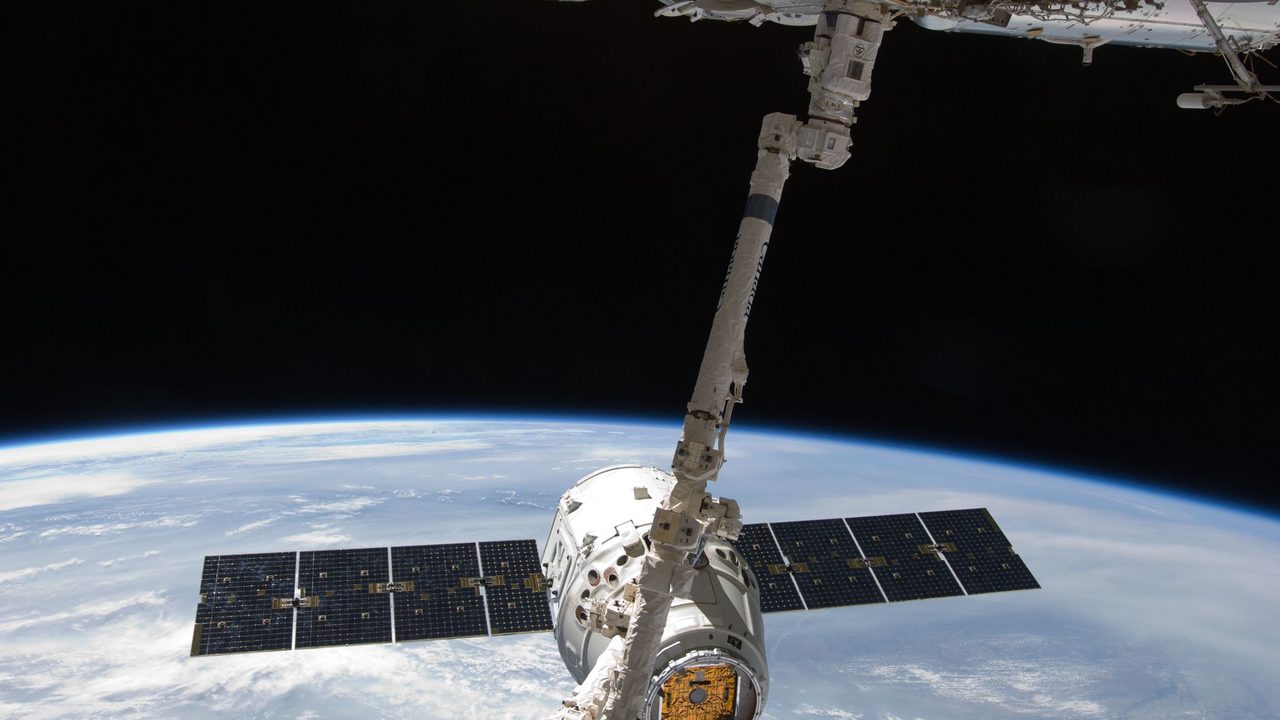
Two astronauts have finished a power upgrade to the International Space Station that began in 2021. On Nov. 5, NASA's Anil Menon and Joshua Kutryk of the Canadian Space Agency installed and unrolled the eighth and last ISS Roll-Out Solar Array, known as an iROSA, according to Space.com.
The new arrays are meant to keep the station supplied with electricity until it is retired and brought down in a controlled deorbit, currently scheduled for late 2030.
How the final spacewalk went
The spacewalk began at 8:36 a.m. EST and ended at 3:35 p.m. EST, lasting 6 hours and 59 minutes, Space.com reported. Menon and Kutryk worked on the starboard side of the station's main truss, at the 3B power channel. They took the 750-pound array from a temporary storage platform, moved it with the Canadarm2 robotic arm and bolted it to a bracket kit that had been assembled earlier. The work repeated much of what the same pair did on an Oct. 29 spacewalk, when they installed the previous array.
A problem appeared after Menon connected the cables. Nichole Stilwell, a NASA astronaut serving as spacewalk officer in Mission Control, told the crew the array was delivering only half of the expected shunt current, and that in that state it would not be deployed.
Because the arrays produce electricity whenever sunlight hits them, the astronauts had to wait until the station passed into Earth's shadow before anyone could safely inspect the connectors. They used the time to tidy the worksite and park the robotic arm. The problem was then cleared, and Stilwell gave a "go for deploy" after seeing good readings on the ground.
After the astronauts released two bolts, the array unfurled to its full 63-foot length in about 10 minutes. No motor was involved. According to Space.com, the array extended itself using only the energy stored in its rolled-up carbon composite booms.
Why the arrays were needed
Flight controllers saw the station's eight original arrays lose output as they passed their 15-year design life, Space.com reported. The iROSAs were added to make up the shortfall. SpaceX Dragon cargo spacecraft delivered all eight of them with their mounting hardware.
Four pairs of astronauts have installed the arrays since June 2021:
- Shane Kimbrough of NASA and Thomas Pesquet of the European Space Agency worked on the 2B and 4B channels.
- Josh Cassada and Frank Rubio, both of NASA, worked on 3A and 4A in December 2022.
- NASA's Steve Bowen and Woody Hoburg worked on 1A and 1B in June 2023.
- Menon and Kutryk handled the 2A and 3B channels, finishing the set.
What this means for the station's final years
For the station, the upgrade means a steadier electricity supply for research and operations through the end of its planned life. Space.com said the arrays add the power needed to support operations until retirement in late 2030.
Reports differ on how large the gain is. Space.com's account says the new arrays augment the legacy wings to produce as much as 30% more electricity. Menon, speaking at the end of the spacewalk, described the new arrays as half the size of the old ones and bringing 40% more power. Space.com did not reconcile the two figures, which may describe different comparisons.
Stilwell noted that the station had just passed 26 years of constant human presence. She congratulated the crew on finishing the last of the arrays and the power-system upgrades meant to carry the station to the end of its service.
By the numbers for the crew
Menon has now spent 33 hours and 30 minutes outside on four spacewalks. Kutryk has logged 14 hours and 10 minutes on two. Space.com described Thursday's outing as the 101st U.S. spacewalk at the station without a space shuttle present and the 286th overall in support of station assembly, maintenance and upgrades. It was the ninth spacewalk of 2026 and the sixth by the station's 75th resident crew.
Read next
Astronauts Unroll a 63-Foot Solar Array on the Space Station's 100th U.S. Spacewalk
Three NASA Astronauts Vote in Midterms From the Space Station
Crew-12 Astronauts Splash Down After Eight Months on the Space Station
Around Prague, based on reporting by Space.com