Astronauts Unroll a 63-Foot Solar Array on the Space Station's 100th U.S. Spacewalk
USD 22,22
Popular
Two astronauts installed and unrolled a new solar array on the International Space Station on Thursday, Oct. 29, in what Space.com described as the 100th U.S. spacewalk from the orbiting outpost. NASA's Anil Menon and Joshua Kutryk of the Canadian Space Agency finished the outing at 3:08 p.m. EDT.
The array is the second-to-last of a set of upgraded panels meant to keep the station supplied with enough electricity for the rest of its life. One more is due to go up in early November.
The spacewalk by the numbers
- 100: the count of U.S. spacewalks from the station without a space shuttle docked, according to Space.com. The shuttle has since been retired.
- 7 hours and 11 minutes: how long Menon and Kutryk spent outside, starting and ending in the station's Quest airlock.
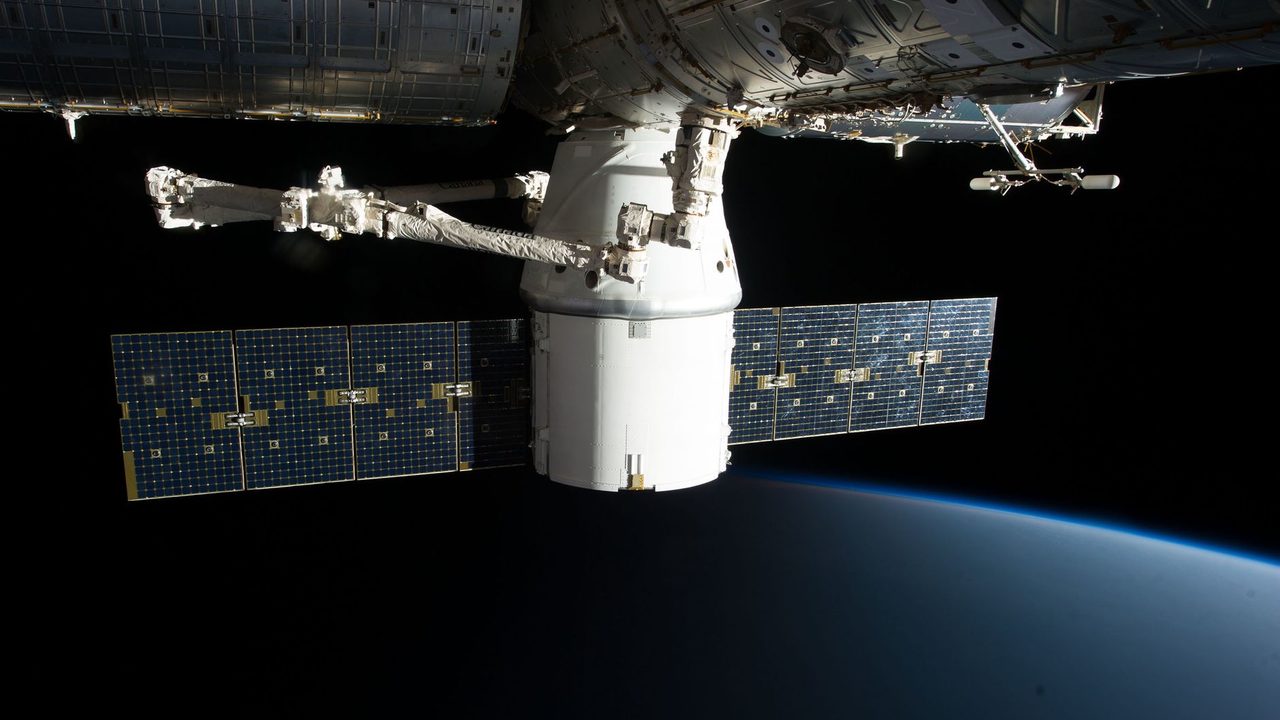
- 750 pounds: the weight of the rolled-up array, known as an iROSA (ISS roll-out solar array), which arrived earlier this month in the unpressurized trunk of a SpaceX Dragon cargo capsule on that company's 35th resupply mission for NASA.
- 63 feet: the length of the array once fully unrolled.
- 20% to 30%: the increase in the station's power supply that the new arrays provide when used together with the older panels, according to Space.com.
- 285: the total number of spacewalks supporting station assembly, maintenance and upgrades, including 66 from the Russian segment and 119 by visiting shuttle crews.
How the array went up
Menon and Kutryk first unbolted the array from a temporary storage platform. Menon then anchored himself to the end of the Canadarm2 robotic arm and carried the package to the station's port side, while Kutryk traveled to the worksite along the station's main truss.
The two mounted the array with bolts on the station's 2A electrical power channel and connected its cables to the power system. Space.com reported that the cables were connected during a night pass because of safety concerns.
No motor was needed to open the panel. Energy stored in the rolled-up carbon composite booms was enough to unfurl it. Mission Control reported that deployment had begun four hours and 23 minutes into the spacewalk, and about 12 minutes later the array was fully extended. It now covers roughly half of a larger but less capable legacy panel on the P4 truss.
The pair also worked ahead of schedule. They removed some of the beams holding the final array on its temporary platform and rotated two launch locks used during its delivery.
Why it matters: power for the station's remaining years
The station's eight original arrays are producing less power than they once did, because they have passed their 15-year design life, Space.com reported. The newer arrays do not replace them but work alongside them, adding capacity.
That extra electricity is needed for current and planned station operations, including its safe and controlled deorbit, which is currently scheduled for 2030. In practical terms, the upgrade helps keep the research laboratory running until it is retired.
Firsts for the crew
The spacewalk was Menon's fourth and Kutryk's first. Kutryk is the fifth Canadian astronaut to conduct a spacewalk, and it was the first by a Canadian since April 2019, when David Saint-Jacques went outside with NASA's Anne McClain. Menon has now logged 26 hours and 31 minutes of spacewalk time during his current stay on the station.
The first U.S. spacewalk from the Quest airlock took place on Feb. 20, 2002, when Carl Walz and Daniel Bursch spent 5 hours and 47 minutes outside, mostly testing the airlock's systems.
After the work, Menon said the milestone reflects how much has been accomplished, noting that crews have been doing complex operations like this for over 26 years. Of working outside, he said, “it is always sunny in space.”
What happens next
Menon and Kutryk are scheduled for another spacewalk on Nov. 5. They are expected to install the eighth and final iROSA, which would complete the five-year process of upgrading the station's power supply.