A Wormhole Wider Than Jupiter Could Let a Human Cross in 6.1 Days, Math Shows
USD 22,31
Popular
A physicist in Chile has worked out, on paper, how large a wormhole would have to be for a person to pass through it unharmed. According to ScienceAlert, Mauricio Cataldo of the University of Bío-Bío calculated that a traveler could cross in about six days without firing any thrusters.
The result is purely theoretical, and it comes with a large condition: the scenario depends on a form of matter that scientists do not know exists, let alone how to make.
How the calculation works
Wormholes are hypothetical shortcuts through spacetime. ScienceAlert reports that Einstein's general relativity allows them mathematically, but holding one open long enough for anything to get through is the hard part. One proposed fix is exotic matter, which behaves very differently from the ordinary matter in stars, planets and people. One of its properties is negative energy density, which would prop the wormhole's throat open.
Quantum physics offers a hint of how negative energy density might arise. Even empty space is full of tiny quantum fluctuations. When two conducting plates sit extremely close together in a vacuum, they limit which fluctuations can occur between them. The vacuum energy changes and the plates are drawn together, a phenomenon known as the Casimir effect. The energy density between the plates is negative compared with undisturbed vacuum.
In 2019, Remo Garattini of the University of Bergamo in Italy used the math of the Casimir effect to describe a traversable wormhole. The size of its throat was only slightly more than a Planck length, far too small for even a proton to fit through.
What Cataldo changed
Cataldo concluded that the tiny size was not built into wormholes themselves. It came from the specific energy scale of the Casimir effect. He let the magnitude of the energy density vary freely while keeping some of the mathematical features of Casimir energy.
That means his models do not describe wormholes held open by the Casimir effect itself. They describe wormholes held open by hypothetical matter that behaves in a mathematically similar way. He calls them Casimir-like wormholes, and in his calculations they have no upper size limit.
How a human could survive the trip
Two dangers stand out. One is acceleration, which could produce deadly forces on the body. The other is the tidal force, the difference in gravity's pull on different parts of the body. If the pull on your feet were far stronger than on your head, the result would be fatal.
To avoid the first problem, Cataldo imagined a traveler who simply falls through the wormhole under its gravity. As with an astronaut orbiting Earth, a person in free fall feels weightless even while speeding up.
The second problem depends on size. A bigger wormhole has gentler spacetime curvature, which softens the gravitational gradients. Cataldo calculated that a throat radius of around 100,000 kilometers (62,000 miles), an opening wider than Jupiter, would keep tidal accelerations on a freely falling human below 1 g, the acceleration of gravity at Earth's surface.
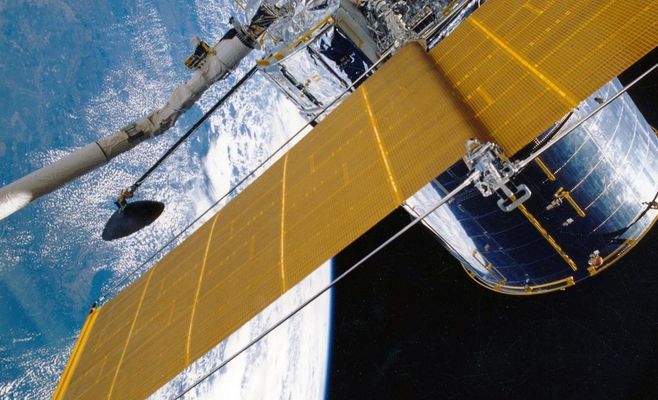
In that scenario, a traveler released from rest at a space station on one side would reach 66 percent of the speed of light at the throat. The wormhole's gravity would then slow the traveler on the far side, bringing them to a gentle stop at a second station. The whole trip would last 6.1 days.
Why it matters, and why nobody is booking tickets
Nothing in the work suggests wormhole travel is close. The exotic matter it requires has never been found, and the amounts needed would be enormous, according to ScienceAlert. No one has built or observed a wormhole.
The value of the study is in the physics. Cataldo says it shows researchers have been exploring wormholes through too narrow a mathematical lens. In his words, Einstein's equations allow Casimir-like wormhole solutions at scales far beyond the Planck length. For now, the finding tells physicists what conditions a survivable wormhole would have to meet, and it does not change what anyone can do in space.
Read next
Physicists Find a Math Fix for Time-Travel Paradoxes, With a Catch
Giant Black Holes Ruled Out as Dark Matter by Big Bang Afterglow
Supermoon Math: Why Astronomers Disagree on Which Full Moons Count
Around Prague, based on reporting by ScienceAlert