Early Humans Kept Souvenirs 500,000 Years Ago. Did It Shape Memory?
USD 22,31
Popular
Picking up a pretty shell on the beach or a strange rock on a hike is a familiar habit. A new paper from Tel Aviv University argues that people have been doing something similar for as long as 500,000 years, and that the habit may have helped shape how the human mind remembers.
According to ScienceDaily, which republished the university's announcement, the researchers propose that early humans collected unusual stones, fossils and old flint tools as personal keepsakes. The idea is a proposal drawn from several fields, not a settled finding.
Who did the research and where was it published?
The work was led by Dr. Yoav Ram of the university's School of Zoology, along with Prof. Ran Barkai and Dr. Ella Assaf of its Department of Archaeology. They worked with Prof. Liad Mudrik of the School of Psychological Sciences and Dr. Bar Efrati of Oxford University. The findings appeared in the journal Evolutionary Anthropology.
The team drew on archaeology, evolutionary theory, psychology and neuroscience. They examined a puzzling pattern: early humans sometimes gathered, carried and kept objects that had no obvious practical use.
What objects did early humans keep?
The evidence comes from several archaeological sites in Israel that date back hundreds of thousands of years.
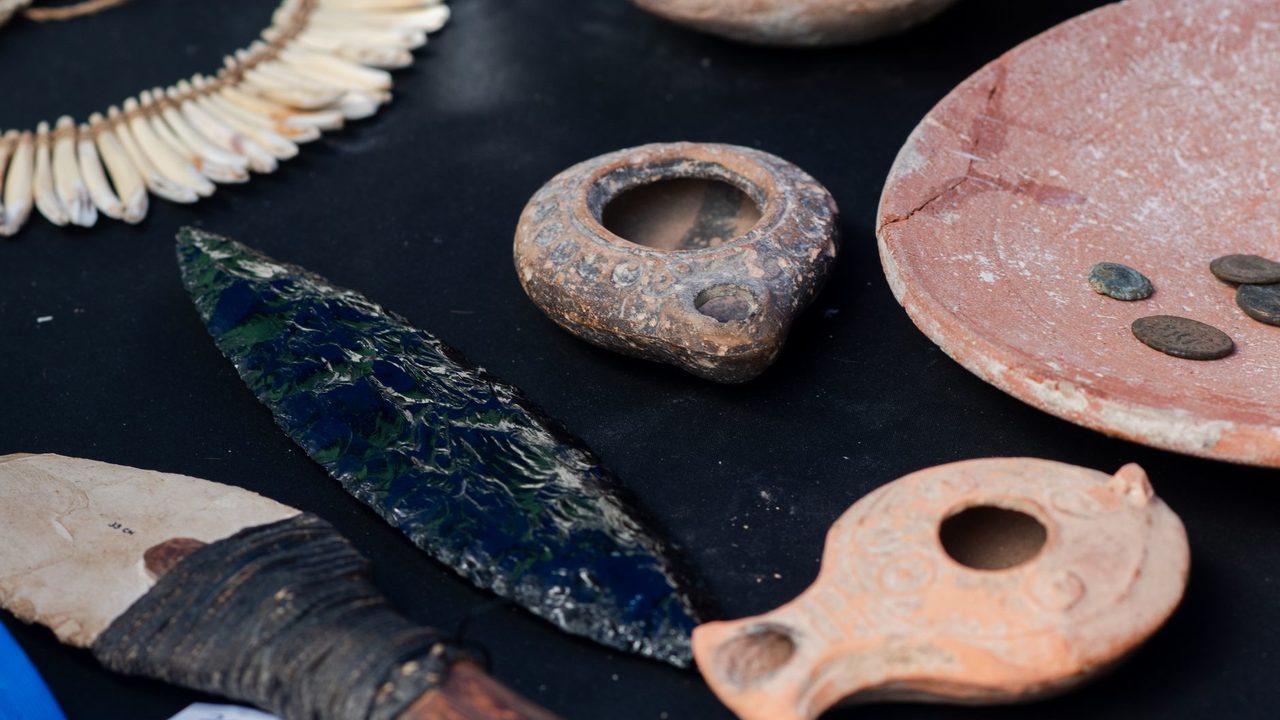
- Qesem Cave: archaeologists found small, colorful pebbles that had been brought in from different places, with no identifiable practical use.
- Sakhnin Valley: early humans made handaxes from flint that contained fossils or distinctive geological features. In some cases the tools were shaped so those features stayed intact at the center, where they remained visible and could be touched.
- Revadim, Jaljulia and Qesem Cave: archaeologists found much older flint tools that people had picked up after their surfaces were already worn by age. Some were sharpened again, but much of the original surface and earlier craftsmanship remained.
The researchers suggest the signs of age may have been part of the appeal. A weathered surface preserved a record of the object's past.
How could a keepsake change memory?
The team argues that bringing an object home from a particular place could give early humans a physical cue for recalling an experience. Details such as color, shape and texture might also have helped a person judge whether a memory came from something they lived through, something someone else told them or something they imagined.
A keepsake can carry meaning that is unique to its owner, and it can be carried and shown to others. Showing an object tied to a past event may also have made the owner's account of it more believable.
Accurate memories of personal experience have social value, the researchers say. Remembering earlier encounters, alliances, gift exchanges, shared duties and rights to particular places helps people manage complex relationships. Dependable memories can also encourage cooperation and build trust in a community.
Over many generations, the researchers propose, collecting and using keepsakes may have created evolutionary pressure for brain mechanisms that track where a memory came from and how reliable it is. That interplay between objects and biology may have contributed to autobiographical memory, the ability to recall events from our own lives and link them into a personal story.
Why did the habit appear when it did?
Barkai suggests the behavior may have developed as the environment changed. In the account released by the university, the disappearance of large animals, particularly elephants, forced early humans to develop new hunting methods and learn hunting grounds that were home to animals such as fallow deer and wild cattle. Objects taken from those places may have helped people keep a personal connection to the land that would provide their livelihood.
Why does it matter?
The study suggests that an everyday impulse, keeping a small object because it reminds you of a place or a person, may be very old and may have played a part in how human memory and identity evolved. It treats the stones and tools as possible clues to the inner lives of people who left no written record.
The conclusions are a hypothesis built from interpreting objects at a handful of sites. Stones with no obvious practical use do not prove why someone carried them, and the link to the evolution of memory is a proposal rather than a demonstrated result. Other researchers may weigh the same evidence differently.
Read next
Ancient Australians Were Picky Eaters 45,000 Years Ago, Bones Reveal
Ice Age Humans Left DNA in Cave Dirt: Scientists Read It 22,000 Years On
Fossil Teeth Hint That Coastal Dinosaurs Ate Seaweed 100 Million Years Ago
Around Prague, based on reporting by ScienceDaily