Science & Space By

New Weather Satellite Sensors Aim to Sharpen Forecasts Several Days Out
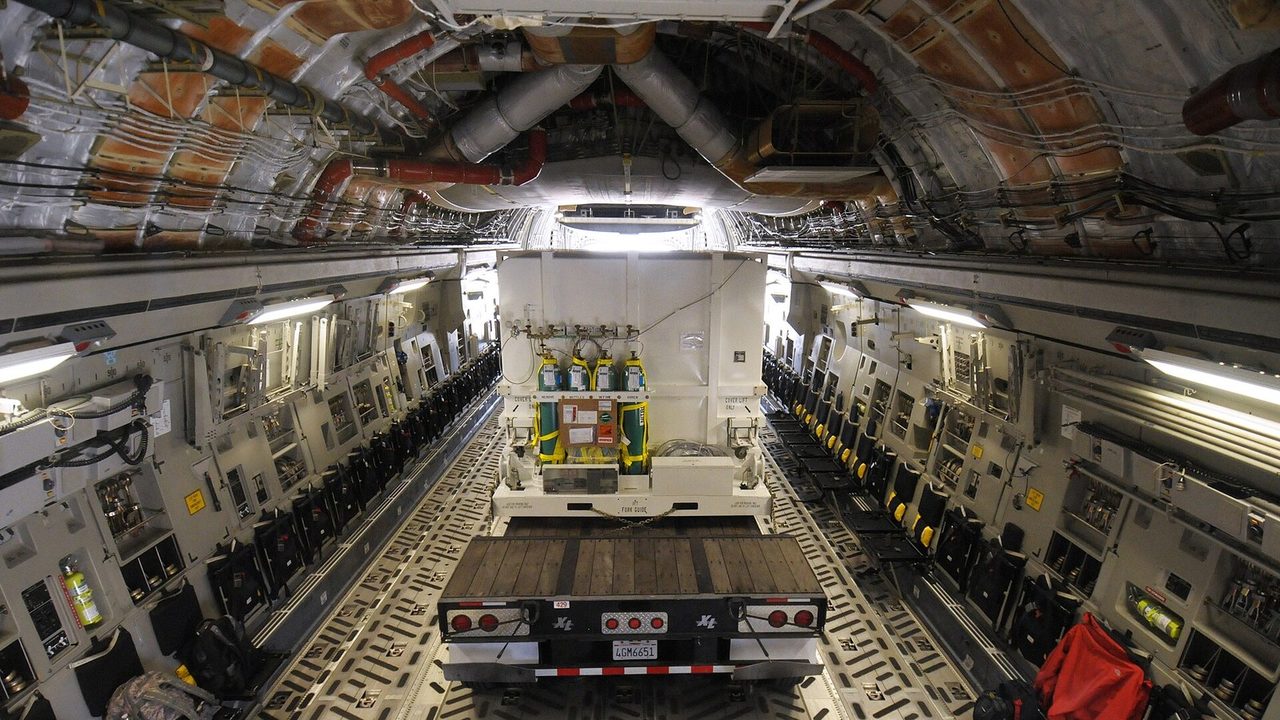
NASA, acting for the National Oceanic and Atmospheric Administration (NOAA), has awarded Northrop Grumman Systems Corporation a $290.6 million contract to build three new weather-sensing instruments for a coming series of NOAA satellites. According to NASA, the instruments could improve medium-range forecasts from the National Weather Service.

The instruments are called Sounder for Microwave-Based Applications, or SMBA. They will fly on NOAA's Near Earth Orbit Network (NEON) satellites and are described by NASA as the next generation of low Earth orbit microwave sounders.

Why it matters for everyday forecasts

Microwave sounders measure temperature and moisture in the atmosphere. NASA says those two factors strongly influence weather patterns, which is why the measurements are considered critical for forecasting.

For ordinary readers, the potential benefit is better medium-range forecasts, the kind that look several days ahead, from the National Weather Service. NASA's wording is cautious: the instruments "could improve" those forecasts. The announcement does not quantify any improvement, and it does not say when the satellites will launch or begin sending data.

NOAA will own and operate the instruments and deliver the data to users worldwide, according to NASA. That means the measurements are meant to reach forecasters and other users beyond the United States.

What the contract covers

Northrop Grumman will handle design, development, production, testing and mission support for three SMBA instruments. NASA describes the deal as a hybrid contract that combines cost-plus-fixed-fee, firm-fixed-price and time-and-materials terms. The period of performance runs from Nov. 23 through April 1, 2042, and the work will take place at the company's facility.

NASA's Goddard Space Flight Center in Greenbelt, Maryland, is managing the acquisition.

How the NEON program is organized

NEON is a joint effort between NASA and NOAA. NOAA leads the mission and provides the funding, the technical requirements and operations after launch. NASA will manage development of the NEON satellites and launch them on NOAA's behalf.

The two agencies plan to work with commercial partners to design and build both the NEON spacecraft and their instruments. The Northrop Grumman award is one piece of that arrangement, covering the sounders rather than the satellites themselves.

What is still unknown

NASA's announcement does not give launch dates, the number of NEON satellites planned or the size of the expected forecast gains. Those details were not disclosed in the release.

Around Prague, based on reporting by NASA

Cover photo: Sarah Corrice / Wikimedia Commons (public domain)

Share: Telegram WhatsApp

More science news

What Shroud of Turin DNA Cannot Tell Us About the Cloth's Age
A new genetic study of the Shroud of Turin found DNA from people, microbes, plants and animals, but its authors say the results cannot establish how old the cloth is or whether it is authentic, accord
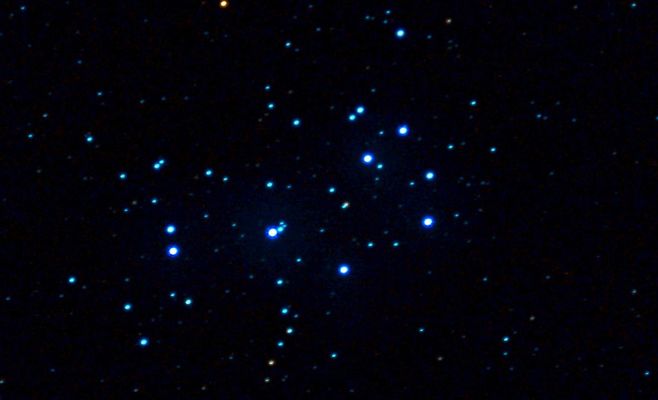
Supermoon Slides Past the Seven Sisters Star Cluster Before Dawn on Nov. 24
The full Beaver Moon of November 2026 arrives Tuesday, Nov. 24, and it is a Supermoon. Hours before dawn that morning, according to Starlust, the Moon will pass very close to the Pleiades star cluster
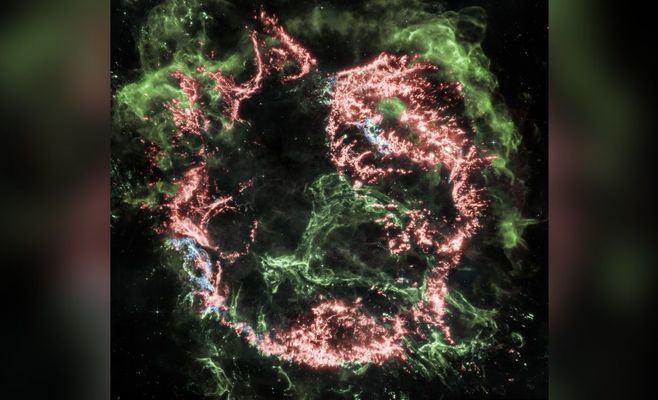
Webb Telescope Finds Dust Clues to a Star’s Last Hours Before Exploding
NASA’s James Webb Space Telescope has mapped the dust inside the supernova remnant Cassiopeia A, and the pattern suggests the star’s interior was reshuffled shortly before it exploded, according to NA
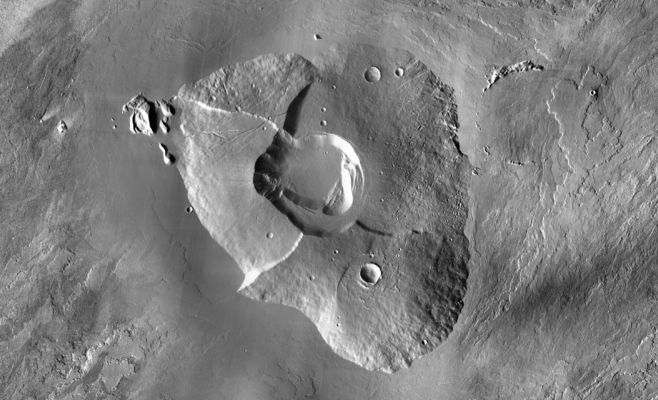
Orbiter Images Show Dead Martian Volcano Steeper Than Mauna Kea
A spacecraft circling Mars has returned new images of Tharsis Tholus, an ancient volcano that is no longer active. According to Space.com, the European Space Agency's Mars Express orbiter captured the
Shroud of Turin Carries DNA From Maize, Peanuts and Red Coral, Study Finds
The most thorough DNA analysis of the Shroud of Turin to date has found genetic traces from many people, animals and plants, including crops native to the Americas. According to ScienceAlert, the inte
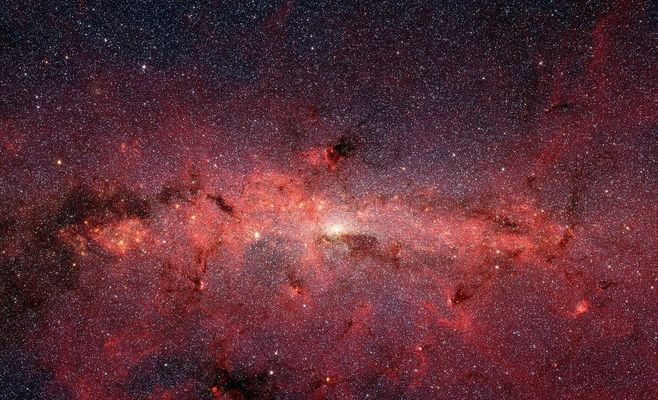
Part of the Milky Way’s Norma Arm May Be a Star Factory on the Galactic Bar
Part of what astronomers have long called the Norma spiral arm of the Milky Way may not be a spiral arm at all, according to a new study in Nature Astronomy. The researchers say it could instead be a

Related news

A new genetic study of the Shroud of Turin found DNA from people, microbes, plants and animals, but its authors say the results cannot establish how old the cloth is or whether it is authentic, according to a University of Lancashire summar
The full Beaver Moon of November 2026 arrives Tuesday, Nov. 24, and it is a Supermoon. Hours before dawn that morning, according to Starlust, the Moon will pass very close to the Pleiades star cluster, also called the Seven Sisters, in the
NASA’s James Webb Space Telescope has mapped the dust inside the supernova remnant Cassiopeia A, and the pattern suggests the star’s interior was reshuffled shortly before it exploded, according to NASA. The researchers say the change may h
A spacecraft circling Mars has returned new images of Tharsis Tholus, an ancient volcano that is no longer active. According to Space.com, the European Space Agency's Mars Express orbiter captured the views, which show a worn but remarkably
The most thorough DNA analysis of the Shroud of Turin to date has found genetic traces from many people, animals and plants, including crops native to the Americas. According to ScienceAlert, the international team behind the study, publish
Part of what astronomers have long called the Norma spiral arm of the Milky Way may not be a spiral arm at all, according to a new study in Nature Astronomy. The researchers say it could instead be a region where stars are forming along the
A building block of DNA that looks like a weakness may actually have been a strength. Researchers at Texas A&M University report that thymine, which DNA uses in place of RNA's uracil, appears to channel ultraviolet damage into forms that ar
A faster and more precise satellite-tracking laser officially began operating on Oct. 12 at the Ny-Ålesund Geodetic Observatory in Svalbard, Norway, according to NASA. It is the first of NASA's next-generation satellite laser ranging system
A "Black Saturn" is a theoretical object: a round black hole circled by a ring-shaped black hole, with each keeping its own boundary. A new paper by theoretical physicist Jay Armas, submitted to the arXiv platform on Nov. 16, 2026, extends
A robotic submersible exploring the Mariana Trench has found the shattered debris of explosive volcanic eruptions on a trench wall about 20,000 feet below the surface, Popular Science reported. The researchers say it is the deepest evidence
Scientists exploring the deepest part of the ocean have found evidence of an explosive eruption where they did not expect any volcanic activity at all. According to Live Science, a robotic submersible spotted the deepest pyroclastic flow ev
Some massive stars may end their lives without the blast scientists usually expect, collapsing straight into black holes instead. A new Caltech-led study of gravitational wave data finds a pattern in black hole masses that fits that idea, a