Science & Space By

Sour Taste Makes Taste Buds Release Serotonin That Mutes Sweet and Bitter Signals
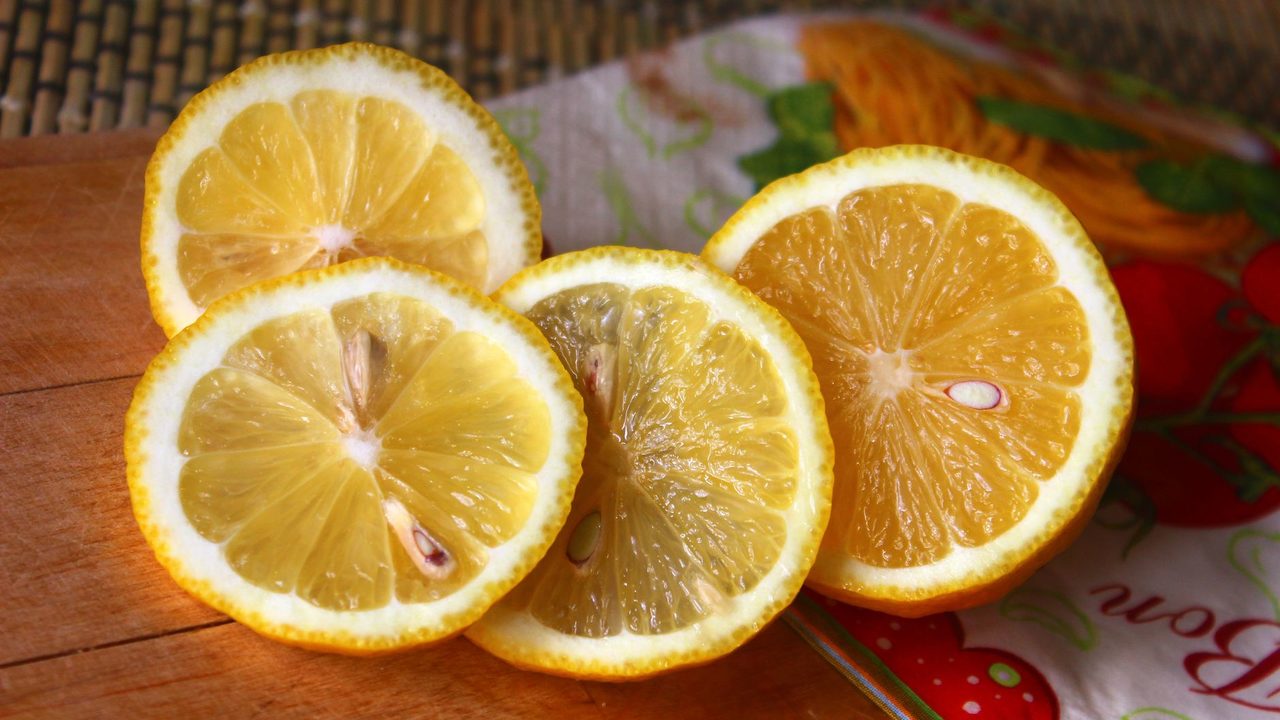
Sour-sensing cells in the taste bud release the chemical serotonin, which quiets neighboring cells that detect other tastes, according to a new study in mice, Scientific American reported. The finding suggests that taste buds do more than relay information: they edit it before it reaches the brain.

The study, published in the Journal of Neuroscience, was led by neurobiologist Stephen Roper of the University of Miami Miller School of Medicine. It was done in mice, and the results have not been shown in people.

What did the researchers find?

Roper and his team traced how taste signals travel from the tongue to the brain in mice. They found that specific cells in the taste bud sense sourness and respond by producing serotonin, a neurotransmitter. That serotonin suppresses nearby cells that would otherwise report certain other tastes, including sweetness and bitterness.

The sour signal then travels to the brain along a pathway reserved for aversive tastes, meaning those that cause a strong sense of dislike. Pleasant tastes such as sweet use a separate route.

Why does a splash of lemon change a dish?

Cooks have long used acid to brighten food. Roper said chefs have known this for ages, and that his team used the idea to work out what happens inside the taste bud. In the study, the sour-sensing cells also overpower nearby cells that detect sweet, salty and umami, the savory taste found in mushrooms and soy sauce.

How many taste buds do people have?

Scientific American said adult humans have between 2,000 and 8,000 taste buds, mostly on the tongue but also elsewhere in the mouth and throat. Each one holds dozens of taste-sensing cells, and each cell typically responds to just one taste.

Why does it matter?

The work gives scientists a clearer picture of the chemistry of taste. Neuroscientist Sue Kinnamon of the University of Colorado Anschutz School of Medicine, who was not part of the study, said it helps settle long-standing questions about how taste cells talk to each other. She pointed to serotonin as the main messenger in this process, rather than gamma-aminobutyric acid, or GABA, which sour-sensing cells also release.

Kinnamon said the cells sit close together, so it is not surprising that they influence one another. The study also shows that taste buds shape the signals they send, a more active role than many assumed.

What is still unknown?

Several questions remain open. Roper said it is unclear how the two taste pathways interact, and he hopes to find molecular markers that distinguish them so researchers can trace the neurons involved.

Neuroscientist Emily Liman of the University of Southern California, who was not involved, noted a deeper puzzle: whether sour is truly a taste at all. The cells might instead be reacting to something else, such as ammonium from cellular decay, that upsets their acidity balance in a similar way.

Sourness can signal spoiled food such as milk, but not always, and many toxins do not taste sour. Some sour flavors, like lemonade, are pleasant. Roper said those conflicts make it a mystery that sour gets such priority.

What happens next?

Roper said his group plans to map the pathways that carry the modified signals from the tongue to the brain, to learn how the brain makes sense of the competing tastes in a single mouthful.

Around Prague, based on reporting by Scientific American
Share: Telegram WhatsApp

More science news

Astronomers Watch a Giant Planet Vanish From View as a Hidden Sibling Tugs on It
For the first time, astronomers have followed a giant exoplanet as it gradually dropped out of view from Earth. The planet, TOI-2535b, had vanished by March 2026, according to ScienceAlert, which repo
Gold Steamship Sunk in 1857 Was Found With Math, Then Fought Over in Court
The SS Central America, a wooden steamship that sank in a hurricane off South Carolina in 1857, is now remembered less for the 425 people who died than for its gold and the courtroom fights that follo
Voyager 1 Is About to Be One Light-Day From Earth, More Than 16 Billion Miles Away
NASA's Voyager 1 is set to reach a distance of one light-day from Earth on Wednesday, NPR reported. The spacecraft is already the farthest anything humans have launched into space, and the agency is m
Vulcan Rocket Loses 40 Amazon Internet Satellites 10 Minutes After Liftoff
United Launch Alliance's Vulcan rocket failed to reach orbit Sunday, Nov. 15, losing all 40 Amazon Leo internet satellites it was carrying. The company said an anomaly struck about 10 minutes after li
Voyager 1 Is About to Be a Full Light-Day From Earth, So Replies Take Two Days
NASA's Voyager 1, already the most distant human-made object, reaches a new marker on Nov. 18: it will be one light-day from Earth, so far away that light needs 24 hours to cross the gap, according to
A Knitted Sock That Stiffens the Arch Cut Walking Effort in a Small Test
A sock that squeezes the ball of the foot can make walking slightly less tiring, according to a new study from the University of Texas at Austin. ScienceAlert reported that the socks stiffened the foo

Related news

For the first time, astronomers have followed a giant exoplanet as it gradually dropped out of view from Earth. The planet, TOI-2535b, had vanished by March 2026, according to ScienceAlert, which reported on a paper in The Astrophysical Jou
The SS Central America, a wooden steamship that sank in a hurricane off South Carolina in 1857, is now remembered less for the 425 people who died than for its gold and the courtroom fights that followed its discovery, Popular Science repor
NASA's Voyager 1 is set to reach a distance of one light-day from Earth on Wednesday, NPR reported. The spacecraft is already the farthest anything humans have launched into space, and the agency is marking the milestone with a public event
United Launch Alliance's Vulcan rocket failed to reach orbit Sunday, Nov. 15, losing all 40 Amazon Leo internet satellites it was carrying. The company said an anomaly struck about 10 minutes after liftoff from Cape Canaveral Space Force St
NASA's Voyager 1, already the most distant human-made object, reaches a new marker on Nov. 18: it will be one light-day from Earth, so far away that light needs 24 hours to cross the gap, according to Live Science. NASA says the spacecraft
A sock that squeezes the ball of the foot can make walking slightly less tiring, according to a new study from the University of Texas at Austin. ScienceAlert reported that the socks stiffened the foot's arch and lowered the body's energy u
A 28-year-old man from the northeastern United States has spent two years seeing his pet cat's features in the faces of people he meets, according to ScienceAlert, which covered a case report in the journal Cortex. The episodes began after
A gas giant about 1,000 light-years from Earth has slipped out of sight while astronomers were watching it. According to EarthSky, the planet, TOI-2535 b, did not really go anywhere: the gravity of another, unseen planet has tilted its orbi
Astronomers say a star system nicknamed the Blaze Star is very likely to erupt soon, but none can say exactly when. According to Space.com, skywatchers have waited about two years for the nova, and when it comes it will make a faint, normal
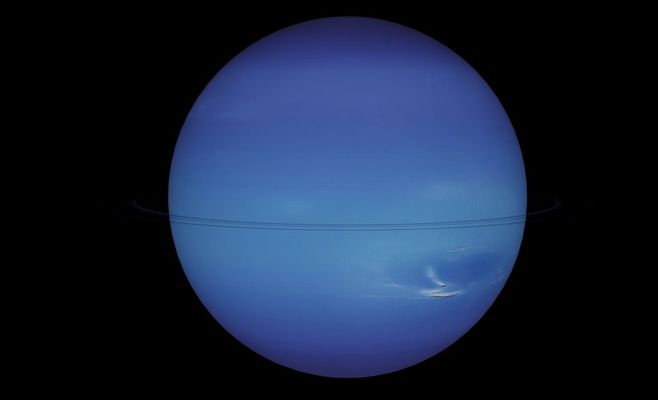
Scientists may have an explanation for one of the oddest features of Uranus and Neptune: their lopsided magnetic fields. According to ScienceDaily, new computer simulations suggest that the way the planets’ deep interiors conduct electricit
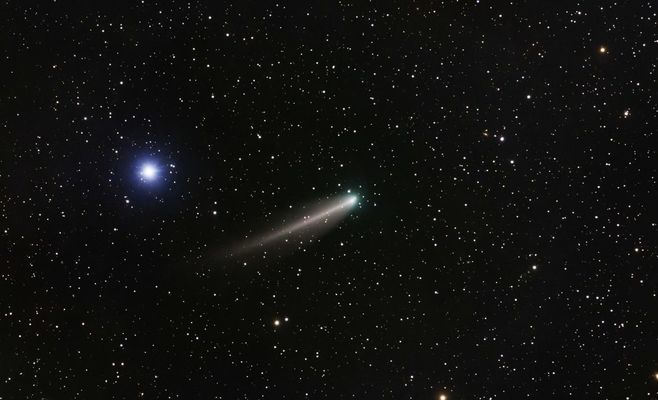
A faint, little-noticed comet flared up twice this summer, and researchers now say they know why. According to Space.com, sunlight warmed ice below the surface of comet 220P/McNaught, the ice turned to gas, and the escaping gas tore through
NASA's Voyager 1 probe will reach a distance of 16.09 billion miles (25.89 billion kilometers) from Earth on Wednesday, Nov. 18, according to Live Science. At that range, light takes 24 hours to cross the gap, making the spacecraft the most