Science & Space By

People Who Lean on AI Help Gave Up Sooner When It Was Taken Away

People who rely on AI assistance to work through math problems and reading comprehension tasks are more likely to give up, or to struggle, once that help is taken away, according to new research reported by Live Science. The finding points to a possible downside of leaning on chatbots: a weaker drive to push through hard tasks.

The work was presented earlier this month at the 2026 Conference on Language Modeling in San Francisco. Live Science described it as evidence that relying too heavily on AI could erode people's motivation to persist when a challenge gets difficult.

What the researchers looked at

AI tools such as chatbots have become part of everyday life, Live Science noted. People use them to write messages, get answers to questions and pick up new skills. Many of those uses save time, which is a large part of their appeal.

The new study asked a different question: what happens afterward? The tasks it examined were math problems and reading comprehension, two areas where people often turn to AI for a quick answer or explanation. According to Live Science, participants who had used AI assistance were more likely to quit, or to have trouble, when the assistance was no longer available.

What it means for everyday AI users

The result does not say that using AI makes anyone less capable in a lasting way. It describes a change in behavior at the moment the support disappears, and it points to motivation rather than raw ability. Live Science framed the central concern as whether people's willingness to keep trying fades when a tool has been doing the heavy lifting.

For students, workers and anyone else who uses a chatbot to handle routine mental tasks, the study raises a practical question about habit. If a tool is always there to take over at the first sign of difficulty, the experience of working through that difficulty alone may become less familiar. The research suggests that this shift may show up as a quicker decision to stop.

The outlet also tied the findings to a broader question: what happens when people stop exercising their brains? Live Science put that question to its readers, asking whether they feel AI is making them less motivated, or whether it simply makes them more efficient, and it opened a reader poll and comment section on the topic.

What the findings do not settle

The report describes results presented at a conference, and Live Science's account leaves out many details that would help readers judge the strength of the effect, including how the participants were chosen and how long the effect lasted. The findings are best read as an early signal rather than a final answer on how AI affects motivation.

It is also worth separating two things the report keeps apart. The time savings from AI tools are real and are a main reason people use them. The new study adds that those savings may come with a cost in persistence, at least in the specific moment when the assistance is withdrawn.

Researchers and readers alike are now weighing whether AI tools make people more efficient, less motivated, or both. For now, the study offers one concrete observation: in tasks involving math and reading, people used to AI help were more inclined to give up when it was gone.

Around Prague, based on reporting by Live Science
Share: Telegram WhatsApp

More science news

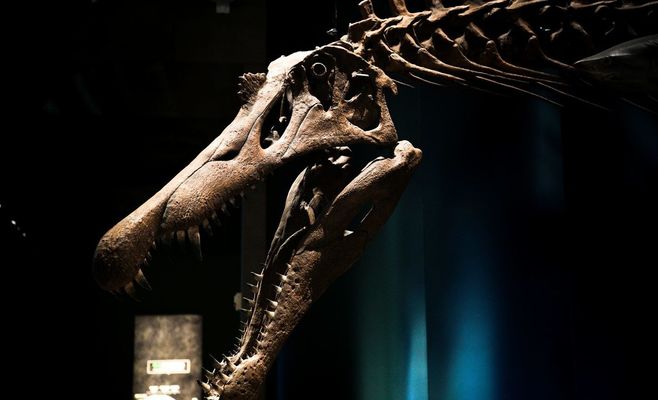
Rare Nanotyrannus Skeleton, Once Mistaken for Baby T. Rex, Goes on Sale in New York
A mounted skeleton of Nanotyrannus, a dinosaur long mistaken for a young Tyrannosaurus rex, goes on the auction block in New York on Tuesday, with a starting price of at least $6 million, the BBC repo
Google's Genie 4 Conjures Explorable Worlds in Real Time, With a Short Memory
Google DeepMind has unveiled Genie 4, an updated "world model" that builds explorable virtual environments from a text description, according to Ars Technica. The model is meant to improve on last yea
A Gemstone Buried Deep Inside Mars May Explain Its Strangely Rusty Rocks
Meteorites that traveled from Mars to Earth have long carried a chemical contradiction: they look highly oxidized, yet the planet's deep interior should have produced the opposite. A new study suggest
Satellite Photo Shows Two Hurricanes Side by Side Like a Pair of Eyes Staring Into Space
A satellite photo from a decade ago shows two hurricanes, Madeline and Lester, lined up over the Pacific and heading for Hawaii, Live Science reported in its weekly Earth-from-space series. The swirli
Why Dolls Give Us the Creeps: Scientists Point to the Uncanny Valley
Many adults feel uneasy around dolls, and researchers at Northeastern University say a long-studied quirk of human perception may be behind it. According to EarthSky, which reported on the scientists'
Why Scientists Started Sending Messages to Aliens Instead of Just Listening
For sixty years, scientists have listened for signs of intelligent life beyond Earth. A parallel effort goes the other way: instead of waiting for a signal, it sends one. Universe Today has begun a se

Related news

A mounted skeleton of Nanotyrannus, a dinosaur long mistaken for a young Tyrannosaurus rex, goes on the auction block in New York on Tuesday, with a starting price of at least $6 million, the BBC reported. Sotheby's expects it to fetch up t
Google DeepMind has unveiled Genie 4, an updated "world model" that builds explorable virtual environments from a text description, according to Ars Technica. The model is meant to improve on last year's Genie 3, and Ars reports that Google
Meteorites that traveled from Mars to Earth have long carried a chemical contradiction: they look highly oxidized, yet the planet's deep interior should have produced the opposite. A new study suggests a rare garnet that forms only under ex
A satellite photo from a decade ago shows two hurricanes, Madeline and Lester, lined up over the Pacific and heading for Hawaii, Live Science reported in its weekly Earth-from-space series. The swirling clouds around the two storms look lik
Many adults feel uneasy around dolls, and researchers at Northeastern University say a long-studied quirk of human perception may be behind it. According to EarthSky, which reported on the scientists' comments, the reaction is known as the
For sixty years, scientists have listened for signs of intelligent life beyond Earth. A parallel effort goes the other way: instead of waiting for a signal, it sends one. Universe Today has begun a series on the history of that practice, kn
Earth's magnetic field does not absorb the solar wind evenly. New computer simulations suggest some regions of the shield come under noticeably more stress than others, which could sharpen forecasts of space weather that threatens satellite
Two fossils found in China point to an amphibian that spent its entire life in the ocean, according to ScienceAlert. No amphibian alive today lives in the sea, since their porous skin generally cannot cope with salt. Geologist Lipin Diao an
Keanu Reeves is set to star in "Maelstrom," a Netflix action movie built on a script that was first sold to a Hollywood studio in 1993, according to Page Six, Variety and TheWrap. The role was previously linked to Alan Ritchson, who has dro
SpaceX has fired all 33 engines on the booster for its next Starship test flight, the first big check in a series of preparations for Flight 15. Space.com reported that the Super Heavy booster, known as Booster 22, ran its Raptor 3 engines
Researchers have described a new kind of landslide in Canada's Northwest Territories, in which large blocks of frozen ground break loose and slide downhill. The slides, called permafrost detachment slides, occur where permafrost is relative
October's full Hunter's Moon dominated the autumn sky overnight on Oct. 25-26, and photographers around the world captured it above skylines, landmarks and lighthouses, Space.com reported. The outlet gathered some of the best images sent in