Science & Space By

Possible Dwarf Planet Found Beyond Pluto, Roughly the Size of Texas
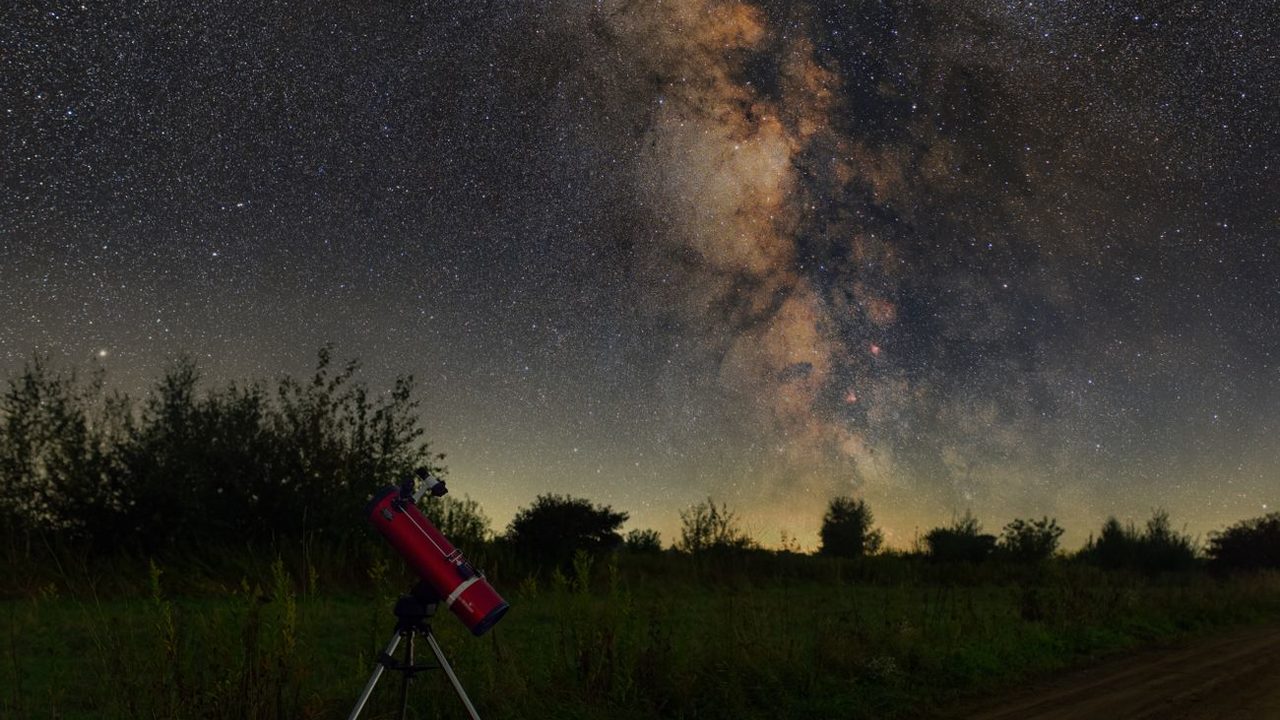
Astronomers have found a candidate dwarf planet in the outer reaches of the Solar System, according to New Atlas. Provisionally named 2026 ED138, the icy object turned up in early data from the Vera C. Rubin Observatory in Chile. New Atlas puts its width at somewhere between 600 and 1,500 kilometers (373 and 932 miles), which it compares to the size of Texas.

That size is only a rough estimate, and the object has not been confirmed as a dwarf planet. Here is what is known so far.

What exactly was found?

A chunk of ice and rock, currently about 46 times farther from the Sun than Earth is. For comparison, New Atlas says Pluto's average distance is about 40 times Earth's. The object appears to orbit close to the plane of the Milky Way, where millions of background stars make it hard to pick out faint, slowly moving specks.

Who spotted it, and how?

Harvard & Smithsonian astrophysicist Matthew Holman was processing archived Rubin data with software he developed with colleague Kevin Napier when a signal emerged. The code is designed to connect detections scattered across Rubin's huge collection of observations. Given the distance, the object's brightness suggested something unusually large. Holman described his first reaction as “excited disbelief.”

University of Washington astronomer Mario Jurić then found another 20 observations in Rubin's records that hinted at a possible dwarf planet. Searches of older survey images extended the object's observational history back to 2016, giving astronomers about a decade of evidence to reconstruct its likely orbit. The discovery was announced this week, based on observations gathered while Rubin was still preparing for its main survey.

How big is it, really?

Nobody can say yet. A small object with a shiny surface can reflect as much sunlight as a larger, darker one, so brightness alone leaves plenty of room for interpretation. Until researchers pin down how reflective the surface is, New Atlas says, the diameter should be treated as a ballpark estimate. Observations at longer wavelengths could help by measuring radiation emitted by the object itself rather than sunlight bouncing off it.

What would make it a dwarf planet?

Under the International Astronomical Union's definition, a dwarf planet must orbit the Sun, be massive enough for gravity to pull it into a nearly round shape, and have failed to clear its orbital neighborhood. It also cannot be a moon. New Atlas notes that an icy body within the estimated size range has a good chance of being fairly round, which makes it a promising candidate. If confirmed, it would receive a new name and join Pluto, Eris, Haumea, Makemake and Ceres.

Is this the long-sought Planet Nine?

No. According to New Atlas, 2026 ED138 is far too small and too close to fit the Planet Nine hypothesis, a proposed heavyweight world meant to explain the unusual orbital clustering of some distant objects. The object's orbit is tilted about 25 degrees from the plane of the Solar System, which New Atlas says suggests a gravitational encounter with a massive body such as Neptune may have nudged it off its original path.

Why does it matter?

For general readers, the find is a first glimpse of what the new observatory was built to do. Rubin sits on Cerro Pachón and pairs an 8.4-meter (28-foot) telescope with a 3,200-megapixel camera, described as the largest digital camera ever built. Over its decade-long Legacy Survey of Space and Time, it will repeatedly photograph the southern sky every few nights, producing what New Atlas calls a cosmic movie. By comparing images, researchers can tell objects that move or change brightness from the static background.

That record could reveal new asteroids, hidden comets and exploding stars, offering insights into subjects from dark matter to the history of the Solar System. A faint world that went unnoticed for a decade in older images shows how much data like this can still hold.

Around Prague, based on reporting by New Atlas
Share: Telegram WhatsApp

More science news

Potatoes Grown in Fake Moon Soil Match Earth Yields With Worm Compost
Scientists on a NASA-backed project have grown potatoes in simulated moon soil, and with enough added compost the harvest matched what the same plants produced in ordinary Earth soil, according to a s
AI Data Centers Linked to 650 U.S. Deaths From Pollution Far Away
The rapid growth of data centers built for artificial intelligence harms air quality and health in regions far from the buildings themselves, according to a new study by MIT researchers. The team esti
Thanksgiving Dinner for 10 Costs $58.63 as Turkey Prices Jump 10%
A traditional Thanksgiving dinner for 10 people will cost an average of $58.63 this year, about 6% more than in 2025, according to the American Farm Bureau Federation's annual survey, released Wednesd
Scientists Flooded Los Santos From Grand Theft Auto to Show Rising Seas’ Toll
Researchers in Germany have put a virtual version of Los Angeles underwater to make a point about climate change. Timed to the launch week of Grand Theft Auto VI, the study simulates coastal flooding
Early Dinner, Early Breakfast: Study Ties Longer Overnight Fast to Lower BMI
People who ate dinner earlier, ate breakfast earlier and did not snack in between tended to have lower body mass index five years later, according to a Spanish study of 7,074 adults. The findings do n
Atmospheric River Breaks 76-Year Rain Record in San Francisco, Floods Bay Area
An atmospheric river drenched Northern California on Wednesday, setting rainfall records in downtown San Francisco and causing flooding and power outages around the Bay Area, The Guardian reported. Th

Related news

Scientists on a NASA-backed project have grown potatoes in simulated moon soil, and with enough added compost the harvest matched what the same plants produced in ordinary Earth soil, according to a study in the journal npj Microgravity. Th
The rapid growth of data centers built for artificial intelligence harms air quality and health in regions far from the buildings themselves, according to a new study by MIT researchers. The team estimates that extra air pollution from the
A traditional Thanksgiving dinner for 10 people will cost an average of $58.63 this year, about 6% more than in 2025, according to the American Farm Bureau Federation's annual survey, released Wednesday. It is the first yearly increase sinc
Researchers in Germany have put a virtual version of Los Angeles underwater to make a point about climate change. Timed to the launch week of Grand Theft Auto VI, the study simulates coastal flooding in Los Santos, the fictional city from G
People who ate dinner earlier, ate breakfast earlier and did not snack in between tended to have lower body mass index five years later, according to a Spanish study of 7,074 adults. The findings do not prove cause and effect, but they add
An atmospheric river drenched Northern California on Wednesday, setting rainfall records in downtown San Francisco and causing flooding and power outages around the Bay Area, The Guardian reported. The storm was expected to reach Southern C
When people want to convince others that a statistic is big or small, they tend to describe it in words instead of just stating it, according to a new study. Audiences find those word-based descriptions persuasive even when they are told th
A rare greater one-horned rhinoceros calf was born at Chester Zoo in England on the evening of Oct. 11, and security cameras recorded the birth, Popular Science reported. The footage shows the mother, Asha, giving birth and the calf taking
Across the world, sedimentary rock from the Cambrian period, around 540 million years ago, sits directly on far older granite and other crystalline rock, with the layers in between missing. A new study in the journal Nature suggests the cau
Researchers in Hong Kong have built a floss-shaped device that collects the fluid between teeth and reads sugar and uric acid levels from it. In a small early test, its glucose and uric acid readings closely tracked those from blood tests,
Uranus and Neptune have long been called “ice giants,” but a new paper proposes a way to test whether they hide large amounts of rock beneath their thick atmospheres. The idea hinges on a noble gas, argon, according to Universe Today, which
A Cygnus XL cargo spacecraft carrying about 11,000 pounds of science, supplies and equipment is targeted to launch to the International Space Station no earlier than 10:47 a.m. EST on Sunday, Nov. 29, NASA announced. The agency, Northrop Gr