Science & Space By

Two Different Gamma-Ray Bursts Struck Four Minutes Apart, and Nobody Can Fully Explain Why
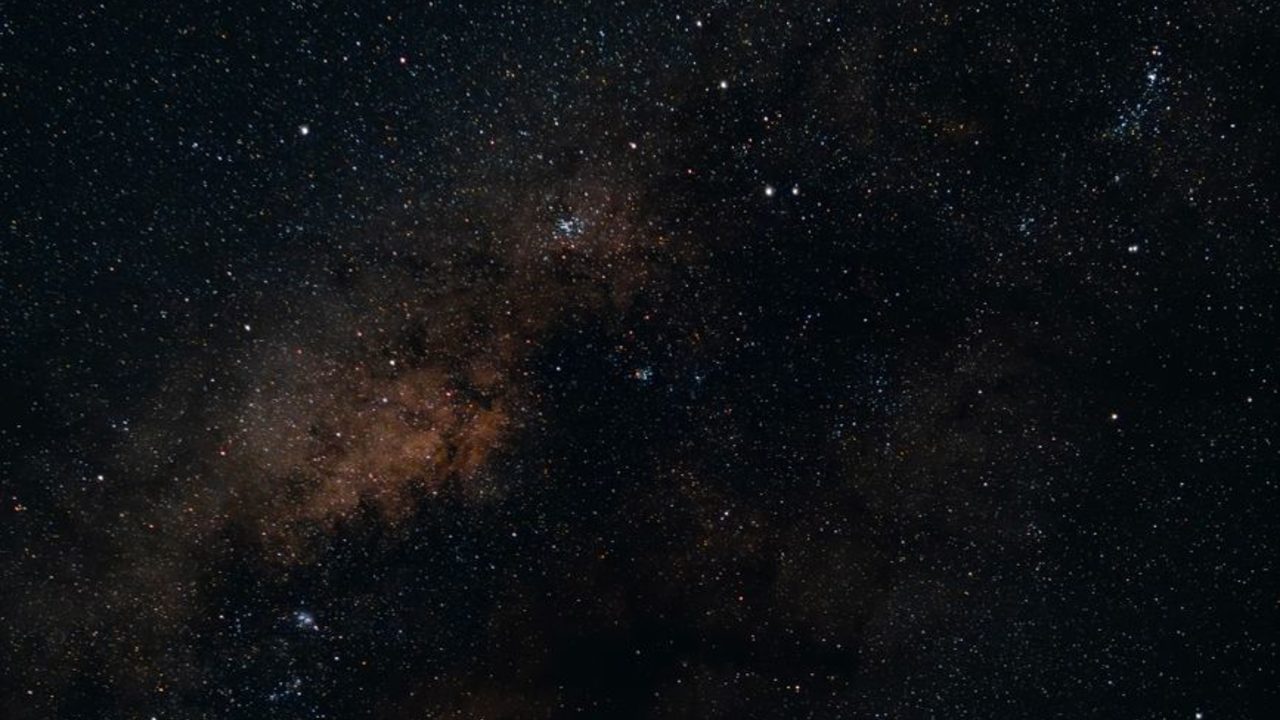
Astronomers have reported a pair of gamma-ray bursts that does not match anything seen or predicted before: a short burst and a long burst, separated by only four minutes. According to ScienceAlert, the finding, described in a paper in Nature Astronomy, may force scientists to rethink how these explosions are classified and where they come from.

The event, named GRB 160425A, was detected on April 25, 2016, by the Neil Gehrels Swift Observatory in space. Gamma rays are blocked by Earth’s atmosphere, so a space-based instrument is needed, while ground-based telescopes then followed the fading afterglow, ScienceAlert reported.

What are gamma-ray bursts, and why are two types a big deal?

Gamma-ray bursts are among the most energetic cosmic events since the Big Bang. Astronomers sort them by duration. Short ones last less than two seconds and are thought to come from collisions and mergers of compact objects such as neutron stars and black holes. Long ones last more than two seconds and are typically linked to core-collapse supernovae, the deaths of massive stars.

Until now, a single event has not been seen to combine both kinds, with a quiet gap in between.

What exactly did the telescopes record?

The first burst, called G1, lasted 1.7 seconds and is associated with a merger origin. The second, called G2, lasted 51.2 seconds and is associated with a collapsing star. The host galaxy, possibly a pair of merging galaxies, is so distant that the light took roughly 5.5 billion years to reach Earth, according to ScienceAlert.

The outlet reported that, if the energy were spread evenly in all directions, the first burst would have released billions of years’ worth of the Sun’s output and the second roughly three times more. Gamma-ray bursts actually release energy in focused beams, however, which substantially changes the math, corresponding author Bing Zhang of the University of Hong Kong said.

Could it just be a coincidence?

That is the first of five explanations the researchers considered, and they describe each as challenging. In this scenario, the two bursts came from separate host galaxies that happened to line up in space and time, both pointing their jets toward Earth.

ScienceAlert reported that the odds of this are about 2 in a trillion for any one moment and patch of sky. Across all the years Swift has been watching, the odds are only around 1 in 100,000 to 1 in 10 million. Zhang said he would think the bursts were independent, but that the chance of such an alignment is so low that the pair has to share an origin.

What are the other explanations?

The second idea is that both bursts came from the same galaxy but from different places. According to the report, that is even less likely once Swift’s years of observations are factored in.

The third is a rare version of a short burst, with a big blast followed by a weaker tail. The long quiet gap, and the fact that the second burst is far too energetic to be a tail, make that unlikely.

The fourth is a single long burst from a dying massive star, with a smaller early emission before the main explosion. That also looks doubtful, because such a process would probably produce a weaker first signal.

The fifth is the most unconventional: a single system with an undetermined type and number of celestial bodies that produced an intertwined blast, through a mechanism that cannot yet be specified.

Why does it matter?

For readers, this is a story about how science handles a surprise. The standard picture of gamma-ray bursts, with short ones from mergers and long ones from collapsing stars, has served astronomers for years. One event that does not fit either box is a signal that the picture may be incomplete.

The result is a single observed event and the explanations are still open, so it is too early to say which, if any, is right. Zhang, who has worked on gamma-ray bursts as a theorist for more than two decades, said all the scenarios have “severe difficulties” and that this one really challenged him. He added that the researchers ran out of possibilities.

Around Prague, based on reporting by ScienceAlert, Universe Today

Share: Telegram WhatsApp

More science news

New Method Stops AI Weather and Turbulence Models From Predicting the Impossible
Researchers at MIT say they have found a way to keep machine-learning models of chaotic systems from drifting into predictions that could never happen in the real world. According to MIT News, the met
NASA Backs 302 Small-Business Projects, From Rollable Solar Arrays to Lunar Landing Pads
NASA has selected 302 projects from small businesses for up to $171 million in early-stage funding, the agency announced. The awards target technology for exploring the Moon and Mars, including work t
Planet Hunt Turns Up a Surprise: A Red Dwarf Orbited by Two White Dwarfs
Astronomers looking for planets have found a triple star system only 28 light-years from Earth that one of the researchers says should not exist. According to Universe Today, the team went searching f
A New Egg-Eating Snake, No Thicker Than a Knitting Needle, Found in Ethiopia
Biologists have described a new species of egg-eating snake from forests near the Bale Mountains in southeastern Ethiopia, according to Popular Science. The white-throated egg-eater, Dasypeltis albigu
Hamster Cells Now Carry Algae DNA Across 150 Generations of Division
Researchers in Japan have fused hamster cells with algae and kept the combined genetic material stable through more than 150 generations of cell division, ScienceAlert reported. The team calls the res
Webb Telescope Catches Two Stars Merging in the Andromeda Galaxy in Real Time
Astronomers have for the first time watched the final inspiral of two stars inside a shared envelope of gas, ending in a merger and a bright eruption, according to Universe Today. The event, cataloged

Related news

Researchers at MIT say they have found a way to keep machine-learning models of chaotic systems from drifting into predictions that could never happen in the real world. According to MIT News, the method builds physical limits directly into
NASA has selected 302 projects from small businesses for up to $171 million in early-stage funding, the agency announced. The awards target technology for exploring the Moon and Mars, including work tied to Artemis and a planned U.S. Moon B
Astronomers looking for planets have found a triple star system only 28 light-years from Earth that one of the researchers says should not exist. According to Universe Today, the team went searching for an exoplanet around a nearby red dwar
Biologists have described a new species of egg-eating snake from forests near the Bale Mountains in southeastern Ethiopia, according to Popular Science. The white-throated egg-eater, Dasypeltis albigularis, is a tiny, nonvenomous snake that
Researchers in Japan have fused hamster cells with algae and kept the combined genetic material stable through more than 150 generations of cell division, ScienceAlert reported. The team calls the resulting cells “planimals,” and the study
Astronomers have for the first time watched the final inspiral of two stars inside a shared envelope of gas, ending in a merger and a bright eruption, according to Universe Today. The event, cataloged as AT 2025abao and nicknamed “Bao,” too
Flooding in South Florida has shut schools, parks, libraries and county offices from Palm Beach to Broward, and two counties have extended local states of emergency, CBS12 reported on Thursday, Nov. 19. A flood watch remains in effect for p
A team of physicists in the U.S. and Canada has proposed that dark matter could contain its own versions of familiar chemical elements, a sort of hidden periodic table, according to ScienceAlert. The idea, laid out in a long preprint paper,
Physicists at Delft University of Technology in the Netherlands have flipped the spin of an atom's nucleus using a scanning tunneling microscope, an effect that current understanding says should not happen, according to New Atlas. The resul
A photograph taken in 2008 by NASA's Mars Reconnaissance Orbiter appears to show thickets of scraggly trees standing upright on frozen dunes near the Martian north pole, ScienceAlert reported. The trees are an illusion. The dark streaks are
A joint European-Japanese space mission has arrived at Mercury after a voyage of more than eight years, The Guardian reported. Flight controllers are due to fire the spacecraft's thrusters on Saturday to send it into orbit around the smalle
Four years after NASA deliberately crashed a spacecraft into an asteroid, Europe's Hera probe has returned its first images of the target system, Universe Today reported, based on a European Space Agency press release. The pictures are the