Scientists from Three Countries Join Forces to Save a Rare Flower and Sand Dunes in the Polabí Region
USD 21,62
Popular
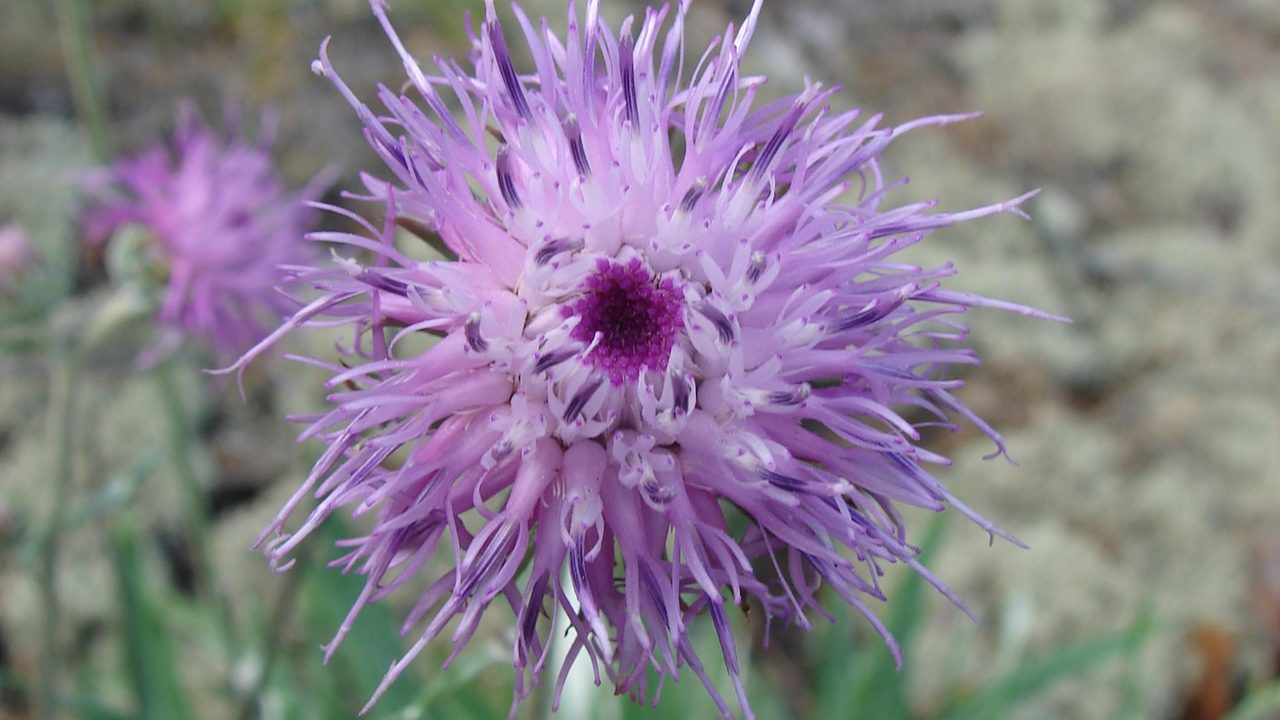
An international team of scientists from Czechia, Germany and Ukraine has launched a large-scale project to save the critically endangered Jurinea cyanoides — a cornflower-like plant — and to restore unique sand dune habitats. The work will cover seven sites in Czechia (mostly in the Polabí region, along the Elbe) and 22 sites in Germany (in the state of Saxony-Anhalt), according to the Institute of Botany of the Czech Academy of Sciences.
Sites in Ukraine where the plant still grows will serve as a testing ground for knowledge transfer — researchers there will trial methods for conservation planning, hands-on restoration work, education and public engagement. This is particularly relevant given Ukraine's upcoming EU accession: using a single species as an example, the project will demonstrate how to prepare nature-conservation documentation in line with European standards, which should later make it easier to protect other rare species and habitats across the region.
Genetics and Pollinators Under the Microscope
Before practical work begins, specialists will carry out an extensive study of the species — its genetics, biology and ecological requirements — across all three countries. "This research will allow us to design the most suitable measures for each site and decide which seed source is best suited for reintroducing the species into the wild," said project leader Hana Pánková of the Institute of Botany of the Czech Academy of Sciences.
Scientists are also paying special attention to monitoring pollinators and other insects. According to entomologist Michal Perlík of the Biology Centre of the Czech Academy of Sciences, the health of flowering-plant communities depends directly on pollinating insects, which form a crucial part of the biodiversity of every habitat. As part of the project, researchers will study the insect communities at selected sites where the plant grows and how conservation measures affect them.
Ten Years of Work to Save the Species
Across all the chosen sites, plans include clearing shrubs and invasive species, regular mowing, livestock grazing, and removing turf to create open, vegetation-free sandy patches. The goal is to establish a long-term care system that will continue functioning long after the project itself ends.
"We have ten years of intensive work ahead of us, at the end of which we want not only to bring the cornflower-leaved jurinea back into Czech nature, but also to ensure it survives once the project is over. Right now we're discussing specific measures with landowners and the managers of protected areas, trying to find care approaches that work both for the plant and for local residents," explained Karel Kříž of the Czech Union for Nature Conservation (Vlašim branch).
Alongside plant care, a significant part of the project is dedicated to supporting pollinating insects — regional herb-and-flower seed mixes will be developed specifically for pollinators typical of sandy habitats. The project also includes ex-situ conservation — in botanical gardens and through cultivation in private gardens with the involvement of local residents, communities and organisations. The aim is to build sufficiently large and genetically diverse populations that can serve as a seed source for reintroducing the species into the wild.
The wider public will also be invited to take part in practical conservation efforts, with opportunities to help monitor pollinators and invasive species through citizen-science initiatives. School partnerships and student internship placements are planned as well.
The project is coordinated by the Institute of Botany of the Czech Academy of Sciences, with partners including the Czech Union for Nature Conservation (Vlašim), the Biology Centre of the Czech Academy of Sciences, the Botanical Garden of the Faculty of Arts at Charles University, German and Ukrainian conservation organisations, and the Ústí and Central Bohemia regions. Funding is provided by the EU's LIFE programme, the Czech Ministry of the Environment, and the relevant ministry of the state of Saxony-Anhalt.
Source: ekolist.cz