Society By

Czech Schools May Ban Mobile Phones Entirely: Researchers Warn of Unexpected Side Effects

Czech Schools May Ban Mobile Phones Entirely: Researchers Warn of Unexpected Side Effects

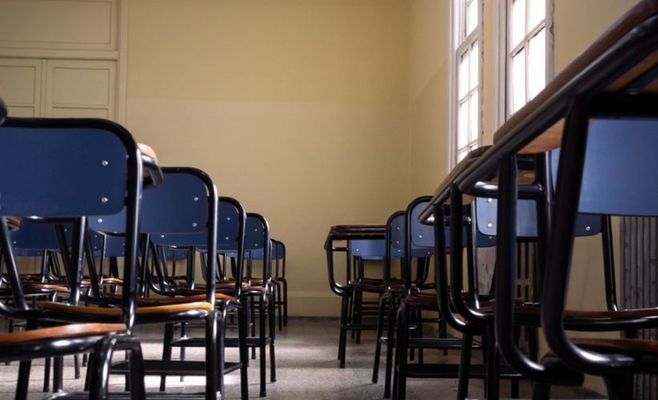
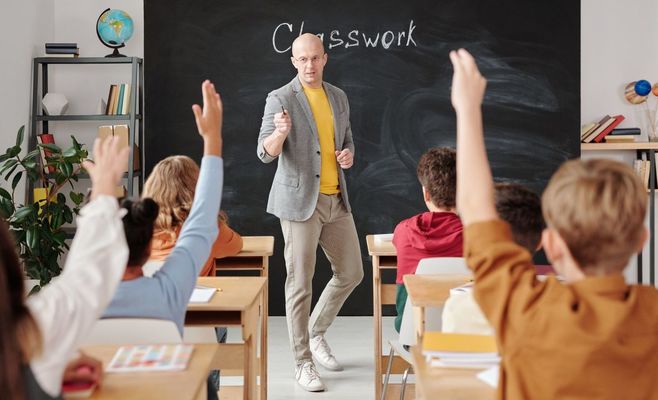
The Czech government led by Prime Minister Andrej Babiš has backed a bill that would completely ban mobile phones in nursery schools, primary schools and the lower grades of grammar schools and conservatories. The ban could take effect from September 2027 and would cover not only lessons but also breaks and after-school care groups.

Under the proposal put forward by the prime minister and Education Minister Robert Plaga (both from the ANO party), pupils would be barred from using phones, smartwatches and tablets throughout the entire school day. Bringing a device to school would still be allowed, but each school would decide for itself exactly how devices must be stored — switched off in a bag, in a locker, or under lock and key. Gadgets could only be used during lessons at a teacher's explicit instruction, with exceptions made for children with special educational needs or medical reasons.

According to the bill's authors, international experience — particularly in France and the Netherlands — points to positive effects from such bans, including improved student concentration and reduced bullying in schools. This is also supported by recommendations from the Czech National Institute of Mental Health.

It's worth noting that the new law wouldn't actually change much for many schools: since 2021, headteachers have already had the right to restrict phone use, and reportedly around half of Czech primary schools have already banned gadgets during breaks, often drawing up their own rules together with students.

The initiative has been criticised by children's ombudsman Martin Beneš, who argues that a nationwide regulation isn't necessary and that the proposal, in his view, was never actually discussed with children themselves — despite the fact that the Ministry of Education runs a dedicated youth panel for exactly this kind of consultation. The ombudsman fears that a blanket ban could sour children's attitudes toward school, which they might start seeing as a place that restricts their freedom without taking their opinions into account.

Parents themselves are divided: some support the measure, arguing that schools should take on part of the educational and disciplinary role, while others point out that a ban only addresses a fraction of a much deeper problem.

Researchers at Masaryk University in Brno analysed data from 21 countries, including Czechia, and concluded that banning phones in classrooms is not a one-size-fits-all solution. According to Libor Juhaňák, one of the study's authors, students genuinely do get distracted less during lessons, but that alone doesn't guarantee better academic results. The ban also showed no significant impact on cyberbullying or children's overall psychological wellbeing.

Even more strikingly, the study revealed an unexpected effect: in schools that introduced a ban, anxiety levels in classrooms actually rose, and students began disrupting lessons more often — the exact opposite of what the Czech government was hoping for. Similar findings emerged from the UK's Smart Schools study: after a strict ban was introduced, children simply started using their phones more outside school, meaning negative effects such as cyberbullying were merely shifted beyond the school gates rather than eliminated.

That said, the researcher stresses that these findings don't mean a ban is pointless — it's simply too blunt a tool for such a complex problem. In his view, schools need to work in parallel on improving relationships among students, engaging with parents, and building children's digital literacy.

The researcher also sketched out a hypothetical scenario: if a phone ban were combined with a ban on social media for the same age group — a topic already being debated in Czechia — it could produce a generation of children who are completely unprepared for the digital world and more vulnerable to developing addictions later in adulthood.

Read also: Prague Castle from the inside: 9 spots within the fortress you shouldn't miss

Around Prague, based on reporting by seznamzpravy.cz
Share: Telegram WhatsApp

More U.S. news

Thomas Markle Indicted on Two Federal Counts: What Happens Next in the Case
A federal grand jury in Los Angeles on Tuesday indicted Thomas Markle, the 82-year-old estranged father of Meghan, the Duchess of Sussex, on two counts of possessing child sexual abuse material, accor
What We Know About the Plane Crash Off Mississippi's Horn Island
The U.S. Coast Guard is searching the Gulf of Mexico off Mississippi for six people, four adults and two children, after a small plane went down Tuesday afternoon. Crews have found wreckage, but as of
O'Hare Outage Update: Ground Stop Lifted, Delay Program Runs Through Tuesday Night
The Federal Aviation Administration has lifted the ground stop at Chicago's O'Hare International Airport, but flights bound for the airport are still being delayed while technicians repair a piece of
Jensen Huang Heads to Capitol Hill After Trump-Backed Return to Nvidia
Jensen Huang's return as Nvidia's chief executive has moved from Wall Street to Washington. He is due to be questioned by three House committees on Dec. 1, according to the BBC, and lawmakers from bot
O'Hare Ground Stop: What the Equipment Outage Means for Thanksgiving Travelers
The Federal Aviation Administration briefly halted flights bound for Chicago O'Hare International Airport on Tuesday because of an equipment outage, then replaced the stop with a short ground delay, a
GTA 6 Project Leonida Collapses After Creator Quits, but Other PC Efforts Go On
Project Leonida, the best-known fan effort to get a leaked Xbox build of GTA 6 running on PC, has gone dark. Its Discord server and GitHub page became inaccessible on Nov. 23, and its creator, who goe

Related news

The weight-loss drug Wegovy in tablet form may appear in Czech pharmacies no earlier than the first quarter of next year. It was approved in Czechia back in July, so according to the State Institute for Drug Control, all that remains is sup
A private primary school, ScioŠkola, for 200 children will be built in Brandýs nad Labem–Stará Boleslav. The town council approved the project in early November. Tuition will cost CZK 130,000–150,000 per child per school year, and the first
Children, students and pensioners in Czechia will keep riding public transport at a 50% discount rather than 75%: Andrej Babiš's government is delaying the promised return of the former discount because the budget is short of money. Even fr
Open days at secondary schools in Prague and the surrounding area let prospective students see a school up close before the 2027 entrance exams. Applications are due from Feb. 1 to Feb. 20, so it is worth choosing a school now. What you can
The reopening of the Pisárek tunnels in Brno after repairs may be delayed: without the client’s knowledge, the contractor asked the regional authority to extend the closure by nine days. The work began in mid-October and was supposed to fin
On Tuesday, Nov. 17, large stores in Czechia will not close: hypermarkets, shopping centers and hobby markets will keep their regular hours. The Struggle for Freedom and Democracy Day holiday is not among the dates covered by the sales ban.
Since November, the mobile information centres of the Prague Integrated Transport system (PID) in the Central Bohemian Region have accepted cashless payments only. In return, people get longer opening hours and more visits, but rights advoc
From Nov. 1 to the end of March, drivers in Czechia need winter tires or all-season tires with the “Alpine symbol” — a mountain with three peaks and a snowflake on the sidewall. On-the-spot fines can reach 1,500 crowns, and after a serious
On the evening of Monday, 2 November, social service workers walked through Plzeň with candles from the main railway station to the spot where a homeless woman died two years ago. It was their way of drawing attention to the disastrous cons
The Czech Ministry of Labour and Social Affairs (MPSV) wants to scrap the child-rearing pension supplement (výchovné) entirely from 1 January 2027 and replace it with a notional income for the time spent caring for a child. MPs passed the c
The law on the so-called child certificate, due to take effect in Czechia in January 2027, has drawn criticism from lawyers. They support the underlying idea of better protecting children from people convicted of serious crimes, but argue t
On Tuesday, 3 November, traffic in central Prague will be severely restricted: student marches are due to start at around 2 p.m., and at 4:36 p.m. a rally in support of Czech Television and Czech Radio begins on Wenceslas Square. Police adv