Burning Ostrava landfill case: firm had been fined before, Czechia
USD 21,81
Popular
In early July, the Ministry of the Environment, led by Igor Červený (Motorists for Themselves), ended its investigation into who had dumped hundreds of thousands of tonnes of waste on the site of a former coal mine in Ostrava. For several years the local firm Ridera Bohemia had been under suspicion. Once the suspicion was lifted, it immediately declared that the accusation had been false and that it had always followed the rules during work on the Heřmanice landfill.
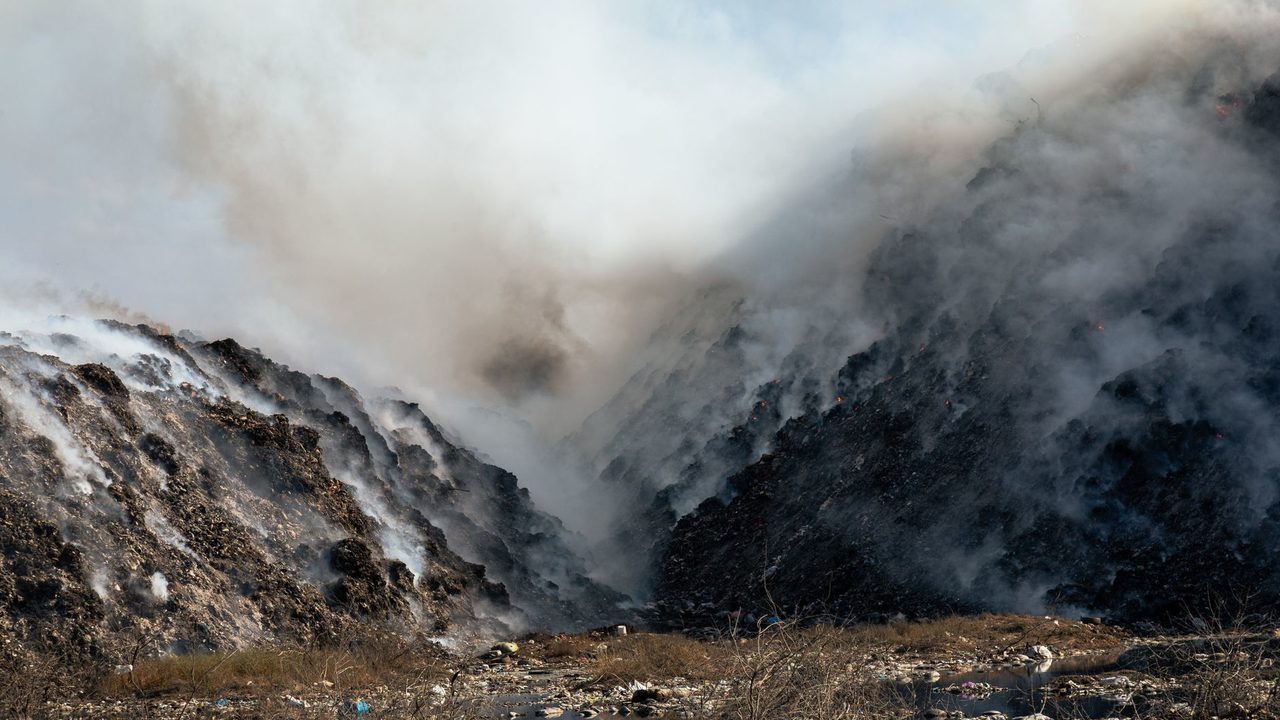
The landfill is on fire and faces an environmental disaster. As a journalistic investigation has revealed, during its work on this hundred-hectare landfill the firm was fined twice, and both fines were for breaking the law on waste handling.
First fine: concrete with rebar
Already at the first inspection in 2017, the Czech Environmental Inspectorate (ČIŽP) found construction waste in the dividing wall. According to the inspectorate, loads of demolition and construction waste that had not been broken down by crushing had been mixed into the body of the landfill: huge chunks of concrete with rebar, whole bricks or a mixture of both. The inspectors called this a violation and imposed a fine of 20,000 crowns. In theory, the law allows a fine of up to 50 million. The firm did not object to the findings of the inspection.
Second fine: crusher and waste records
The inspectorate imposed the second fine in 2020. The firm had a waste crusher on the landfill, for which it must keep records of which waste was processed, when and in what quantity. The data did not add up during the inspection: the records, for example, claimed that processing was under way at a certain time, although other information showed the unit was not running then. The violation concerned roughly three thousand tonnes of waste. Although the fine was only 10,000 crowns, the inspectors stressed that they did not regard it as an ordinary oversight, because the environment had been put at risk.
In a new statement, the firm called the violations purely administrative, which, it says, is also confirmed by the symbolic size of the fines. Company representative Eva Kijonková said that over all eight years of construction the wall was thoroughly checked by the state-owned enterprise Diamo and by state authorities, and that illegal waste handling would have been detected, but this did not happen. Board chairman Roman Rogel had said earlier that state inspections always ended “without serious remarks”. The firm attached five expert opinions to its response. According to the VŠB – Technical University of Ostrava, the material in the wall is incapable of carrying combustion from one part of the landfill to another. Experts from the Silesian University of Technology in Gliwice confirmed that the material meets all standards.
How the ministry closed the case
The inspectorate investigated the main part of the case, that is, hundreds of thousands of tonnes of waste in the dividing wall, until February of this year. Then the superior ministry took the case away from the inspectorate shortly after Minister Červený took office. The firm itself had asked for this, claiming that the inspectorate was handling the case in a biased and unprofessional manner. In July the ministry ruled that it was impossible to identify the culprit and that there was no convincing evidence against Ridera Bohemia. It found the photographs and expert opinions on the waste discovered unconvincing, and it blamed the inspectorate for an investigation that lasted more than three years instead of the prescribed three months.
The inspectorate’s new leadership also stopped the expert tests that had already begun, which were meant to establish what lies deep inside the wall and whether the material can burn. The ministry’s decision removed the threat from the firm of having to haul hundreds of thousands of tonnes of waste out of Heřmanice, which was estimated to cost billions of crowns. Whoever brought the waste to the landfill without paying fees or completing other formalities could have earned anywhere from hundreds of millions to a billion.
Journalists also described what went on behind the scenes of the decision: official Tomislav Střelec copied whole passages into his ruling from the firm’s defence, which it had sent shortly before, while the document itself had reached him already finished from his superior. The ministry responded that this is common practice.
Source: seznamzpravy.cz