Technology By

Nuclear explosion in space: what happens to satellites and Earth
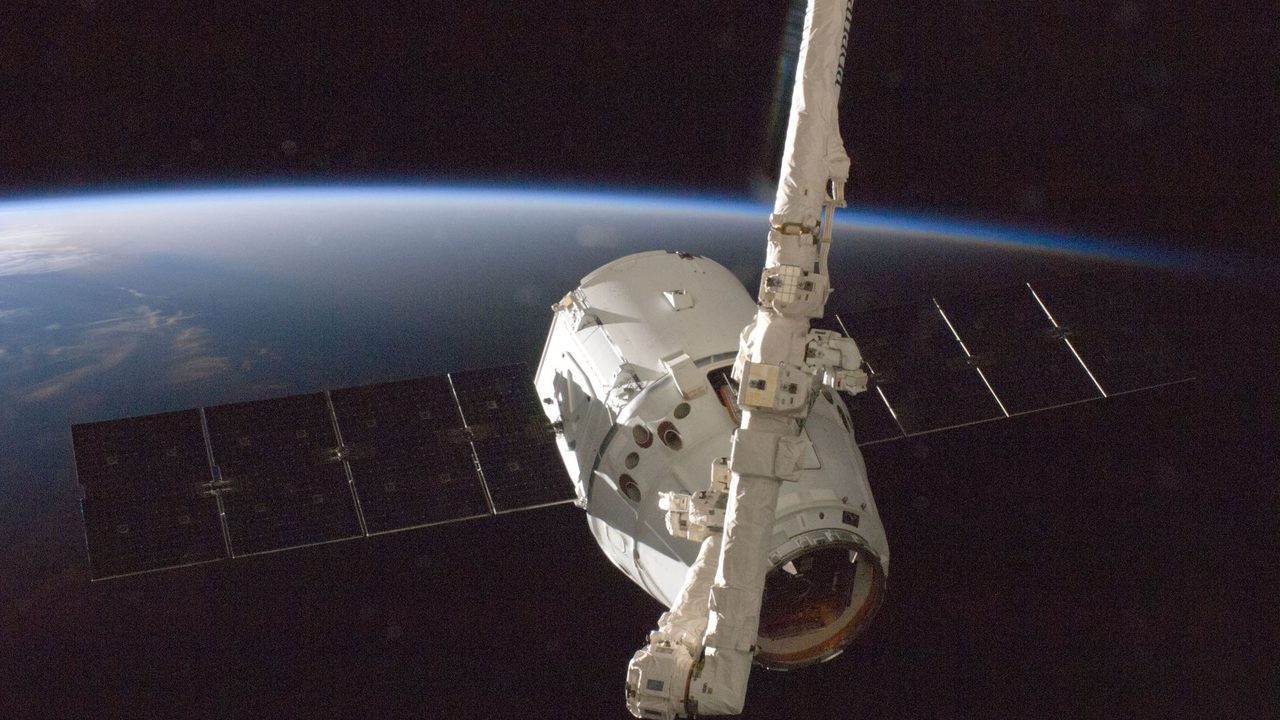
Nuclear blast in orbit: what it would do to satellites, Starlink and communications on Earth

A nuclear explosion in orbit could knock out satellites within a radius of thousands of kilometres and create a new artificial radiation belt around Earth. Astrophysicist McDowell and Keith Ryden, professor of space engineering, told British media about a hypothetical scenario in which Russia detonated a nuclear warhead in space.

The two main consequences

According to McDowell, there would be two consequences. Everything near the blast could be hit by X-rays and other radiation, which can damage or disable satellites within thousands of kilometres. In addition, particles released by the explosion could become trapped in Earth’s magnetic field and form a new radiation belt similar to the Van Allen belts. These are two regions around the planet where high-energy charged particles accumulate.

Experts recall 1962, when the United States detonated a thermonuclear bomb about 400 kilometres above Earth’s surface, in low orbit. The operation was called Starfish Prime. There were far fewer satellites then, but the lifespan of many of them was shortened. According to McDowell, for several months at least half of the satellites operating in orbit at the time were exposed to heavy radiation.

Who would be hit

Satellites in low Earth orbit are particularly vulnerable to sudden spikes in radiation, explained Ryden, who teaches at the University of Surrey. The natural level of radiation there is relatively low, so the spacecraft are not designed for high doses, and an unexpected increase is dangerous for them.

There are about 17,000 satellites in low orbit, used for weather forecasting, climate monitoring and military purposes. Elon Musk’s Starlink network also operates there and plays an important role in supporting Ukraine as it repels the Russian invasion, as does the International Space Station, in which Russia is a partner. Satellites used for television broadcasting, GPS and other communications sit in higher orbits, so the direct consequences for them would be different.

What it would mean on Earth, and for how long

If an explosion did occur, it would take years to restore operations in the affected zone. McDowell estimates that it would take anywhere from several years to ten years for the trapped particles to disperse from the radiation belt. Ryden added that the space industry would not be able to quickly build and launch so many new spacecraft.

In 1962, street lights went out in Hawaii beneath the blast site, burglar alarms went off and telephone service was lost. McDowell allows for disruption to computers and electronics wherever the explosion would be visible. Ryden noted that the tests of the time were carried out over sparsely populated areas: much depends on where the blast takes place. That explosion also produced bright auroras, with the sky turning green, yellow and red. According to McDowell, the auroras would be enormous and the explosion would not go unnoticed.

How realistic is it

One European security official believes Russia is unlikely to take such a step: it would hurt Western economies, but also Russia itself, and would probably damage not only Russian but also Chinese satellites. “It would be like shooting themselves in the foot,” he said. In his words, Moscow’s threats to use nuclear weapons against Ukraine or the West have often turned out to be a bluff, and the same now appears to be happening.

McDowell called such a scheme a “stupid idea”: Russia would commit an act that would be seen as an act of war.

Around Prague guide on the topic: Погода в Праге на сегодня, завтра и 10 дней

Around Prague, based on reporting by novinky.cz
Share: Telegram WhatsApp

More science news

A Spacecraft Just Reached Mercury After an 8-Year Trip. Science Starts in April
The joint European-Japanese BepiColombo spacecraft has entered orbit around Mercury, according to Universe Today. Mission leaders said it completed its orbit insertion on Nov. 21 at 18:27 UTC, making
A Baby Star's Giant Dust Rings Aren't All Made by Planets, New ALMA Analysis Finds
The rings and gaps in the dust disk around a young star called V1094 Scorpii do not all come from newborn planets, according to a new analysis of existing data from the ALMA telescope array in Chile.
A Nuclear Rocket to Ceres Could Reach the Dwarf Planet in a Little Over a Year
A proposed mission would send a nuclear-powered spacecraft to the dwarf planet Ceres, land there, pull water out of the ground and bring samples back to Earth. The idea, reported by Universe Today, co
How Scientists Track a Fireball With Satellites, Sound Waves and Radar
When a bright fireball streaks across the sky, witness reports are only the start. Fireball sightings in Michigan, Ontario and Ohio on a recent Wednesday night were logged with the American Meteor Soc
Four Giant Tunnels May Be Hiding Under the Moon's Surface
Four spots on the Moon may hide huge underground tunnels carved by ancient lava, according to a new analysis of the Moon's gravity. Each candidate tunnel is less than 2 kilometers wide and sits beneat
Balls on a Curved Ramp Always Land Together. Atoms Can Too, a Preprint Says
A ball released anywhere on a specially curved ramp will reach the bottom in the same time. Physicists now say quantum particles hopping through a row of sites can behave in a similar way, according t

Related news

New evidence of possible smuggling of Nvidia chips into China has increased pressure on Jensen Huang, who has returned as the company’s CEO, just days before his scheduled appearance in the US Congress. According to Bloomberg, a data center
Scientists at Rice University in the U.S. have created synthetic graphite that can be made in 0.2 seconds with an electrical discharge. An anode made from it lets a lithium-ion battery charge so fast that a full charge takes four minutes.Gr
Spotify has still not announced a date for Wrapped 2026, according to JubileeCast, which says the yearly listening recap is widely expected on Wednesday, Dec. 2. The date is a prediction based on past launches, not a promise from the compan
Spotify has still not announced when Wrapped 2026 will arrive, but the yearly recap has already become a subject of its own. The history helps explain why the release is so closely watched. El Constitucional reported that thousands of users
The US Federal Communications Commission (FCC) has authorized Elon Musk's SpaceX to put up to a million satellites into orbit to operate as data centers processing vast amounts of data. The regulator announced the decision in a press releas
Spotify has still not announced a release date for Wrapped 2026, but its own website now signals the annual recap is close. Outlets that track the launch say it is most likely to land between the last week of November and the first week of
Spotify has not announced the release date of Wrapped 2026. Its newsroom post of 5 November only says "Wrapped season is almost here". Based on the past five years, the most likely date is Wednesday, 2 December 2026, with Wednesday, 9 Decem
If you fly to Prague this winter, two small things decide how smooth the first hour is: whether your phone has data when you land, and whether the power bank in your bag is allowed on the plane. Both have rules that changed recently. Here i
Security experts say the AI-driven break-in at Bell is likely a preview of attacks to come, as the Canadian telecom company continues to notify customers whose data may have been exposed, CBC reported. Some of those notices are reaching peo
Physicist Ariel Zhitnitsky of the University of British Columbia (UBC) and his colleagues have proposed a new explanation for dark energy: it may originate in the strong nuclear force that holds quarks together inside protons and neutrons.
Bell, one of Canada's largest telecommunications companies, says customers across several of its brands were affected by a cybersecurity incident on Nov. 17. According to CBC News, a Bell spokesperson said the affected brands are Bell, Bell
The US Air Force is looking for suppliers of old-format memory cards for F-22 Raptor fighter jets. It published the request earlier this week on the federal procurement portal SAM.gov. Two options are acceptable: a PC Card, the kind that us