Flying to Prague This Winter: eSIM, Roaming and Power Bank Rules
USD 22,28
Popular
If you fly to Prague this winter, two small things decide how smooth the first hour is: whether your phone has data when you land, and whether the power bank in your bag is allowed on the plane. Both have rules that changed recently. Here is what applies in November 2026, and what we could not confirm.
Staying connected: three cases
You live in the EU or EEA. Czechia is inside the "roam like at home" area, so your home plan's calls, texts and data should work here at domestic prices. The limit is the fair use policy: the scheme is for temporary travel, and operators can check your use over a four-month period. Living in Czechia on a foreign SIM would count as permanent roaming. The EU has also extended the scheme to 2032, and Moldova and Ukraine joined the area on 1 January 2026.
You live in the UK. The UK is no longer covered by the EU rules. Most big UK networks brought back daily EU roaming charges, often with a data cap. A price comparison site lists roughly £2 to £2.60 a day at EE, Three and Vodafone, while O2 still offers EU roaming within a fair use cap. Treat those figures as indicative and check your own tariff before you fly.
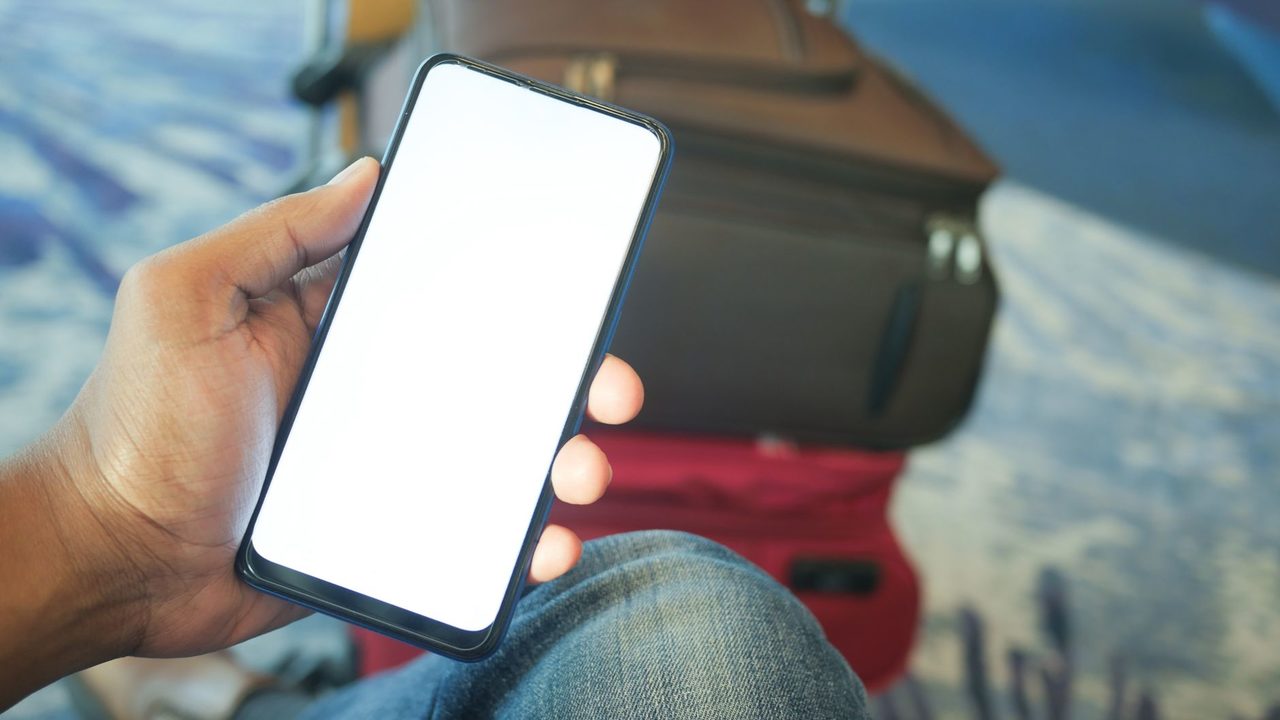
You live in the US or elsewhere. Carrier day passes are the simplest option but add up. LatestGadget's guide to using an eSIM when traveling puts typical US carrier passes at around $12 a day, against a few dollars to about $10 for small travel data eSIM packs. For a week in Prague, a data eSIM usually costs much less, though it normally gives you data only and no local phone number.
How to set up an eSIM before you fly
- Check that your phone supports eSIM and is carrier-unlocked. A locked phone only accepts its own carrier's profiles.
- Buy the plan and install it at home over Wi-Fi, a day or two before the flight.
- Keep your main line on for calls and texts, but switch mobile data to the travel eSIM.
- Turn data roaming off on your home line so it does not bill you, and turn it on for the travel eSIM if the provider asks for it.
Our guide to eSIM and mobile internet in Czechia covers the local side: which networks cover the city and where to get a local SIM if you stay longer.
Power banks on the plane
The basic limits are the same across most airlines. A power bank must travel in your carry-on, never in checked luggage. Banks up to 100 Wh need no approval. Banks between 100 Wh and 160 Wh need the airline's approval, and anything above 160 Wh is not allowed on passenger flights. International aviation guidance also limits passengers to two power banks.
The capacity printed on the case is usually in mAh, not Wh. The conversion is Wh = mAh x voltage / 1,000, with cell voltage of about 3.6 V. A 20,000 mAh bank holds about 72 Wh, so it is fine. A 27,000 mAh bank is roughly 97 Wh, which is close to the limit. LatestGadget's power bank buying guide has a size table if you want to check your own.
| Power bank | Approx. energy | On a flight |
|---|---|---|
| 10,000 mAh | about 36 Wh | Allowed, carry-on |
| 20,000 mAh | about 72 Wh | Allowed, carry-on |
| 27,000 mAh | about 97 Wh | Allowed if labelled under 100 Wh |
| Over 27,000 mAh | over 100 Wh | Airline approval needed up to 160 Wh; banned above |
Using the bank during the flight
This is where airlines now differ, and where passengers get caught out. In-flight rules have tightened since late 2025.
- Lufthansa Group (Lufthansa, Swiss, Austrian, Brussels Airlines, Eurowings): the group's rules from 15 January 2026 limit passengers to two power banks and ban using or charging them on board. This comes from the group's own notice as shown in search results; the page itself would not load for us.
- Ryanair: its help centre says a power bank must not be recharged on board. We could not load a page that states whether you may use it to charge your phone, so check before you fly.
- Wizz Air: a third-party guide says use is not allowed in any phase of the flight and that one bank per passenger is allowed. We could not confirm that on Wizz Air's own pages.
- Smartwings and Czech Airlines: we found no official page. A third-party guide lists Smartwings at 100 Wh, 160 Wh with approval, and two banks. Treat that as unconfirmed.
Industry guidance from IATA is expected to bring similar rules to most airlines worldwide from January 2027, so the safe habit is to charge everything before boarding and keep the bank in a pocket or seat bag, not an overhead bin, where you can reach it.
A simple checklist for Prague
- Install the eSIM before leaving home, or confirm your plan's roaming terms.
- Check the Wh label on every power bank, and bring no more than two.
- Read your airline's current battery page the day before you fly.
- Download offline maps of Prague as a backup.
FAQ
Can I use my US phone plan in Czechia? Usually yes, but it is billed under your carrier's international terms. Check the daily pass price first.
Is a power bank allowed in checked baggage? No. Lithium batteries must go in the cabin.
Do I need an eSIM if I have an EU plan? No. Roam like at home should cover you for a normal trip.
Around Prague, based on reporting by Your Europe (European Commission), Lufthansa Group, Ryanair Help Centre, NimbleFins, LatestGadget, LatestGadget