"There's nowhere left to return to": how Russian bombs turned the town of Oskil into a dead zone
USD 21,62
Popular
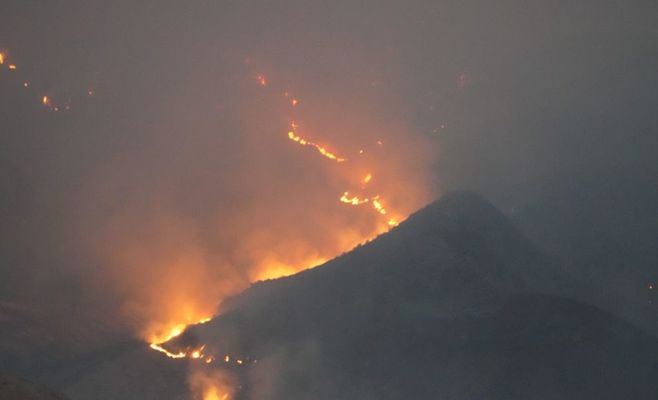
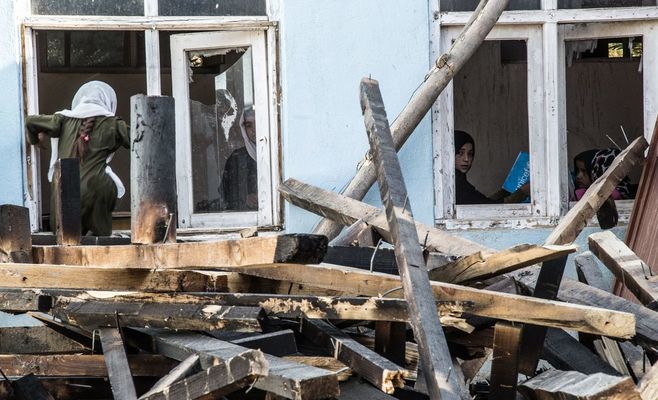
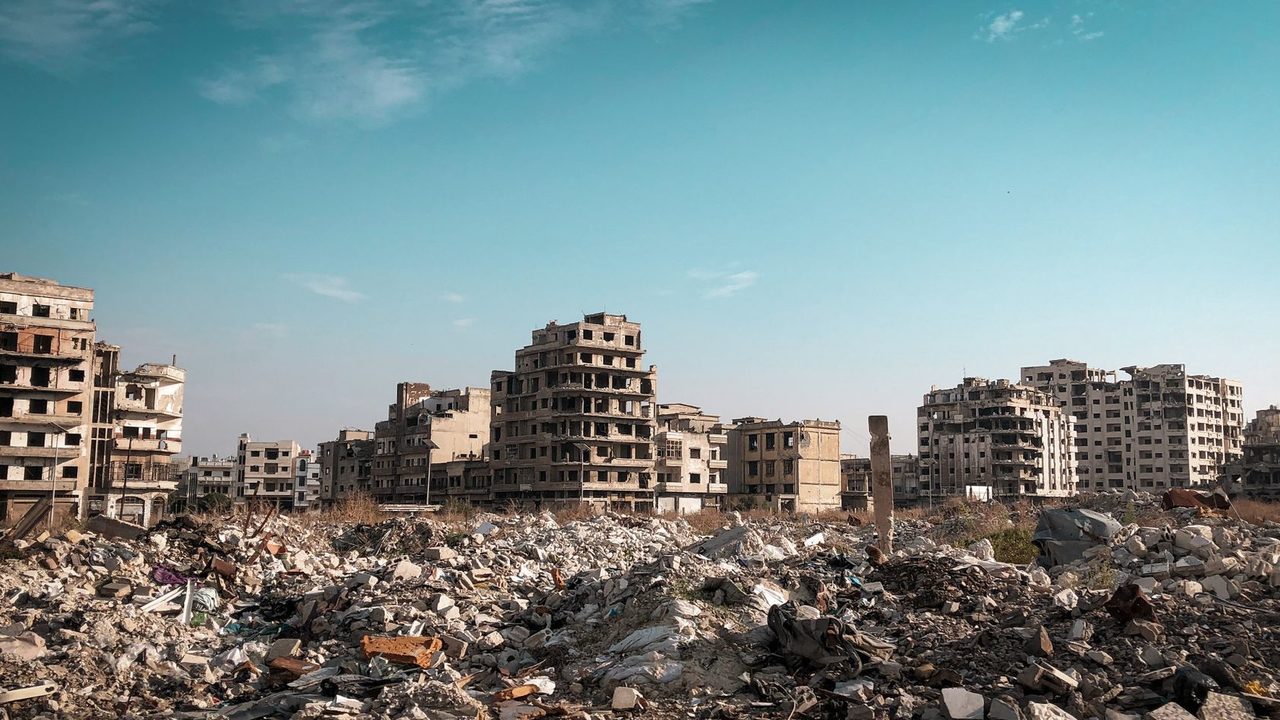
Russian aerial bombs and strike drones have turned the frontline town of Oskil in Ukraine's Kharkiv region into a zone where residents have nowhere left to return to: the local school, where just a year ago children were training in football, has been destroyed by a direct hit, while nearby houses and fields are pockmarked with craters from explosions.
The road under drone attack
Our guide — the commander of the local military administration and husband of Natalia, the director of Oskil's school — drives with total focus, trying to move as fast as possible. He has to watch not only the road but the sky as well: in this area, Russian strike drones deliberately hunt civilians and cars. Permission to reach Oskil was obtained during a lull between shelling, which is why the haste is justified.
Along the way we pass the freshly burned-out husks of cars and military vehicles — anti-drone cages welded onto the hoods on all sides and shielding the roof with signal jammers clearly did not save them. "This one's from a recent strike, it wasn't here last time," Natalia says, pointing to a pile of wreckage at the edge of a field. Beside the remains of a house gapes another explosion crater, from which withering clusters of dark-blue grapes still protrude.
The road from Kapytolivka to Oskil is partly covered by tunnels of netting — protection against lightweight FPV drones. Over the whole trip we encounter only two military vehicles and one elderly pedestrian on foot. Scorched holes in the netting show just how unreliable this kind of protection really is. In the distance, two explosions sound one after another — the sound of KAB guided bomb strikes, which usually come in pairs. The car doesn't slow down: the blasts went off far enough away that even a stork circling above, in the car's shadow, doesn't break its flight. It, too, has grown used to this. Forests stretch out on either side, and between them lie sunflower fields with heavy, ripe heads bowing toward the ground. "Who's going to harvest these fields?" Natalia asks her husband. "Who's going to harvest them," he answers.
How the town came back to life after liberation — and emptied out again
Just a year ago, Oskil — as much as that's even possible under martial law — remained a picturesque little town on both banks of the river that shares its name. The town came back to life after the Russian occupation ended in 2022: life returned here quickly, despite the deep, bloody wounds left in the memory and fates of local residents, some of whom had been killed or tortured.
On Natalia's initiative, local children at the school began playing football at a serious, competitive level — an expression of hope for a better future and an unquenchable hunger for life, freedom and peace. Dozens of children of every age, boys together with girls, trained almost every day and eagerly awaited the yellow school bus that would take them to matches against other school teams in Izium and Sloviansk. Their parents were fighting, and some had already died defending their homeland. Other children's parents had been convicted as collaborators with Russia, implicated in denunciations and the executions of local residents that followed. Thanks to the training sessions, the children ate a proper meal at least once a day — Natalia and the coach made sure of that.
A school with nothing left but its walls
Today there are no children in Oskil. Nor is there a school left — we drive past the building at the very moment it becomes clear that after a direct hit from a KAB guided bomb, only the outer walls remain standing. Just last year, during breaks in football training, the schoolchildren used to carry new computers, 3D printers and the most modern equipment down into the basement classrooms — donated by humanitarian organizations and volunteers, some of it brought in from Kharkiv.
We can't get a photo of the school: the car doesn't stop, it's simply too dangerous right now. Maybe on the way back. Natalia's eyes well up with tears.
Source: novinky.cz