Ukrainian Intelligence: Russia Has Over 1,500 Long-Range Missiles, Including North Korean Ones with 2.5-Ton Warheads
USD 21,74
Popular
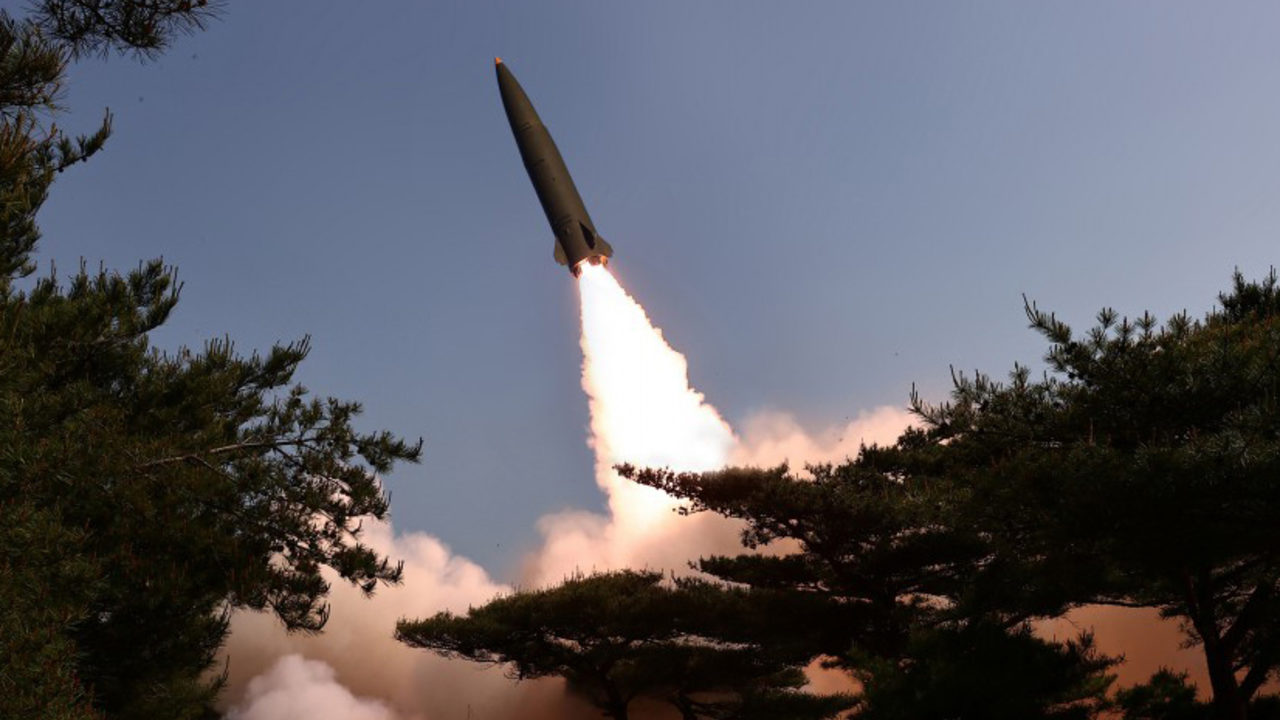
According to Ukrainska Pravda, Russia has a total arsenal of more than 1,500 missiles of various types capable of striking Ukraine, including 50 North Korean ballistic missiles. These include the already-used KN-23 and KN-24, as well as a new model, the KN-30, about which little has been reported so far.
All of these missiles belong to the same family of North Korean short-range ballistic missiles, the Hwasong-11. In the West, the KN-30 is designated Hwasong-11C, the KN-23 as Hwasong-11A, and the slightly shorter KN-24 as Hwasong-11B. There are also submarine-launched variants and scaled-down versions for multiple rocket launch systems.
A More Powerful Warhead
According to the Ukrainian outlet Militarnyi, the KN-30 is a single-stage, solid-fuel missile that flies on a depressed ballistic trajectory. However, its warhead is significantly more powerful: North Korea claims a payload of 2.5 tons, though this figure has not been independently verified.
Pyongyang had previously claimed the KN-23's warhead could weigh up to 1.5 tons, but in practice, missiles with a payload of around half a ton — comparable to Russia's Iskander-M — have been used. Notably, the KN-30 is considerably larger than other missiles in the Hwasong-11 family: it measures 10 meters in length with a diameter of 1.26 meters, compared to the KN-23's 8.7 meters in length and 1.1-meter diameter — indirectly suggesting a heavier payload.
The KN-30 was first tested in March 2021, when it demonstrated a range of roughly 600 kilometers — somewhat farther than its counterparts. However, launching it requires larger launch platforms.
North Korean missiles have traditionally lagged behind Russian ones in accuracy and reliability. According to Reuters, nearly half of the KN-23 missiles used in early 2024 either failed to reach their targets or malfunctioned. Upgraded versions, however, are expected to be more precise.
Hundreds of Missiles in Stockpiles
Ukrainian intelligence reports that Russia's largest stockpile consists of Oniks anti-ship missiles, adapted for strikes on ground targets — around 600 units. There are also 450 Kalibr cruise missiles, though Ukrainian air defenses regularly intercept them. Russia is estimated to hold 120 Zircon hypersonic missiles and roughly 100 Kh-101 air-launched missiles.
Ballistic missiles pose a particular threat, as Kyiv currently has almost no defense against them due to a shortage of interceptors for its Patriot systems. Russia's largest ballistic arsenal consists of RM-48U missiles, launched from S-400 systems — reportedly based on target-practice missiles with a range of 200 km and a warhead weighing nearly 200 kg. Ukrainian intelligence estimates there are around 470 of these. In addition, Russia is believed to have 130 Iskander-M missiles with a 500 km range and about 50 air-launched Kinzhal aeroballistic missiles.
Read also: Prague Metro: map and tickets
Source: novinky.cz