A hundred million clients is my polar star, says Partners founder
USD 21,65
Popular
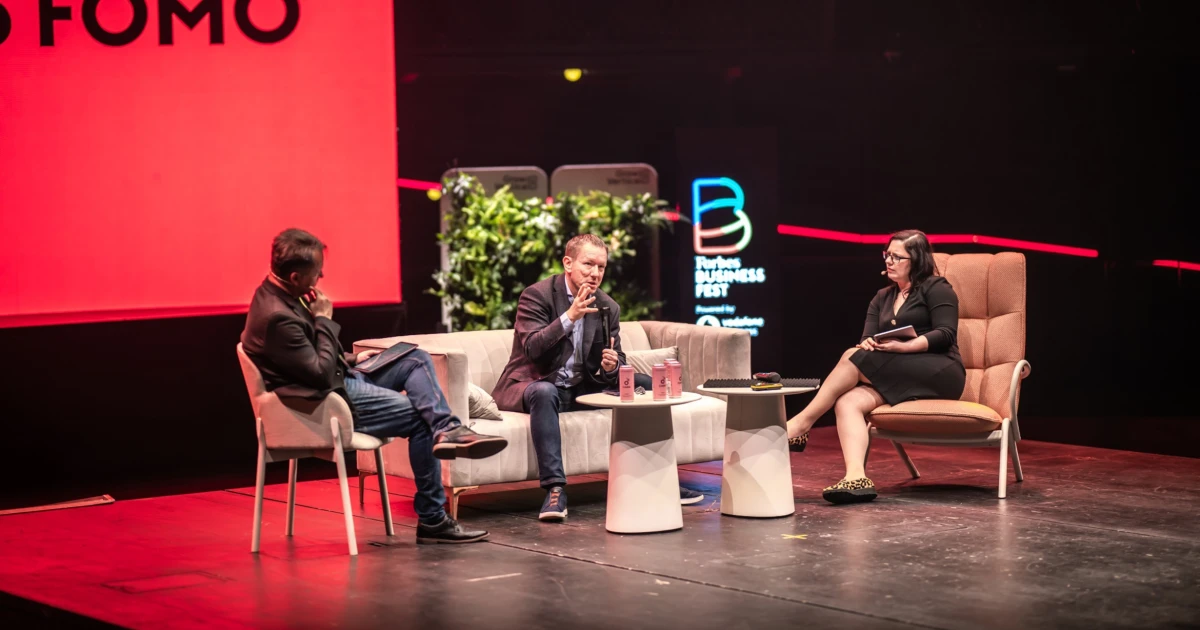
At the Forbes Business Fest, Petr Borkovec, founder of the financial group Partners, spoke about his bank, technology and an ambitious goal — serving a hundred million clients around the world. According to him, it is precisely this long-term goal that shapes all the company's strategic decisions today.
“By the time I'm 70 or 75, I want to have a hundred million clients whose financial lives we take complete care of,” Borkovec shared. He admits the figure itself sounds almost fantastical, but it isn't an end in itself — rather a reference point, a kind of “polar star” against which every important decision in the present is checked.
This same logic underpinned the creation of Partners Banka. According to Borkovec, the idea of having its own bank had for years been part of the group's corporate strategy. Partners gradually built an investment company, an asset management arm, and insurance and pension companies — a bank fit naturally into that picture from the very start. The goal was to give clients complete control over their finances in one place: “We knew that a client's financial life isn't made up only of investments, but also of how they spend, or don't spend, their money. If that part is missing from our service, it's incomplete.”
Many considered the plan to launch a new bank reckless. “Executives at other banks still tell me that today,” Borkovec notes with a smile. But he says a far more interesting mistake made by traditional banks is underestimating what it means to build technology “from scratch”: “We're in a completely different place technologically.” While established institutions run on systems built up over decades, new players can design their processes from day one around today's customer needs.
The hardest part, Borkovec admitted, was not regulation, capital or technology, but merging Partners' culture with people who came from a traditional banking background. “Culture at many banks simply isn't ideal. There's a laid-back attitude, bloated staffing, too much formalism,” he believes. Partners was used to small teams, fast decisions and high personal responsibility, whereas the bank needed a larger-scale structure and experienced managers from big institutions. He called the clash of these two worlds one of the hardest stages of the project — and only once the team had stabilised did the advantage of building a bank from scratch fully show itself.
Borkovec stressed that such ambitions must not be built by burning people out: “I don't want to put pressure on anyone. I can only want two things — for everyone to do their best while living a happy, fulfilled life, and for everyone to keep learning.” He devoted a significant part of his talk to learning, admitting that for years he invested above all in his own development, while today helping the people around him grow matters more to him.
Linked to this is an internal concept he calls “Mickey Mouse”: every new project should strengthen the other parts of the group while also drawing strength from them. The bank should support investments, investments should strengthen the bank, and expansion abroad should raise the value of the technology and other services. In Borkovec's view, it is precisely this synergy between the group's parts that will determine whether a truly global financial group can be built. Looking back on more than twenty years of Partners' growth, he speaks not of financial results, but of time — the most valuable resource any entrepreneur has.