From motocross to a Czech construction empire: Petr Vesecky
USD 21,66
Popular
Petr Vesecký spent twelve years travelling the world as the personal mechanic of freestyle motocross rider Libor Podmol, before unexpectedly swapping his wrench for construction machinery. Today his company Stavosil builds bypasses and motorway sections, earned around 200 million crowns last year, and is aiming for half a billion in revenue this year.
He got his first motorcycle cage from his father and grandfather at the age of six or seven, later started riding himself, and then became the "backyard" mechanic for the well-known freestyle motocross rider Libor Podmol. The next twelve years were spent on the road: living in the US, winters in Spain, trips to Russia, China, Australia, Brazil, Namibia and Saudi Arabia, and two runs at the Dakar Rally. But one day it became clear he couldn't keep going like that. "To hell with it, I'll just do something else" — that's how Vesecký remembers the moment he decided to trade motocross for a construction business of his own.
There were several reasons: freestyle motocross had started to stagnate, he saw no prospects for growth, and meanwhile his wife was expecting a child and they were building a house. The prospect of spending most of the year on the road and seeing his daughter only in snatches turned out to be worse for him than walking away from the career he had built over twelve years. During those years he had also lived through Podmol's serious injuries more than once — fractures, broken bones, concussions — including a crash at the 2020 Dakar, after which Vesecký spent one night, until three in the morning, rebuilding his partner's motorcycle so the two of them could finish the race together.
Vesecký had actually gone into business back in 2011, when, at eighteen, he flew to Los Angeles with just two bags of belongings. At a gas station he bought an old car from a local seller for 1,500 dollars and started bringing vintage cars and motorcycles back to Czechia. A few years later, travelling through Florida, he spotted an unusual machine — an asphalt paver — and decided to buy it and bring it to Europe, even though at the time he had no idea what he'd actually do with it. Orders began to come in, and with them came new equipment: a trailer, a truck to pull it, and later an excavator.
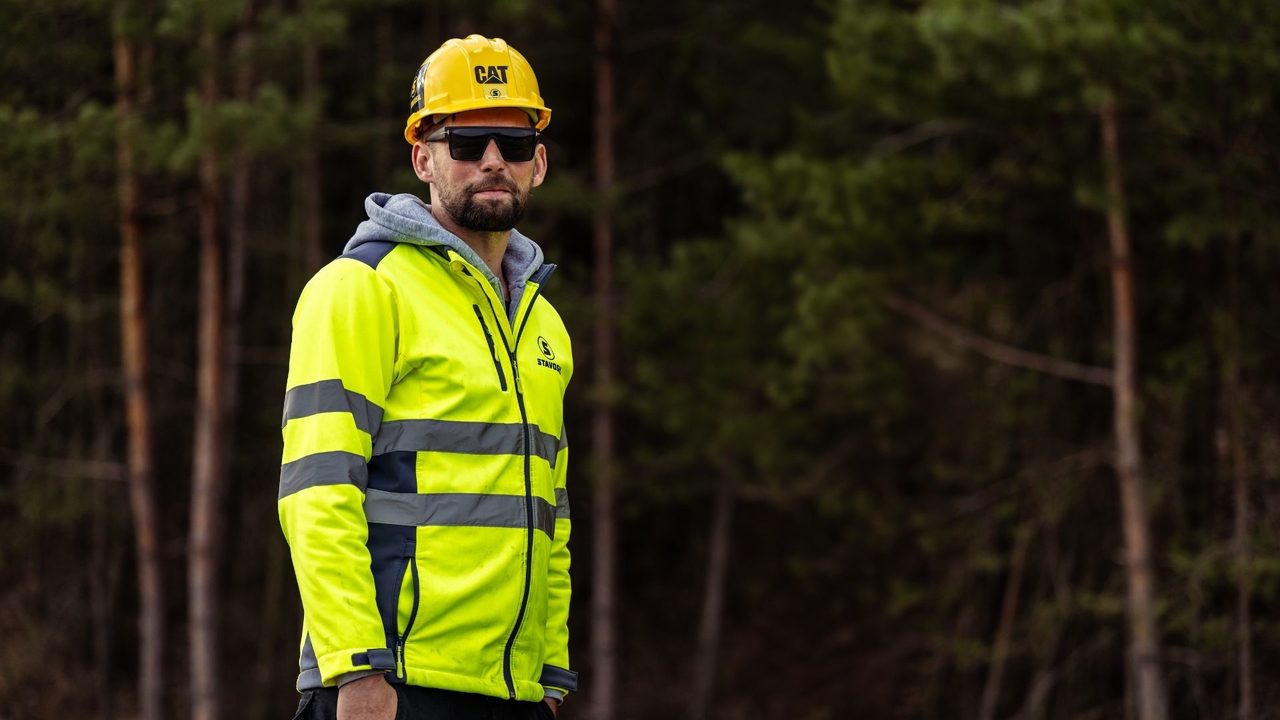
Today the company's fleet includes around forty excavators, thirty trucks, ten bulldozers and eight rollers. Stavosil employs around 80 people. Vesecký landed his first major contracts as a subcontractor, and the project in Olbramovice earned the company a reputation that let it compete for new tenders. He gradually added the necessary certifications, invested in machinery and infrastructure, and started taking on entire projects himself.
Among the completed projects are the finishing of the bypass around the town of Lišov and work on several sections of the D3 motorway in South Bohemia. Seven building sites are currently running at once: earthworks for a Kaufland store in Hradec Králové, a development project in Velké Přítočno near Kladno, and an eight-kilometre stretch of road near Martiňovice close to Mladá Boleslav. The whole contract is valued at 1.2 billion crowns, of which around 300 million falls to Stavosil's share.
The company currently works mainly in the Central Bohemian and South Bohemian regions, but Vesecký is planning to expand into the Hradec Králové region and then into Austria. "Within five years I want to be working across the whole country," the entrepreneur says confidently. This year Stavosil has invested around 80 million crowns in new equipment, including a fully autonomous road roller currently being tested at the site near Martiňovice: using GPS, the machine follows a set route to within a centimetre's accuracy, turns, moves forward and backward on its own, and detects obstacles and people in its path.