How lighter wines helped justWINE hit 150 million crowns in Czechia
USD 21,68
Popular
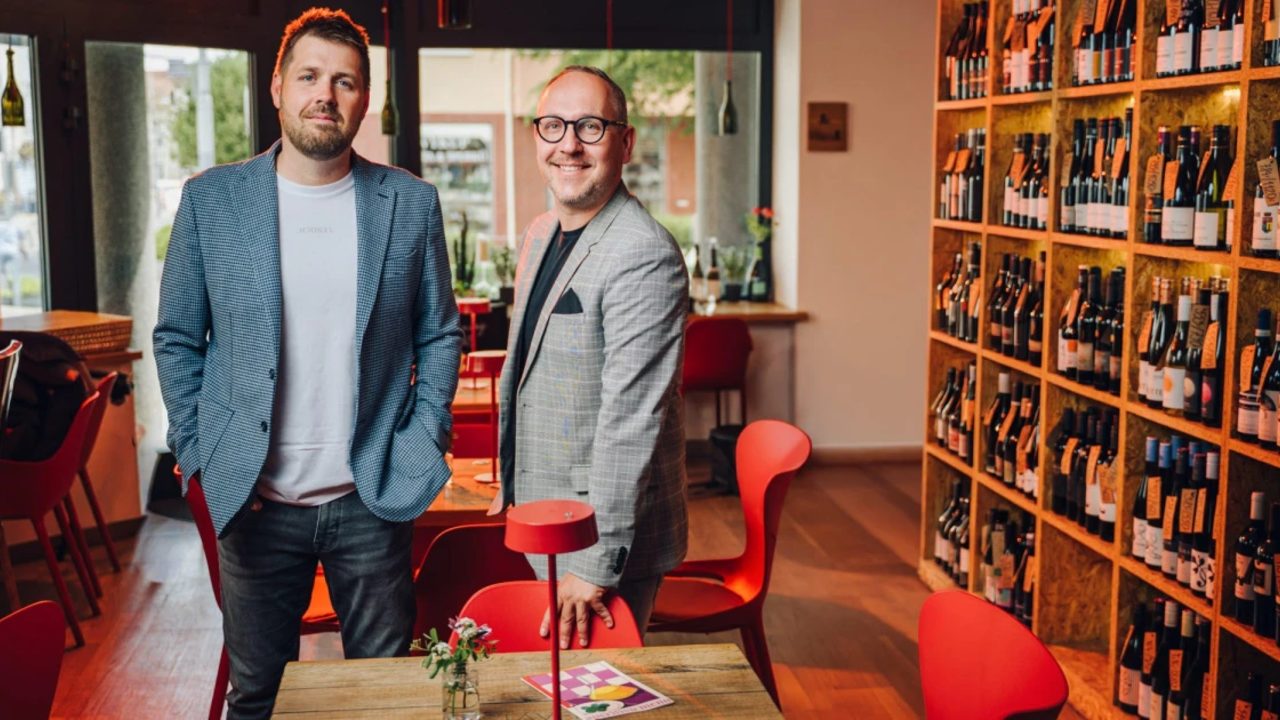
Eleven years ago, Zdeněk Vrána and Tomáš Látal opened a modest wine bar in Brno, mainly so they would have somewhere to entertain partners from their main business at the time — designer accessories. Today their company, justWINE, runs three venues in Brno, supplies wine to a thousand restaurants and several Czech retail chains, and expects to reach a turnover of 150 million crowns this year.
The bar turned out to be such a success that the two partners decided to focus entirely on wine. “Back then there were plenty of wine shops selling wine of dubious origin, or places that came across as overly snobbish. We wanted a bar like the ones we’d seen on our travels around Europe — more modern, more open, pouring wine that had a story behind it,” Vrána recalls of the project’s modest beginnings.
Today the main driver of growth for justWINE is retail: more than 60% of all wine in Czechia is sold through supermarkets. “We don’t really care whether a bottle costs 2,000 crowns or 100. We look for wines with character, ones that are well made and live up to what the winemakers say about them. You can find that even among inexpensive, easy-drinking wines,” explains the company’s co-owner and CEO.
According to Vrána, the market is currently being reshaped by several new trends. Interest in natural wines is growing — wines made with minimal technological intervention, spontaneous fermentation and little or no added sulphur. Among the best Moravian producers of such wines, he names Krásná hora, Koráb Živá hora and the internationally celebrated winemaker Milan Nestarec. The trouble is that there is no single certification for natural wine, and labels such as “raw” or “wild” are often used by producers who have nothing to do with natural winemaking. “That’s why, when choosing a wine, it matters to know the winemaker, the seller and the distributor,” Vrána stresses. Because such wines are so sensitive to temperature swings, the company is now moving its warehouses to a modern logistics centre that specialises in storing food products.
Vrána regards biodynamic wines certified by Demeter as a more reliable benchmark — a certification held only by leading estates in Burgundy, Alsace, the Loire, Champagne, northern Italy, Germany’s Mosel and Austria, which is, incidentally, where his favourite label, Tement, comes from. Earning the certificate takes several years of bringing vineyards up to sustainable farming standards, plus annual inspections.
The third notable trend is rising demand for lighter wines with reduced alcohol content: according to research firm IWSR, between 2022 and 2024 alone the number of consumers of low-alcohol drinks across the ten largest markets grew by 38 million. “Buyers are increasingly looking for balance and freshness — the chance to enjoy a glass of wine without it wearing them out. Less alcohol isn’t a compromise; it’s a new kind of elegance,” Zdeněk Vrána sums up.