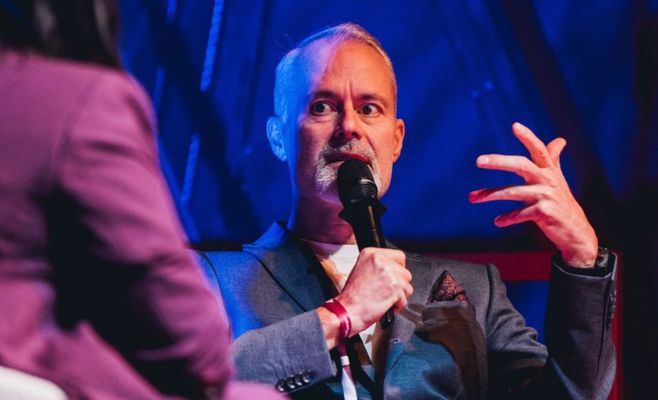
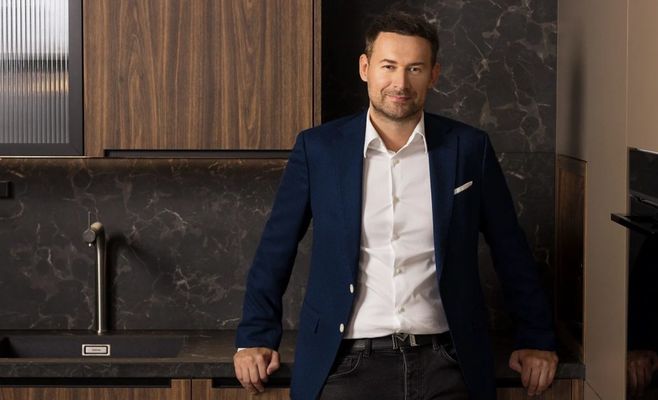
Jan Sušanka: why a founder should never replace the CEO
USD 21,68
Popular
The founder of the boutique multi-family office Sušanka & Partneři, Jan Sušanka, took a bold step more than a year and a half ago: he fully withdrew from the day-to-day running of the business he himself had built. Now, having returned to the company, he has taken on a fundamentally different role — not CEO, but “guardian” of the firm's long-term strategy and values.
Sušanka's company specializes in private banking and wealth management for wealthy entrepreneurial families and investors — helping manage capital, investments and the transfer of assets between generations. By stepping away from operational management, the founder wanted to test whether the firm could function without him, and whether his employees could take on real responsibility.
“I needed to be sure that Sušanka & partneři could function without me too. That people would take on genuine responsibility, and that the company would start relying on its own system rather than on the founder's energy,” Sušanka explains. Management temporarily passed to a new CEO, and for the whole team it became a practical test of delegation.
When Sušanka decided to return to the company this year, he deliberately turned down the familiar role of chief executive. “That would have taken us back to the very model we were trying to grow out of,” he notes. Instead of reverting to the old order, the firm restructured its management system: responsibility for individual areas was distributed among several colleagues, and the executive leadership is now fully accountable for the work and results of all teams.
Sušanka himself has fully settled into the role of founder, which he describes as fundamentally different. “A founder shouldn't replace the CEO and get involved in every important decision. His responsibility lies further away from day-to-day operational work — he safeguards the long-term direction, values and purpose for which the company was created. He thinks on a horizon of ten to twenty years and is present at the moments when questions of corporate culture, investment philosophy and the future are being decided,” the entrepreneur explains.
“Today I don't want to be the best CEO of my own company. I want to be a colleague who's able to admit that someone else is running a particular project. And, above all, I want to be a good founder of an institution that can one day exist without me as well — not dependent on one person's health, energy or physical presence, but built on strong people, a system and shared values,” Sušanka stresses.
This personal experience is directly tied to the service the company offers its clients — large entrepreneurial families: how to build a structure that will hold up through a change of leadership or the arrival of the next generation. “Intergenerational succession doesn't begin at the moment of handover — it begins much earlier, when roles, responsibilities and decision-making rules are defined. The sooner they take shape, the lower the risk that the future of the company or the family's capital will rest on a single person,” Jan Sušanka concludes.
Sušanka & Partneři Group is a boutique multi-family office for entrepreneurial families and investors with significant capital. The company combines investment management across public and private markets, global private banking, liquidity management, asset structuring and intergenerational planning, with an investment architecture built on a four-tier risk management model. The firm works with private banks in Switzerland, the United States, Liechtenstein and Singapore.