What to know about property in Prague: Home Real Estate interview

USD 21,65
Popular
The Czech property market is advancing by leaps and bounds: rapid economic growth, a shortage of properties, accessible mortgage lending and low mortgage rates are all driving demand for private housing and, as a result, pushing the price per square metre noticeably higher. Which means that now is the best time to sell.
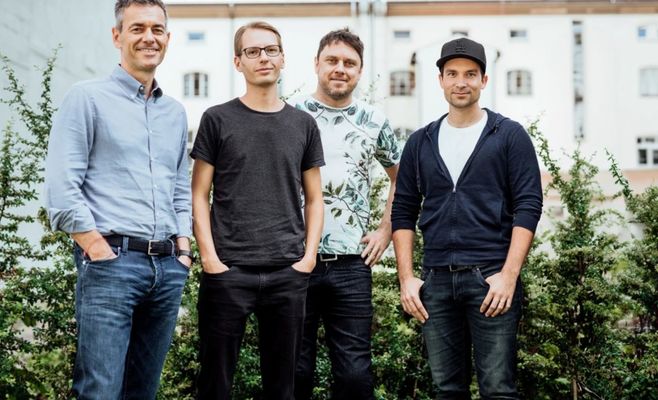
Around Prague met with the owners of the Home Real Estate agency, Artem Melnikov and Petr Popov, to discuss the current situation on the Czech market.
Around Prague: Tell us a bit about yourselves — how did you decide to move to Prague?
Artem: After finishing a military cadet academy in Moscow, I planned to build my life around aviation — I was heading for either the Ulyanovsk flight school to train as a civilian pilot, or the FSB Academy. But things turned out differently: after my first trip abroad, I realised it was time to leave Russia. I ended up in Czechia, got interested in business and graduated from the University of Economics in Prague.
Petr: As a schoolboy I spent three weeks in Germany studying German, and that is when I first dreamed of studying abroad. A few years later I moved to Czechia and enrolled at the Prague University of Economics. The idea of becoming an entrepreneur appealed to me from the very start — I never really considered anything else.
AP: And how did you get into real estate?
A: It happened by pure chance, but now I realise it was absolutely the right choice. It is a fascinating field with plenty of room to grow — and for me, standing still is simply not an option. At first I worked alone, which taught me to multitask and handle stress, but carrying a fledgling business on my own was tough, so after a while Petr joined me.
P: Artem and I studied together on language courses and kept running into each other at business seminars. I had already tried my hand in the football business but saw no real growth prospects there, and when I decided to move into another field, I thought of Artem. I felt we could make a good team — real estate seemed fascinating to me, and it was also a great opportunity to develop my communication skills. We have now been working together for almost three years — I started as an employee and later became a co-owner of the company.
AP: Did you click right away?
P: Yes. We are complete opposites in character, and that is exactly why we work well together. What unites us are shared goals, values and a common vision of what to do and what to aim for. It means a lot that we can discuss anything openly and reach a shared conclusion. In fact, every member of our team has a voice, and together we look for the right solutions to any problem.
AP: Has your team grown a lot?
A: Quite a bit — we now have ten employees and keep growing. I think the greatest achievement of our agency is our team. Everyone is very driven, and we share a certain common philosophy. We are constantly developing: we go through professional training, personal-growth programmes and run masterclasses — sometimes we even find new employees there, which is wonderful.
AP: How do clients find your agency?
P: Many come to us on the recommendation of relatives, friends and acquaintances, and for us that is the highest praise there is. When a client has received genuinely good service, when all of their wishes have been taken into account and they are already settling into the flat of their dreams, a referral is the best thank-you we could ask for. It beats any advertising, because it is a sure sign that we are doing our job well.
AP: What range of services does the company offer today?
P: We handle rentals and sales — commercial premises, hotels and investment property alike. For now we specialise only in these areas, and once we are absolutely confident we have mastered them, we will start to expand. In the future we may move into property management as well. But right now our focus is on sales, and we have already received a great deal of positive feedback about our services.
AP: Is premium property your main segment?
A: Yes, that is our target audience. Most of our clients are interested in buying premium properties; we are aiming at the middle-up (upper-middle) class and working to establish ourselves firmly in that segment. Today most of the people who come to us are Russian-speaking and English-speaking clients selling property in Prague.
AP: How favourable are current market conditions for selling flats?
A: Flat owners are currently in a very advantageous position. On the one hand, property prices have risen sharply in recent times — in 2016 alone, developers sold 6,650 flats in Prague worth a combined 31 billion koruna. On the other hand, owners no longer even need to worry about the tax, which only underlines how worthwhile it is to sell in the near future.
AP: What has changed in the taxation rules?
P: Since November 2016 the payer of the property-acquisition tax has changed. It used to be the seller; now the buyer is required to pay 4% of the flat’s value, which makes the selling process simpler for the owner.
AP: Why were property owners relieved of this tax?
P: It is another government move aimed at slightly cooling both demand and the price per square metre — buyers will now need to save up more to purchase a flat, which will limit their purchasing power and reduce demand, forcing owners, in turn, to lower their prices a little so that interest in their properties does not fade.
AP: And what is driving the rise in demand for property?
A: Mortgage rates, above all. In 2016 a mortgage could be arranged at 1.77% a year — a historic low for mortgage lending in Czechia. There were no serious obstacles to getting a loan, so even people who could not have afforded it under other market conditions became interested in buying a flat. As a result, huge numbers of people flocked to real-estate agencies and developers, and prices rose sharply compared with 2015. Now the state is trying to prevent the price per square metre from climbing any further — new legislation is appearing that will affect the availability of mortgages and set certain barriers.
AP: What exactly has changed — why will getting a mortgage be harder now?
P: A new law on consumer loans came into force last December. Under the new rules, the terms and conditions for granting new loans are set to change — a client’s reliability will now be examined much more closely. These and other legislative changes could have a negative effect on the availability of loans for the public, which is why many banks have paused accepting new mortgage applications while they adapt their usual processes to the new law. All of this should have a positive effect on the balance of supply and demand in the property market and help stabilise the current situation.
AP: Could the new regulations change the situation fundamentally — is there a chance some developer flats will stand empty?
A: No, that is unlikely. The fact is that there simply are not enough properties on the Czech market today. It is quite hard to get building permits in Czechia, and the paperwork, from drawing up a project to move-in, can take up to ten years! In 2016 the number of properties for sale rose slightly, but no major changes are expected yet. Unfortunately, in this respect Prague is currently worse off than most European countries. Developers are currently working on 70,000 new flats, of which only around 24,000 will reach the market over the next five years. For supply and demand to balance out, around 5,000–6,000 new flats would need to appear on the market every year — so over a five-year horizon the situation could stabilise, but supply is unlikely to ever outstrip demand.
AP: Which flats have seen the sharpest price rises?
A: Two-room flats of the 2+1 and 2+kk layouts have risen in price the most, up 13.8% in 2016. The reason, of course, is their popularity — they are the most sought-after type of property among both buyers and investors, thanks to strong demand on the rental market. Demand for these flats will undoubtedly remain strong this year too. Next come three-room flats of the 3+1 and 3+kk layouts, which rose 11.3% in price, though price growth in this segment is expected to slow in 2017. Such flats are mainly bought by families with children, for whom the neighbourhood’s infrastructure matters a great deal — a parking space, a school and a kindergarten nearby affect the price more than proximity to the metro or the number of restaurants in the area.
AP: In your view, when might property prices start to fall?
P: We expect 2017 to be calmer than last year. The new mortgage-lending law makes borrowing somewhat harder, which will probably affect housing affordability. Fewer mortgages being issued will eventually translate into lower demand for property, followed by a drop in the price per square metre. At this point we think that, despite all the measures taken, no dramatic shift in the price trend is expected in 2017 — but we can say with confidence that the kind of rapid price growth seen in 2016 is not going to be repeated.
AP: So how can one sell property as profitably as possible?
A: First of all, the property needs to be properly valued so that the right price can be set. You can do this yourself, but professionals will give you a far more accurate valuation — our agency offers this service free of charge. The next step is a high-quality presentation of the property in the agency’s portfolio. The days when grainy photos taken on a mobile phone were enough to sell a property are long gone — today a prospective buyer takes far more interest in a flat, and is willing to pay more for it, if the photos are appealing. That is why we work with a photographer who specialises in real estate — a professional eye behind the lens matters enormously when selling flats. Skilful marketing combined with a well-written description also carries real weight. In short, there are a great many nuances here, and a real-estate agency is what will help you sell your flat most profitably. If you are thinking about selling, bear the state of the market in mind. Today it could bring you a substantial sum, but it is hard to predict how housing prices will move next year.
AP: So 2017 is really the best time to sell?
P: Yes, it is best to deal with it soon. Market conditions are currently as favourable as they get — prices are still holding at a high level, but the new regulations could affect demand. That is exactly why, to stand the best chance of earning a substantial sum, property should be sold in 2017.
AP: We think property owners will take that advice to heart. Tell us, what are Home Real Estate’s plans for the future?
A: This year we intend to open a branch of our agency in New York. It is a big step that will help us reach a new level — the American property market is developing hundreds of times faster than the Czech one. Petr and I also want to earn an MBA while we are in America — it will let us look at things from a different angle and make a real breakthrough in our business.
AP: How do you see your goal?
P: Our mission is to serve people. We want to build and improve cities, to make people’s lives more comfortable, more interesting and happier. Our company motto is even “Make people happy.” And we do everything we can to see only positive emotions on our clients’ faces!
AP: And finally… you also promised a small gift for Around Prague readers, didn’t you?
Yes, that’s right. We have put together a comprehensive presentation and can value Around Prague readers’ property free of charge. To receive the Home Real Estate presentation, which offers a detailed 45-page analysis of the property market along with a free valuation service, simply call our specialist on +420 777 351 635 or send an email to [email protected].
Around Prague would like to thank the owners of Home Real Estate for a wonderful interview!