Booed Anthem and On-Pitch Brawl: Football Lays Bare Hungary-Ukraine Tensions
USD 21,62
Popular
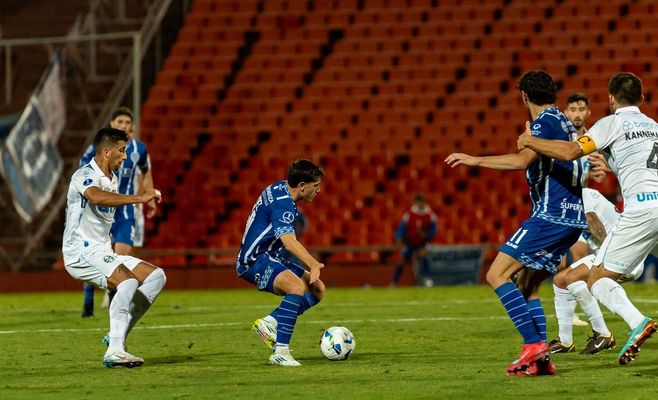
On Friday evening at the Puskás Aréna in Budapest, Ukraine beat hosts Hungary 1-0 in a Nations League match, but the game will be remembered for more than the goal: the Ukrainian anthem was met with loud booing even before kickoff, and stoppage time saw a mass brawl break out between players from both teams.
Brawl in the Final Minutes
Ukraine took the lead shortly before halftime and held on to their narrow advantage until the final whistle, even though Hungary had several chances to equalize. In the second minute of stoppage time, Ukraine's Oleksandr Nazarenko picked up a second yellow card and was sent off. His teammate Viktor Tsyhankov then knocked the ball away during a Hungarian throw-in to run down the clock, prompting home captain Dominik Szoboszlai to shove him.
Within moments other players had joined the confrontation: near the touchline, almost every player from both squads, including substitutes, was pushing and shoving. Objects were thrown from the stands, one of which struck a Hungarian player in the face. The referee calmed things down with a string of yellow cards, and the match was played out to the end.
"A Huge Disrespect to Our Nation"
Ukrainian defender Illia Zabarnyi returned after the match to what had happened even before kickoff. "You could hear it. Even before we broke from the team huddle, I told the guys it was a huge disrespect to our nation and to us," he said of the booing during the Ukrainian anthem, adding that he already knew how Hungarians felt about Ukrainians and how they support Russians and Russia itself.
Cold Peace Instead of Cold War
Zabarnyi's sharp remark came just as relations between Budapest and Kyiv were souring again after several calmer months. Back in spring, things looked different: after sixteen years of Viktor Orbán's rule, the Tisza movement led by Péter Magyar came to power and began openly calling Russia an aggressor and Ukraine the victim of an attack. The new cabinet resumed talks with Kyiv and in June agreed on changes to the rights of the Hungarian minority in Ukraine's Zakarpattia region.
But the rapprochement stalled over the summer: Budapest again tied further progress in Ukraine's EU accession talks to Kyiv fulfilling its commitments on the language, education and cultural rights of Zakarpattia's Hungarians, and in September fresh disputes emerged.
Row Over the Carpathian Initiative
The most visible clash centered on the summit of the new Carpathian Initiative (C8) — an eight-country regional format, including Hungary, unveiled by Ukrainian President Volodymyr Zelensky. He hastily convened the first meeting at the mountain resort of Bukovel in western Ukraine; the group photo alongside Zelensky included Polish Prime Minister Donald Tusk and Romanian President Nicușor Dan, among others, while Czechia was represented by Senate Deputy Speaker Jiří Drahoš. Péter Magyar did not attend the summit, but Budapest still sent the head of its representative office in Kyiv, who did not sign the final declaration — after which the Hungarian government said the country had never officially joined C8 at all. Kyiv, for its part, treated the Hungarian diplomat's presence as confirmation of participation.
The dispute quickly turned into an open war of words. "It seems Viktor Orbán may be gone, but his policy of obstruction and isolation is still thriving," Ukrainian Foreign Minister Andrii Sybiha wrote. Magyar countered that including a sovereign state in an international initiative without its consent was "completely unacceptable," comparing it to setting up a football team in a neighboring village and signing someone up without asking.
A Meeting Still Up in the Air
Despite earlier promises, five months into the new government a bilateral meeting between Magyar and Zelensky still has not taken place — the two leaders have only crossed paths briefly at joint summits. Kyiv proposed combining a visit to the Ukrainian capital with a trip to Berehove, the center of Zakarpattia's Hungarian community, but the trip keeps running into the very question of minority rights: Budapest insists the Ukrainian parliament approve the previously agreed changes by the end of the year, while Kyiv maintains it has already fulfilled its side of the deal.
As a goodwill gesture, the Ukrainian parliament in September condemned the Soviet-era repressions against Hungarians in Zakarpattia in 1944-1946. Budapest reacted positively to the move, but at the same time found no time for a meeting with Ukrainian parliamentary speaker Ruslan Stefanchuk, who had been trying to arrange a visit to Hungary.
Source: seznamzpravy.cz