Cost of Managing the Vltava Philharmonic Construction Balloons to 700 Million — Tender Winner Linked to Key City Official
USD 21,62
Popular
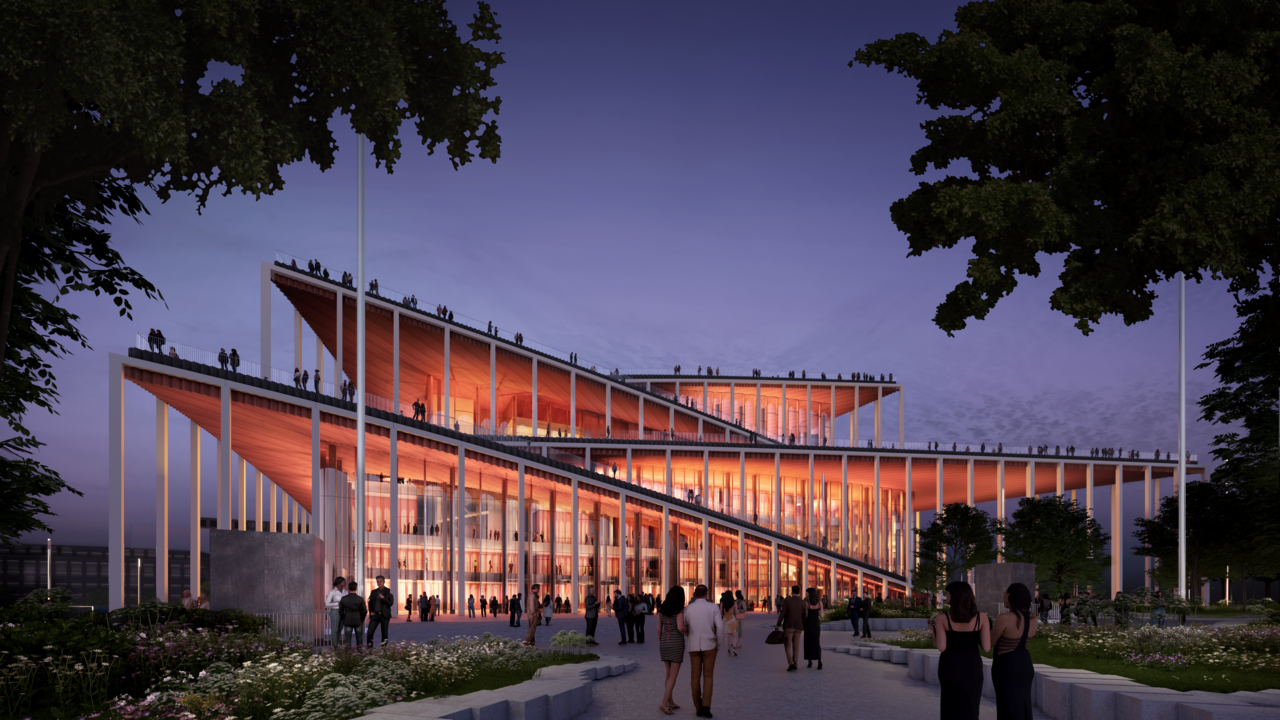
The new Vltava Philharmonic building on Prague’s riverfront is meant to become the city’s new architectural landmark — at least that’s how Mayor Bohuslav Svoboda (ODS) describes the project. But lately the talk isn’t about architecture, it’s about money: the construction budget has swelled from nearly 5 billion crowns in 2021 to 16.5 billion crowns excluding VAT, according to last year’s estimate — and alongside it, the cost of project management, the service the city pays for to coordinate the build, budget and schedule, has spiked just as sharply.
According to tender documents, the starting price for the project-management contract was set at 375 million crowns. Only one bidder applied — a consortium made up of Delta Projektconsult, FETTERS management and JE Group — and, unsurprisingly, it won. The Prague Development Company (PDS), the city organization overseeing the project, signed a contract with the winning consortium worth nearly 900 million crowns — 139% above the starting price. The figure was later reduced to roughly 700 million crowns through amendments.
Ties to a City Hall Official
One of the winning firms, JE Group, has a connection to Jan Rak, who at the time the tender was announced served as director of the city hall’s property department. It has previously been reported that this influential official was living at a cottage in the upscale Harrachov resort complex owned by the Erben family’s company — the same family that controls JE Group.
According to the anti-corruption watchdog Transparency International, whenever a public tender attracts only a single bid, it becomes especially important to scrutinize every circumstance, including possible personal ties among the parties involved. The organization’s legal analyst, Kryštof Doležal, notes that this matters even more when the contracting authority sits outside direct public oversight — as is the case with PDS.
Jan Rak did not respond to a question about whether his close relationship with the Erben family might have influenced the outcome of the competition. JE Group co-owner Jakub Erben said he was aware of nothing of the sort but declined to comment further, citing an ongoing legal dispute with journalists. His brother Michal Erben, who was a co-owner of the company at the time of the tender, also declined to comment.
“It gives me chills,” Says Deputy Mayor
The scandal surrounding the Philharmonic has been fueled further by another tender — for a four-year advertising and communications campaign for the project worth up to 104 million crowns excluding VAT (about 125 million including VAT). Following criticism from the opposition on the city council and media coverage, PDS and the Philharmonic foundation cancelled this tender.
Kristýna Drápalová, a councillor from the Praha Sobě party, points out that tens of millions of crowns are earmarked for helping the city adapt to heat and drought, while a single construction project’s overpriced project management alone costs 700 million. Deputy Mayor Jana Komrsková admitted that the news of JE Group’s win gives her “chills” and raises concerns about how the project will ultimately turn out.
How the Budget Grew
According to minutes from the Prague City Council dated April 2022, the cost of project management was originally estimated at 160–200 million crowns in 2021 prices. At the time, the council tasked PDS with the project under a budget of just under a billion crowns — meant to cover both the architects’ fees and construction management.
But after the architectural competition, costs began to climb: the winning bid came from the Danish firm Bjarke Ingels Group (BIG), priced at one billion crowns — double the original expectations. PDS attributes this to the project’s expansion to include the surrounding area. In the autumn of 2022, PDS launched the tender for construction management with an estimated price of 370 million crowns — 170 million more than the April estimate.
Since the approved budget didn’t have enough funds to cover both the architects and the management simultaneously, city councillors reshuffled the budget: the architects’ contract was handed over to the property department, then headed by Jan Rak, along with the extra billion needed, while a second billion-crown budget line remained with PDS — now earmarked solely for the project-management contract. It was this exact sum that the consortium including JE Group ultimately received, after bidding almost 2.5 times above the tender’s original estimate.
An “Inventive Trick”
PDS management insists that the figures in the budget tables approved by the city council were merely indicative, and that actual financing gets approved in stages as the project develops. Councillor Drápalová disagrees: in her view, the scheme looks like an “inventive trick” that allowed a contract worth nearly a billion crowns to be signed with virtually no political oversight — awarded to the sole bidder, whose price vastly exceeded the starting figure and who, on top of that, has ties to the property department’s former head.
Where Will 16 Billion Come From?
According to City Hall’s plans, construction of the Vltava Philharmonic is set to begin in 2028. The building is designed to house an 1,800-seat concert hall, additional smaller halls, rehearsal spaces, reading rooms, restaurants and cafés — effectively a new cultural hub for the capital. Mayor Svoboda argues that Prague needs a new concert hall to compete with other European capitals and to stop scaring off major performers with the outdated Dvořák Hall at the Rudolfinum.
The trouble is that funding for the construction itself is still far from secured: despite plans to file for a building permit, the city currently lacks the more than 16 billion crowns required. Part of the sum is expected to come from the city budget, part from the state, and the rest is to be raised through the Philharmonic foundation from private donors. Andrej Babiš’s government stated in its policy declaration that it supports the project, but without naming any specific figures, and no negotiations with Prague on the matter have taken place so far. Deputy Mayor for Territorial Development Petr Hlaváček plans to approach the prime minister once the building-permit application is filed — likely in the autumn, with the permit expected early next year. Whether he’ll still hold his post by then remains uncertain, however: Prague’s municipal elections are set for early October.
Read also: 9 restaurants in Prague with the best city views: where to go for dinner and a panorama
Source: seznamzpravy.cz