Czech Finance Ministry unveils 2027 budget draft with a CZK 389 billion deficit

USD 21,75
Popular
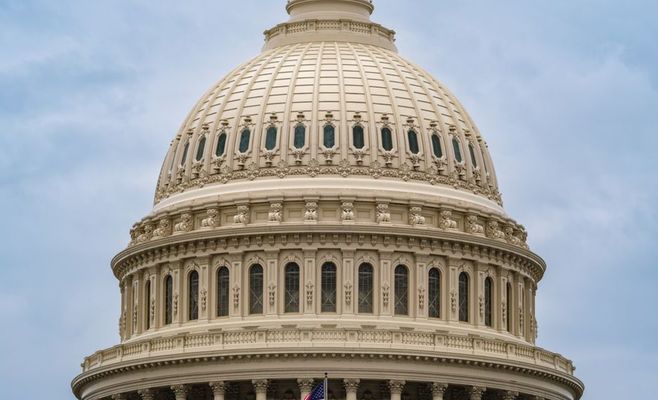
The Czech Ministry of Finance, headed by Alena Schillerová, has presented its draft state budget for 2027. According to the document, the deficit will reach CZK 389 billion — the second-largest shortfall in the country's public finance history.
Under the ministry's plan, the state expects to collect CZK 2,189,173,791,455 in taxes and other revenue — that is, 2.19 trillion crowns. Spending, meanwhile, is projected at CZK 2,578,173,791,455, or 2.58 trillion. The gap between these two figures is exactly the 389-billion-crown deficit by which the national debt will grow over the course of a single year.
Where taxpayers' money goes
Numbers on this scale are difficult for an ordinary person to grasp — by comparison, a large national lottery jackpot rarely exceeds a few hundred million crowns, while pan-European draws reach only the low billions. The state budget, by contrast, deals in thousands of billions.
As usual, the largest share of spending goes to the Ministry of Labour and Social Affairs — roughly two-fifths of the entire budget, most of which covers pension payments.
Another 12% of the budget falls under the somewhat vaguely named "General Treasury Administration" category, which in reality hides hundreds of billions of crowns the state transfers to health insurance companies on behalf of children, young people and pensioners insured through the state budget.
The Ministry of Education receives almost the same amount, covering above all teachers' salaries and other costs of the school system. Once these three largest items are subtracted, only about a third of the total budget remains — and that remainder still has to cover defence, roads and railways.
Debt service and security agencies
A separate line item is servicing the state debt: interest payments on loans in 2027 will amount to CZK 130 billion, roughly 5% of the budget. It is already known that creditors will demand around 30 billion crowns more the following year.
The Ministry of the Interior receives roughly the same amount as goes toward debt servicing — also about 5% of the budget.
It's worth noting that the budget does not reflect the entirety of state activity. In particular, healthcare — financed through the health insurance system — falls outside it, as do part of the funds collected directly by regions and municipalities through local self-government.
Source: seznamzpravy.cz