Czech Senate Blocks Babiš Government's Building Law Reform
USD 21,69
Popular
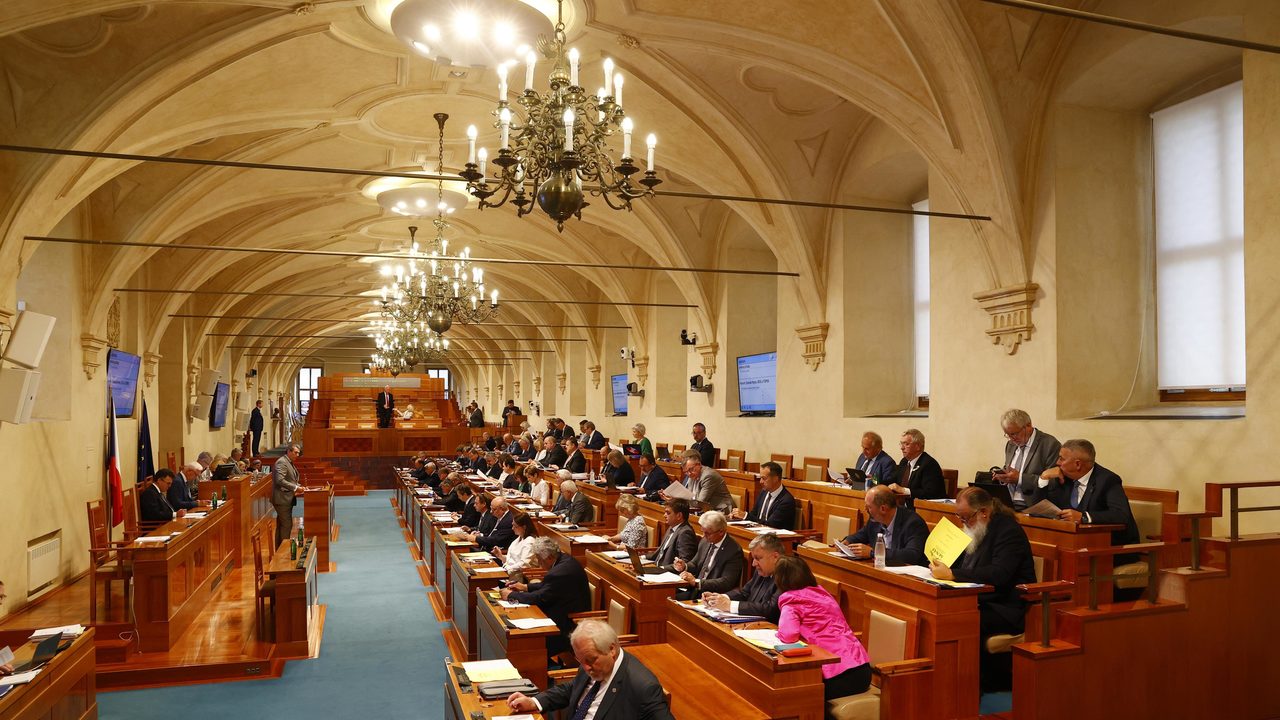
The Czech Senate has rejected a government amendment to the building law that critics say favours business interests at the expense of citizens' rights. Senators argued the bill weakens protections for property, health and the environment while giving developers the upper hand.
Senator Miroslav Plevný (STAN) called the bill "opaque," noting it was submitted not by the government but by individual MPs, allowing it to bypass the standard consultation process and impact assessment. What's more, the text was completely rewritten in the Chamber of Deputies through a sweeping comprehensive amendment. Deputy Senate Speaker Jitka Seitlová (KDU-ČSL) added that the reform "undermines protection of property rights and civil rights, favours private investors, and drastically reduces safeguards for public health and nature."
Ministry insists reform is overdue
Regional Development Minister Zuzana Mrázová (ANO) maintained that the changes are long overdue. She said the poor state of the building permit system has been a well-known problem for years — endless waiting times, constantly shifting documentation requirements, fragmented responsibility, and uncertainty over whether a project will ever get off the ground. She pointed out that building a large residential complex in Czechia typically takes seven to ten years, with the costs of this dysfunctional permitting system ultimately falling on families through housing prices, on municipalities waiting for schools or care homes, and on the state through inflated costs for roads and hospitals.
However, Senator Petr Štěpánek (STAN), who served as rapporteur on the bill for the Senate's standing committee on rural development, dismissed the stated noble goals as a cover for underlying business interests. "I don't know who promised what to whom, but I sense business interests behind this," he said, adding that a law concentrating decisive authority in the hands of a single official is widely seen as highly prone to corruption. Some senators have demanded the government disclose who financed the lawyers who drafted the legislation.
Chamber of Deputies may override the veto
Despite the Senate's rejection, the ruling coalition of ANO, SPD and the Motorists party holds enough votes in the Chamber of Deputies to push through its version of the law regardless. The opposition ODS and TOP 09 have already announced they will challenge the bill in the Constitutional Court if it passes; senators from STAN are leaning the same way.
The reform would transfer building authorities from municipalities to the state. At the heart of the new system would be a Territorial Development Office — effectively a single, unified building authority. Obtaining a building permit would require just one combined procedure with a single stamp of approval. Municipalities, meanwhile, would gain greater powers over drafting local zoning plans.
The bill is backed by developers and construction companies, who hope the reform will simplify the building process and help meet Czechia's enormous demand for housing. Environmental groups oppose it. Anna Winklerová of the organisation Arnika said the changes amount to "a fundamental shift in the rules that weakens protection of nature, heritage sites, public health, and people's right to challenge flawed decisions by the authorities," warning that, under the guise of speeding up permits, the reform would clear the way for large development projects that would never pass under current rules.
Fears over staff shortages
Senator Tomáš Třetina (ODS) warned the reform could trigger a staffing crisis in building authorities — a concern shared by some companies. According to a survey by the trade union representing public sector employees, only 27% of staff said they would stay on at their current municipal, city or regional offices, while 40% of respondents said they would quit for other jobs or retire once the system is centralised.
The Ministry has not disputed the union survey's findings but has treated them cautiously and is preparing its own study, with data analysis expected in September. The building law is among the flagship legislative pledges of Andrej Babiš's (ANO) government, which is picking up where a previous attempt left off: back in 2021, then-Regional Development Minister Klára Dostálová (ANO) had already pushed through centralisation of building authorities, only for Petr Fiala's government to scrap the move after winning the elections.
Source: novinky.cz