German Investigators Trace Organizers of Leipzig Airport Drone Attack
USD 21,81
Popular
German investigators say they have identified the suspected organizers behind the foiled drone attack on Leipzig Airport in early August. According to the newspaper Süddeutsche Zeitung, one of the key figures is a logistics coordinator and operational instructor — a man of Russian origin holding a Latvian passport, who is allegedly linked to a Russian intelligence service.
Suspect's Route Through Berlin
Investigators believe the man entered Germany in late July via Berlin airport, then drove to Leipzig in a rental car. Two days before the failed drone attack, he left the country again, flying out through the same Berlin airport.
DNA Leads to a Second Suspect
At the scene, investigators also found DNA traces that led them to a second suspect. The genetic material was recovered from one of the drones, from the inside of a canister containing explosives, and from an antenna attached to a tree near the airport — believed to have been used to boost the signal for drones controlled via mobile network.
Matching the traces against European databases produced hits in Lithuania and Finland. According to the newspaper, this suspect is originally from Belarus and had previously appeared in police records in connection with another criminal case.
Italian Visa Issued in Minsk
The second suspect, who also holds a Russian passport, reportedly entered Germany on an Italian tourist visa. Investigative documents show the visa was issued in late April by the Italian consulate in Minsk. German investigators, however, are reportedly skeptical about the chances of ever arresting the suspects or bringing them to trial.
According to the newspaper Bild, investigators are searching for at least four people connected to the attack, whose involvement has been confirmed either through DNA evidence or through mobile phone activity records within range of relevant cell towers.
Germany Blames Russia
On Tuesday, German Interior Minister Alexander Dobrindt pinned responsibility for the attack on Russia, saying he does not view the incident as isolated but rather as part of a broader campaign of "hybrid actions."
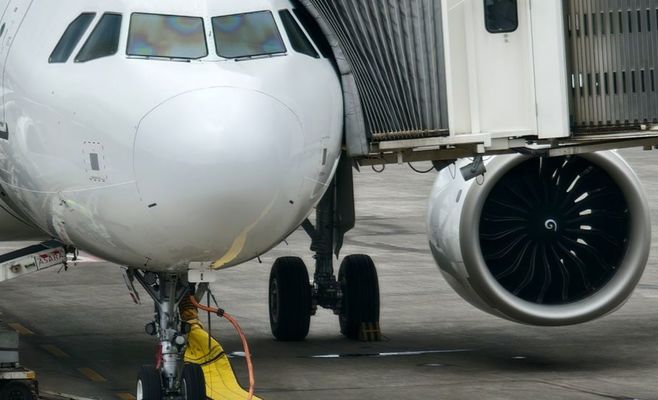
The incident itself occurred late in the evening of August 4, when an airport employee in eastern Germany spotted a drone near a cargo plane belonging to the Ukrainian company Antonov. It later emerged that the drone was carrying explosives, though the detonator apparently malfunctioned. Airport operations were suspended after the drone was discovered.
Another cargo aircraft, which was approaching for landing at the time, had to abort its approach after colliding with an unidentified flying object — it remains unclear whether this, too, was a drone. In late August, German media reported that police had found another drone near the airport in mid-August, possibly the third one detected so far. Moscow officially denies any involvement in the incident.
Read also: Savings accounts in Czechia: 2026 bank rates
Source: novinky.cz