Giant Early Black Holes Leave Astronomers Unsure What Came First
USD 22,26
Popular
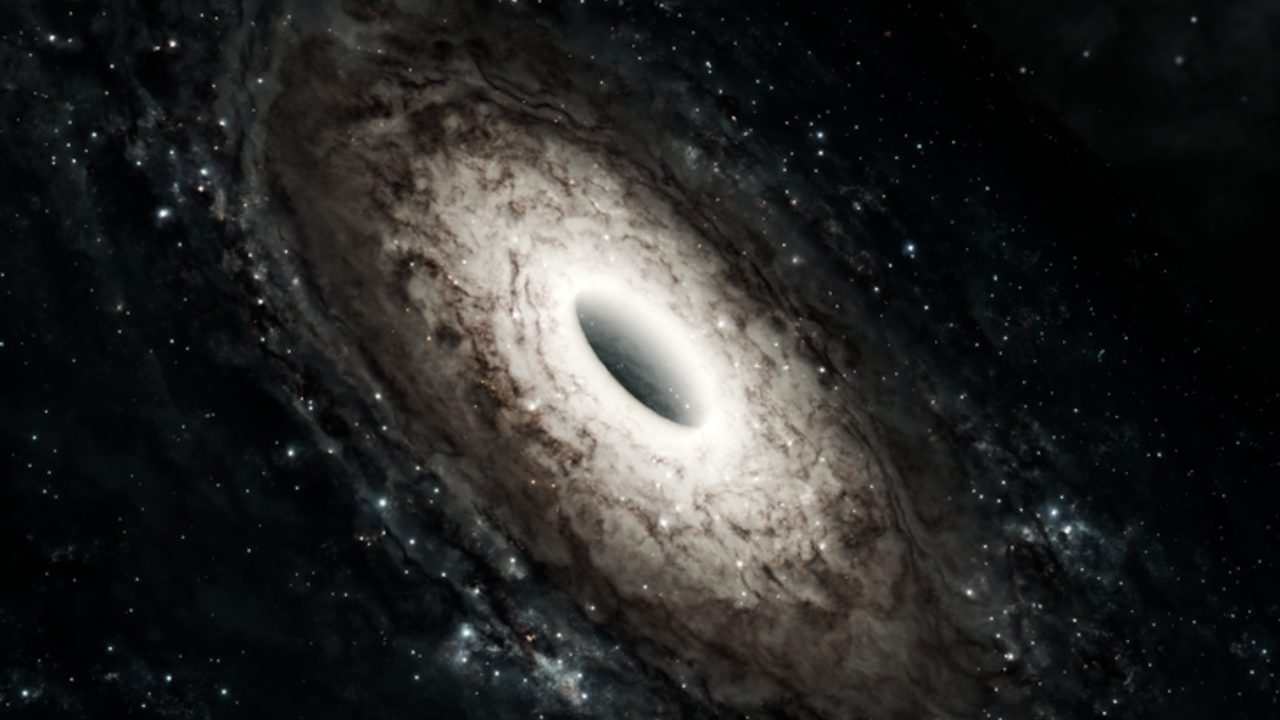
Astronomers have long assumed that galaxies formed first and their central black holes grew later. Observations from the James Webb Space Telescope (JWST) are shaking that assumption, Live Science reported, and researchers it spoke with say the old order of events can no longer be taken for granted.
Nearly every large galaxy is thought to host a supermassive black hole at its center. The question of which came first, the black hole or the galaxy around it, now has no settled answer.
The numbers behind the puzzle
- Over 4 million times the sun's mass: that is the weight of Sagittarius A*, the black hole at the center of the Milky Way.
- A few hundred million years after the Big Bang: Roberto Maiolino, an astrophysics professor at the University of Cambridge, said JWST is finding extremely massive black holes this early in cosmic history.
- About a thousand times less massive: in nearby galaxies, the central black hole is typically around this much lighter than its host galaxy, according to Maiolino. Some early black holes appear to be almost as massive as the stars in their hosts.
- Tens of objects: Joseph Silk, an astrophysicist and professor at Johns Hopkins University, said current samples hold perhaps 20, 30 or 40 such objects, far too few to say whether oversize black holes are typical.
Why the standard picture is under strain
For decades, the prevailing view was that galaxies came first. Silk explained that dying massive stars leave black holes behind, and those can merge and feed until they reach millions of times the sun's mass.
JWST's look back at the early universe complicates that story. In a study published in the journal Nature, Maiolino and colleagues measured the mass of one black hole directly, in an object called Abell2744-QSO1, and found that it holds most of the object's mass. Maiolino told Live Science the findings show the old picture "cannot be the whole story."
Where such giants could come from
Maiolino outlined several possibilities and said more than one could be right. Some supermassive black holes may be ordinary stellar remnants that simply grew much faster than usual. Others may have been born big, formed when enormous gas clouds collapsed directly, which would give them a head start. A third idea is that primordial black holes, formed shortly after the Big Bang and before the first stars and galaxies, seeded the giants.
A cosmic tug of war
Black holes and galaxies also affect each other as they grow. According to Maiolino, a growing black hole can release enormous energy that heats or pushes out gas, which slows or halts star formation. The same process can also compress gas and potentially trigger new stars.
Silk said the balance differs by galaxy type. In giant elliptical galaxies, black holes weighing billions of suns can have violent histories that helped limit how much their hosts grew. In spiral galaxies like the Milky Way, he said, feedback from stars tends to dominate.
What it means for the question
For now, the chicken-and-egg puzzle is unresolved, and the scientists say the data to settle it does not yet exist. Silk said that if black holes outweigh their galaxies more and more the farther back astronomers look, that would strongly suggest black holes formed first. If stars dominate, it would point the other way.
Maiolino suggested the question itself may be too simple. Different black holes, in different environments and at different points in cosmic history, may have formed and evolved through different pathways, he said, so there may be no single sequence at all.
What happens next
Answering the question will take far more JWST observations, Silk said. A larger sample would show whether the oversize black holes seen so far are typical or unusual. Maiolino said astronomers are only beginning to explore a period of cosmic history that still holds many unanswered questions.
Around Prague, based on reporting by Live Science