Meteorologist explains how artificial rain is made — and why it won't save Czechia from drought
USD 21,74
Popular
Drought and creeping desertification are pushing some countries to try artificially influencing the weather. For instance, Kazakhstan launched an emergency cloud-seeding programme this May — a method never before used in Central Asia. Meteorologist Michal Žák from the Faculty of Mathematics and Physics at Charles University explained exactly how rain is artificially induced and why the technique is no cure-all.
According to the expert, the technology essentially boosts moisture that is already present in the atmosphere in the form of a cloud. Special substances — most often silver iodide — are sprayed from aircraft or fired into clouds using rockets. They act as artificial "condensation nuclei," speeding up the transformation of water vapour into droplets, which then become heavy enough to fall to the ground as precipitation.
Not every cloud will do
The method doesn't work universally: a cloud already needs to have certain properties and contain enough moisture. The meteorologist notes that measuring the technology's exact effectiveness is difficult, since the atmosphere isn't a laboratory and a controlled experiment simply isn't possible. According to scientific studies, cloud seeding increases precipitation by at most 15–20%, while the technology itself is quite costly.
The method produces its most noticeable effect in hilly terrain — for example, in the United Arab Emirates, where water from precipitation flows into a limited area and spreads across a larger territory, boosting the effectiveness of the intervention. There is a downside, too: the substances used aren't always harmless to the environment, and with regular, repeated use — say, monthly — the negative impact can become significant.
A risk for neighbouring countries
The launch of the programme in Kazakhstan has worried neighbouring Central Asian states, which fear that artificially inducing rain in one country could deprive the entire region of precipitation. Žák acknowledges that these concerns are theoretically justified. If moisture condenses in one place, there may not be enough left elsewhere — particularly in the interior of Central Asia, which, aside from the Caspian Sea, has almost no moisture sources of its own, with all humidity arriving from far away — from the Atlantic or the Indian Ocean.
That said, the expert believes the consequences are likely to be moderate rather than catastrophic, though it's impossible to prove conclusively whether precipitation would have fallen in the neighbouring region without the intervention. According to the World Meteorological Organization, cloud-seeding technology is currently used by around 50 countries worldwide, and the organisation is calling for further scientific research into the method.
Why it won't help Czechia
The meteorologist believes the technology works better in arid subtropical regions, where local factors matter more than large-scale atmospheric processes. In temperate latitudes, including Czechia, the benefits of the method are far less obvious. According to the InterSucho portal, the length of the soil-moisture-deficit period in Czechia this year has hit a record.
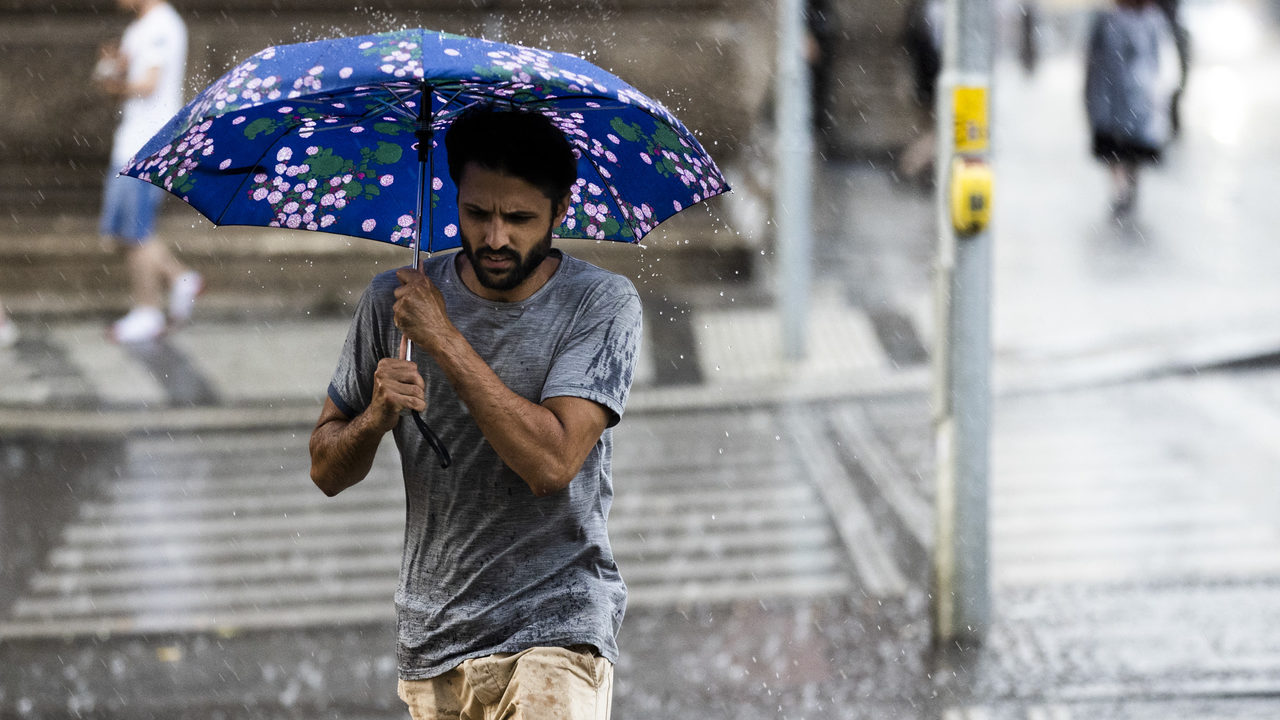
Even regular use of the technology — say, weekly — would only boost precipitation by 10–15%, whereas the country's actual moisture deficit is far greater. What's more, drought in Czechia is largely driven by high temperatures: there's simply nothing for dry air over the territory to "wring out," and heat worsens drought even when precipitation does fall. As the meteorologist points out, fighting drought amid today's high temperatures is far harder than it was half a century ago.
Source: seznamzpravy.cz