Morocco Foils Another Attempt by Hundreds of Migrants to Storm Spanish Ceuta
USD 21,73
Popular
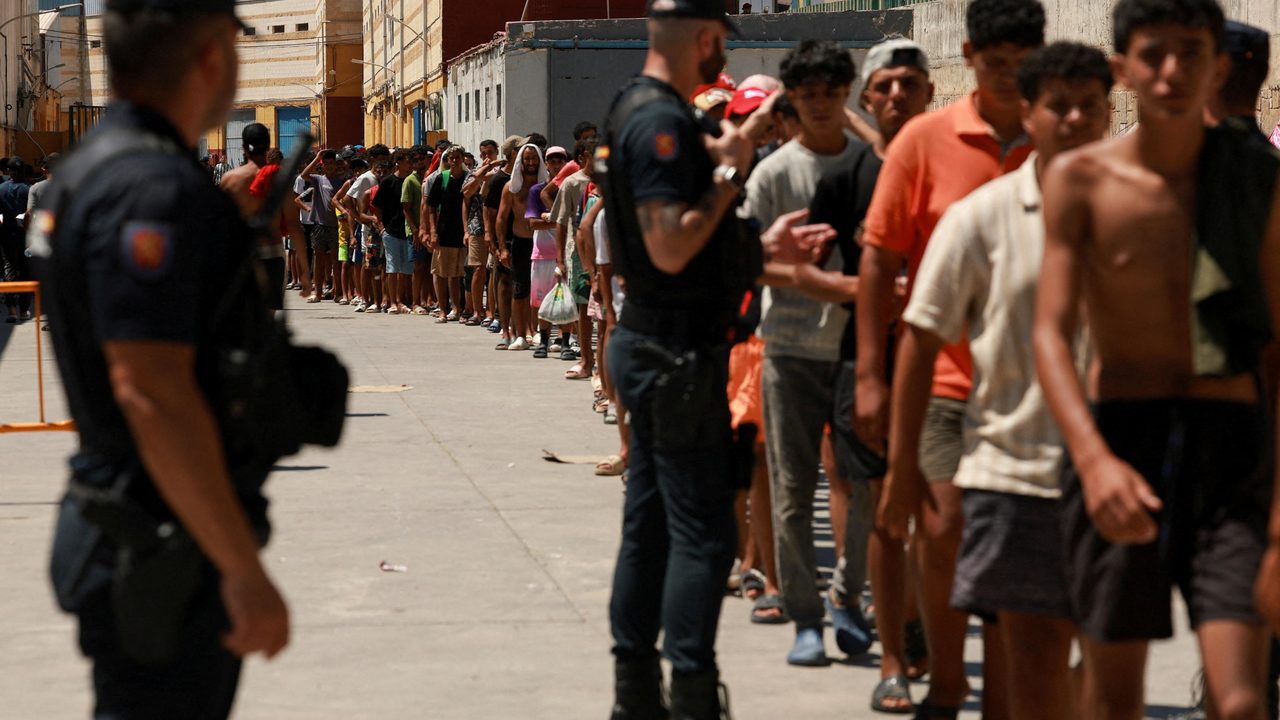
Moroccan police on Saturday thwarted an attempt by hundreds of migrants to mass-storm the border with the Spanish exclave of Ceuta. According to the British newspaper The Telegraph, authorities detained around 300 people, most of them from countries south of the Sahara.
The migrants had gathered in the Moroccan border town of Castillejos after calls for another mass border rush spread on social media. The paper reports that police also detained 61 people suspected of inciting and promoting the attempt online.
Armoured vehicles and a helicopter guard the border
Footage from Saturday's events shows hundreds of people running toward the border. This time, however, Morocco had deployed security units and armoured vehicles in advance — police stopped the migrants roughly three kilometres from Spanish territory, while a helicopter monitored the situation from above. Spain also tightened security, sending troops and armoured vehicles to the border after placing Ceuta on high alert ahead of the weekend in response to worrying signals on social media.
Echoes of the late-July tragedy
Saturday's events came roughly two weeks after a far larger breakthrough attempt. According to The Telegraph, at least 72,000 people tried to force their way into Ceuta on 30 July, and at least 88 died, either drowning or crushed in the crowd. Most of those who reached Spanish territory were later returned to Morocco.
The July events raised questions about whether Spanish authorities had underestimated the threat: unions representing border guards had warned in advance of a rising number of arrivals and demanded reinforcements and a temporary reception centre. There is also debate in Spain over whether the surge was made possible by lax border security on the Moroccan side — and whether Rabat deliberately allowed the pressure to build against the Spanish government. Prime Minister Pedro Sánchez has publicly avoided pointing fingers, but a similar episode occurred in 2021, when nearly ten thousand migrants entered Ceuta after Moroccan border guards reportedly "stepped aside."
Not just Ceuta under threat anymore
This time, the calls circulating on social media target not only Ceuta but also the smaller enclave of Melilla, located further east along the coast. Each city is normally home to about 80,000 people.
The situation has been complicated by a June ruling from a Spanish court, which states that authorities may only immediately return migrants who have crossed the physical border barrier — a rule that does not apply to those who reach Ceuta by sea. The Spanish government says criminal groups subsequently spread distorted information about the ruling on social media. Following the late-July breakthrough, authorities installed a floating barrier at sea on 1 August.
Instagram accounts luring migrants into danger
An investigation by the BBC uncovered Instagram accounts luring Moroccan migrants into a risky journey to Ceuta by presenting it as easy and safe. One account contacted by a BBC journalist offered help crossing the border for an upfront payment of 5,000 dirhams (about 28,500 CZK), in exchange for revealing a "secret route."
According to the BBC, such accounts post misleading content — videos of seemingly happy migrants at sea, or claims that people have successfully reached mainland Europe, even though most arrivals were sent back to Morocco. Instagram's algorithm favours emotionally charged content, giving these accounts wide reach. After being contacted by the BBC, Meta said it was actively monitoring the situation around Ceuta and removing content that violates its rules against people smuggling — several profiles have already been taken down from the platform.
Source: seznamzpravy.cz