Opinion: It's time for Prague to shed its excess districts like Řeporyje and Lysolaje
USD 21,73
Popular
On Prague's eastern edge, near the Central Bohemian town of Říčany, sits the municipal district of Nedvězí — the smallest in Prague, with just 307 registered residents. It has its own mayor and a five-member council, though at the last election only six people signed up on the single list of candidates. The picture is much the same in neighbouring Kralovice (334 residents), where, once again, one single candidate list swept all five council seats with a hundred percent of the vote.
An opinion piece in Seznam Zprávy points out that the Czech capital is carved up into 57 municipal districts with a combined 1,121 local council members — and calls the whole system absurd.
Prague versus other world capitals
For comparison: Prague, home to roughly 1.4 million people, is split into 57 administrative units. Warsaw, with nearly half a million more residents, has just 18 districts. Vienna, with a population of two million, has 23 self-governing districts; Berlin, with almost four million, has only 12; and London, with nine million people, manages fine with 33 boroughs.
According to the author, even politicians from Czechia's major parties admit that maintaining dozens of municipalities with salaried, full-time officials is expensive, inefficient and a breeding ground for potential corruption — not to mention an obstacle to running the capital as a coherent whole.
Where the fragmentation came from
The current division dates back to the "Act on the Capital City of Prague," passed in the heady atmosphere of 1990, when independence — from just about everything, right down to the neighbouring district — was the order of the day. The law, lightly amended in 2000, established 56 municipal districts. Changing it now is no easy task, especially given the rest of the country's traditionally wary attitude toward the capital.
What the author proposes
The column jokingly suggests a rough-and-ready reform, modelled on how Senate constituency boundaries were drawn up 30 years ago — a process the constitutional judge Vojtěch Cepl at the time bluntly called "a mess." The author notes that Prague currently has ten Senate districts and the same number of district prosecutors' offices and courts — a number that could serve as a starting point for any new division.
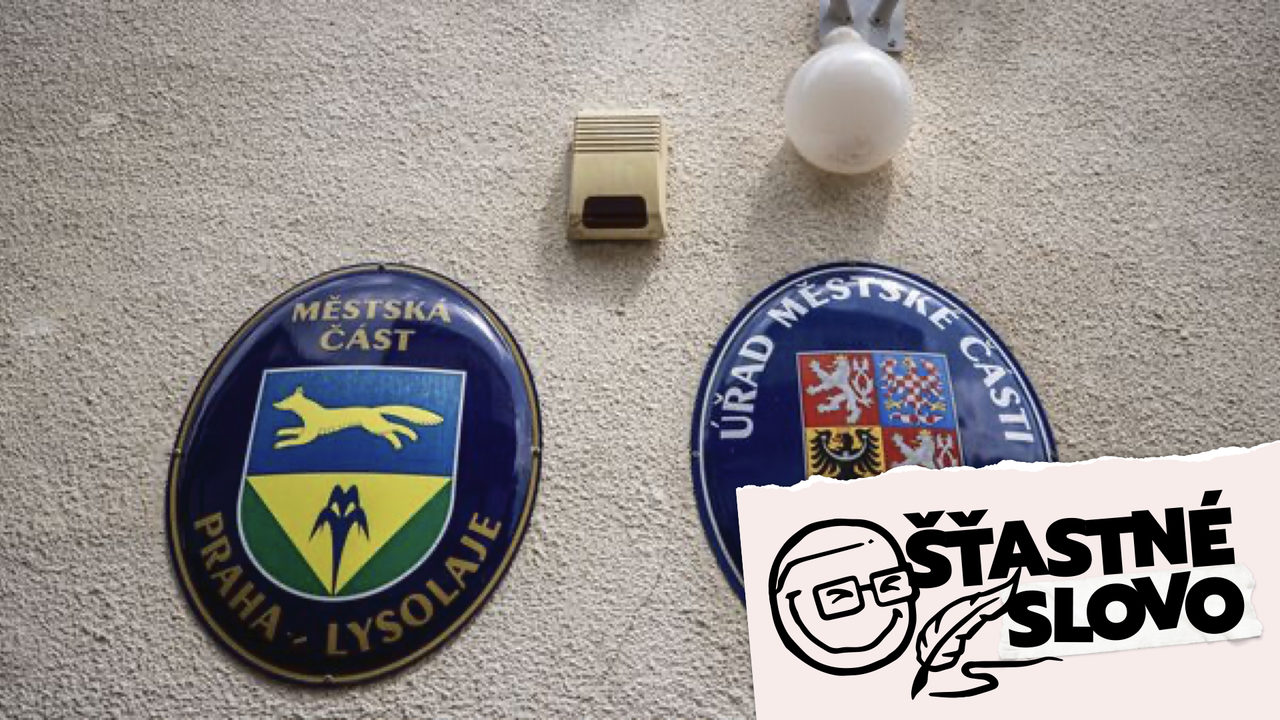
Under the proposal, every municipal district without a number in its name (that is, everything outside Prague 1–22) would lose its independence and be folded either into "Greater Prague" or into the Central Bohemian Region. Among those set to disappear are Klánovice, Lysolaje and Řeporyje — the last of which, the author argues, could easily be absorbed into Prague 13. The numbered districts, meanwhile, would be consolidated: Prague 1, 2 and 7 would merge into a single unit with a population of over 100,000; Jižní Město would merge with Modřany; Prague 8 and 9 would expand to take in the outlying areas of Černý Most and Horní Počernice; and Prague 13 would absorb Zličín and Řepy.
The piece ends with a wry wish of good luck to all the candidates in the upcoming local elections — including the residents of tiny Nedvězí.
Source: seznamzpravy.cz