Pavel and Válek Discuss Centralization of Cancer Care and Status of New Prague Hospital

USD 21,59
Popular
Czech Health Minister Adam Vojtěch (for ANO) met with President Petr Pavel on Tuesday to discuss the centralization of highly specialized medical care and the preparation of new healthcare legislation. According to the minister, no disagreements with the president emerged on any of the topics discussed.
According to the Prague Castle press office, the president urged the minister to address the current situation in Prague's healthcare system and warned that designating the new hospital as a military facility could carry certain risks. The Castle did not specify what those risks might be.
Centralizing Cancer Treatment
One topic of the meeting was the concentration of the most complex oncological surgeries — for example, treatment of pancreatic, liver or lung cancer — in specialized centers. According to Vojtěch, the president supported this idea. "I think we agreed that it makes sense to centralize this kind of specialized care," the minister said.
According to the president's office, the two sides also agreed that patients should receive quality care in facilities that meet modern medical standards. Pavel asked the minister to review the situation in Prague hospitals, the investments already made, and the economic criteria for future construction projects.
Later, on X, Vojtěch added that when preparing the project, its financial sustainability and sensible integration into Prague's healthcare network should play a key role.
Three Bills Before 2028
The minister presented the president with three legislative initiatives currently in development or moving through the legislative process. Most of the changes are expected to take effect by early 2028.
An amendment to the public health insurance law aims to strengthen conciliation procedures between insurance companies and healthcare providers, improve data management, and increase the accountability of insurance funds. At stake is the distribution of more than 600 billion crowns across healthcare segments for the coming year.
According to the president's office, Pavel also raised the issue of the inefficiency of the Czech healthcare system and the lack of transparency in how services and payments are redistributed between private and public institutions, which are often linked through shared staff.
Other pending laws concern the digitalization of healthcare, expanding the authority of non-medical healthcare staff, and reforming the public health protection system. Plans call for creating a National Public Health Institute that would merge the current hygiene stations, health institutes, and the National Institute of Public Health. The goal is a more modern and efficient system capable of responding to epidemics while placing greater emphasis on prevention.
Dispute Over Pharmacy Vaccinations
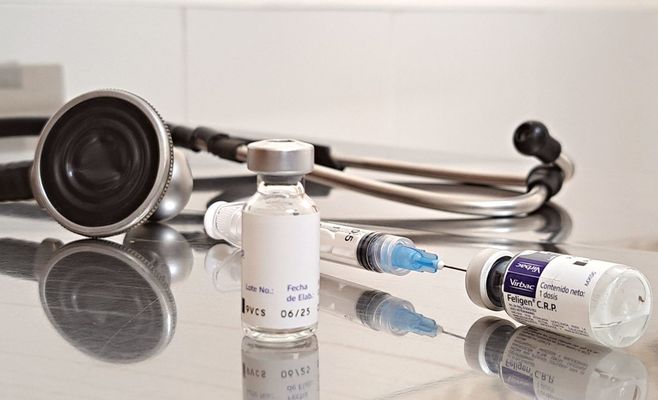
The meeting also briefly touched on flu vaccinations at pharmacies — an initiative championed by Vojtěch that lacks consensus within the ruling coalition of ANO, SPD, and Motorists. The expansion of nurses' authority under the new law would also allow vaccinations to be administered at pharmacies, but the SPD party opposes this option.
According to Vojtěch, this practice is common in many European countries and has helped increase flu vaccination rates in some of them. In Czechia, only eight percent of the population and a quarter of elderly people get vaccinated against flu regularly.
"Of course, this would be voluntary — we're not introducing any new obligation, just an option," the minister emphasized. Pharmacists would need to complete a special training course to administer vaccines. "Pharmacies are often more accessible than a GP's office, so I believe we should allow this. The law has now passed interdepartmental review, so we'll see how the government decides," Vojtěch added.
Read also: Free Czech language courses for foreigners: where to study
Source: seznamzpravy.cz