Quarry in Mrač Has Choked the Village With Dust and Noise for Decades — Residents Don't Trust the Promises
USD 21,73
Popular
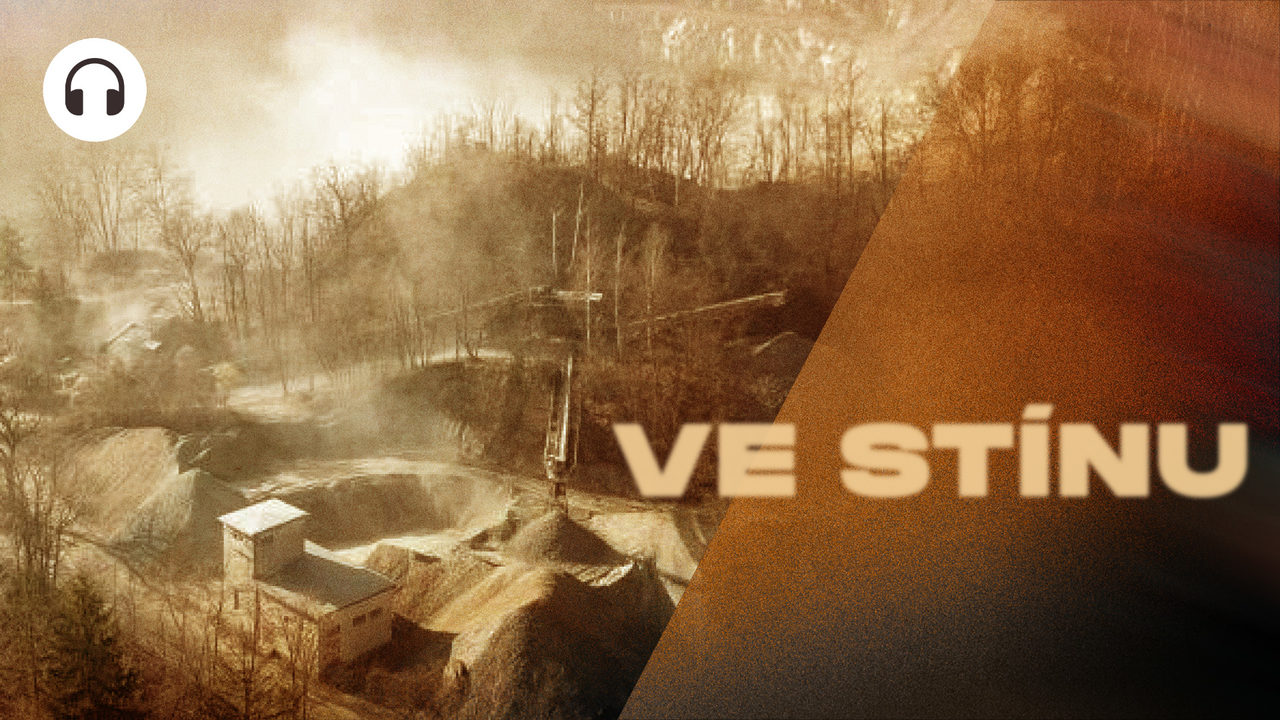
In the Central Bohemian village of Mrač, locals have spent years battling dust and noise from a quarry that has been operating there for decades — and, by all appearances, will keep operating for decades more. The site is one of 47 strategic stone and gravel deposits selected by the government to supply construction material for motorways and railways. That designation means mining permits are fast-tracked.
In a village of just 870 people, it's hard to find a resident unbothered by living next to the quarry. People complain about constant rumbling, clouds of dust, and especially the blasting — some fear the shockwaves could damage their homes. Promises to modernize the equipment have been made for roughly thirty years, according to longtime residents, yet nothing has actually changed.
Fines Instead of Real Action
Three years ago, a resident filmed drone footage showing dust from the quarry spreading far and wide across the surrounding area. Soon after, local resident Pavla Sýkorová co-founded an association called "For the Sustainable Development of Mrač and Podmrač."
According to the Central Bohemian public health authority, repeated measurements have shown noise levels exceeding the permitted daytime limit of 50 decibels. Despite this, the quarry has only ever been hit with fines of up to 50,000 crowns — an amount locals call laughable. Independent measurements commissioned by the association in 2022 found noise levels seven decibels above the legal limit.
In autumn 2023, after photos of dust clouds surfaced, the Czech Environmental Inspectorate, together with regional officials, inspected the quarry's operations. The inspection uncovered violations of the Air Protection Act: two areas lacked water spraying systems, and conveyor belts were left uncovered. The resulting fine of 250,000 crowns was reduced to 100,000 by the Ministry of the Environment after an appeal.
Following this, the quarry finally installed a water-spraying system and covered its conveyor belts. The regional authority itself acknowledged that the operation was outdated and that residents' demands were not excessive. Additional requirements included washing trucks and covering loads of gravel with tarps — yet, according to deputy and association member Kateřina Fumferová, these obligations still haven't been fully met.
Neighboring Villages Are Unhappy Too
The quarry's owner is Strabag, the Austrian construction giant that has operated in Mrač since the early 2000s. The company is now seeking approval to expand its mining operations, which requires a full-scale environmental impact assessment (the so-called "large EIA") evaluating the effects on the environment and public health.
The residents' association has submitted objections to what it considers substandard project documentation, pushing the company to commit to maximum investment in modernization. The regional public health authority has also opposed the project, citing an inadequate noise study. In total, more than seventy objections have piled up.
The neighboring municipality of Sobehrady has complaints of its own — according to its residents, Strabag doesn't account for noise impact there at all, focusing solely on Mrač. The larger town of Čerčany, through which much of the truck traffic passes, is also unhappy: the quarry currently operates at around 60% capacity, but if it starts supplying stone for major transport infrastructure projects, truck traffic could double. Local officials in Čerčany say they were never even invited to discuss the quarry's modernization. "They don't want to deal with the consequences for our town. We're the ones fixing the intersection near the hospice that their trucks tore up, and their vehicles are wrecking our sidewalks," says Čerčany's mayor, Michal Tupý.
How Austria Handles the Same Problem
Member of Parliament and former Justice Minister Helena Válková, who has taken up the issue, points out that not all the standards Strabag is required to meet in Austria have been upheld in Mrač.
For comparison, journalists spoke with the mayor of Saalfelden am Steinernen Meer, an Austrian town of 17,000 residents where Strabag extracts four times the volume of stone it does at the Mrač quarry. There, the company modernized its entire operation: a new filtration and sorting line significantly cut dust and noise, and about eighteen years ago a rail spur was built to reroute freight traffic away from residential areas.
Local governance also plays a key role — longtime council member Karl Schmid acts as a liaison between residents and quarry management, resolving problems as they arise. "My predecessors fought hard against the quarry, but without success — demand for stone existed then and still exists now. So we chose to compromise, and now we cooperate very well," he says.
What Strabag Promises
Pavel Bátek, Strabag's regional director for quarries in Central Bohemia and Vysočina, insists the company is doing everything it can to minimize the impact on the surrounding area while developing a strategic deposit needed for state infrastructure projects.
Mrač's mayor, František Zvolský, has said he won't approve further mining unless the operator meets the village's strict conditions: modernizing the operation, enclosing the main crusher in a concrete housing, washing trucks, covering loads with tarps, installing a seismograph to monitor vibrations, and building a new haul road that bypasses residential buildings and bridges not designed to bear the weight of loaded trucks.
Source: seznamzpravy.cz