A Gemstone Buried Deep Inside Mars May Explain Its Strangely Rusty Rocks
USD 22,18
Popular
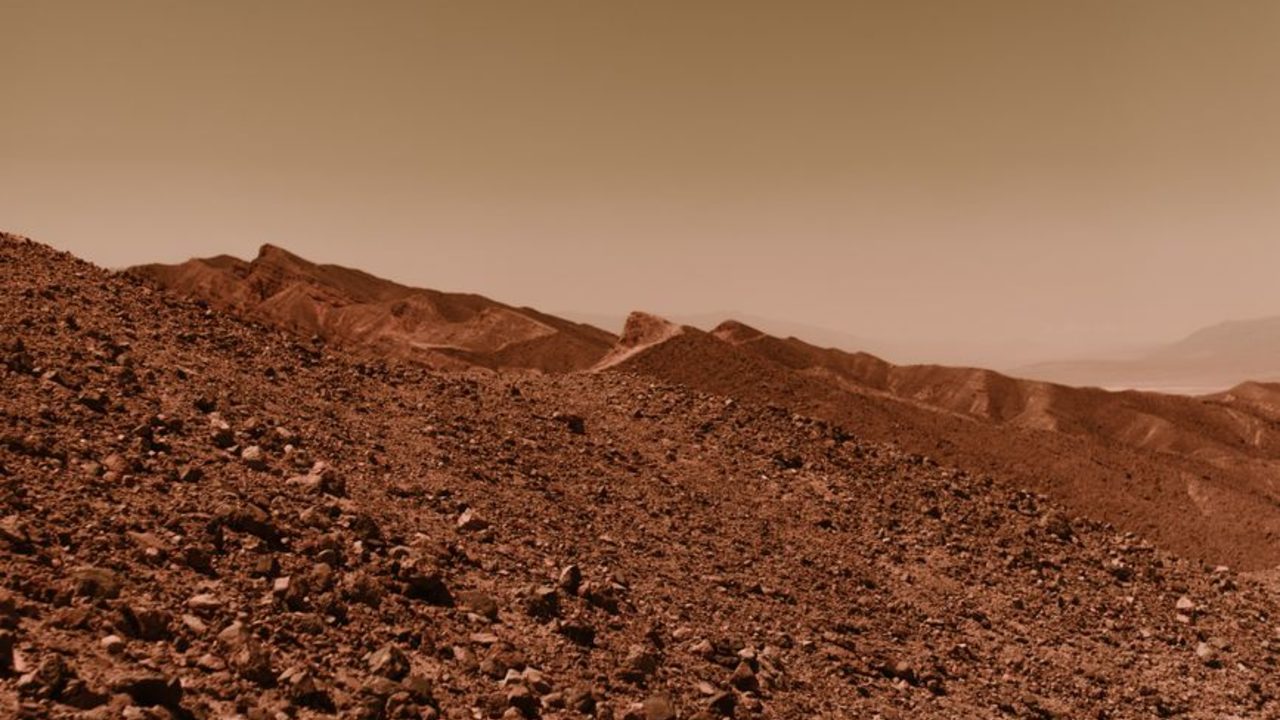
Meteorites that traveled from Mars to Earth have long carried a chemical contradiction: they look highly oxidized, yet the planet's deep interior should have produced the opposite. A new study suggests a rare garnet that forms only under extreme pressure may explain the mismatch, Universe Today reported.
The paper, published in the Journal of Geophysical Research: Solid Earth, comes from planetary scientists Hideharu Kuwahara and Ryoichi Nakada of Ehime University. It points to a mineral called majorite, which forms only under enormous pressures and temperatures deep inside rocky planets. It is not a gem a jeweler would put in a ring.
The numbers behind the Mars experiment
- Four and a half billion years: Mars formed this long ago, according to Universe Today. Heavy metals sank to the center and built an iron-rich core, much as on Earth.
- 150 kilometers: NASA's InSight mission confirmed a layer of molten silicate rock this deep directly above the core. Because it formed next to so much pure metal, it should be strongly reduced, meaning low in oxygen.
- 18 gigapascals: Majorite forms at this pressure at the base of the Martian mantle, just above the core. That is 180,000 times the atmospheric pressure at sea level.
- 2,150 to 2,200 degrees Celsius: The temperature the team used while squeezing synthetic Martian rock in a hydraulic press, with the sample saturated in metallic iron to mimic conditions near the core.
- 11% to 21%: The share of iron inside the majorite crystals that was oxidized, a much higher share than in the surrounding silicates formed in the same experiment.
How the researchers tested the idea
To recreate the conditions at the bottom of the Martian mantle, the team squeezed synthetic Martian rock between tungsten-carbide blocks, using tiny diamond capsules. After the samples cooled, the researchers carried them to the SPring-8 synchrotron facility, about 250 km away, and blasted them with X-rays to see how the iron was bound into the mineral grains.
According to the paper, as summarized by Universe Today, the majorite behaved almost like an iron sponge. It pulled oxidized ferric iron directly into its crystal structure.
What the finding suggests about Mars
Universe Today described the proposed sequence this way. As the interior of Mars began to crystallize, majorite formed out of the surrounding molten rock. In doing so it captured ferric iron that would otherwise have stayed dissolved in the low-oxygen layer at the base of the mantle. Over time, the constant movement of the mantle would have pushed those majorite-rich rocks closer to the surface. Volcanoes such as Olympus Mons could then have thrown oxidized volcanic rock onto the surface and even into space, which would account for the oxidized meteorites found on Earth.
What this means for Earth, too
The work also bears on our own planet, according to the report. Earth is about twice the diameter of Mars, so it has a much deeper mantle, and a different mineral called bridgmanite dominates near the core. Scientists already know that bridgmanite can hold large amounts of iron, even more than majorite, which leaves Earth's deep mantle chemically layered.
As mantle rock rises, the bridgmanite is forced to change into majorite. In the process it releases some of its ferric iron into the surrounding rock, which would effectively oxidize the transition zone of the mantle from below.
For general readers, the practical significance is about understanding rather than daily life. The result links the chemical fingerprints in Martian meteorites to how crystals behave under pressure in the presence of molten metal. It offers a single explanation for evidence that had seemed to point in opposite directions, and it hints that the same process may help shape the inside of Earth.
The study is one set of laboratory experiments, so the explanation is a proposal that others will need to test. The report does not describe any independent confirmation yet.
Around Prague, based on reporting by Universe Today