Science & Space By

NASA Offers $150,000 for a Digital Twin of an Astronaut’s Bone Marrow
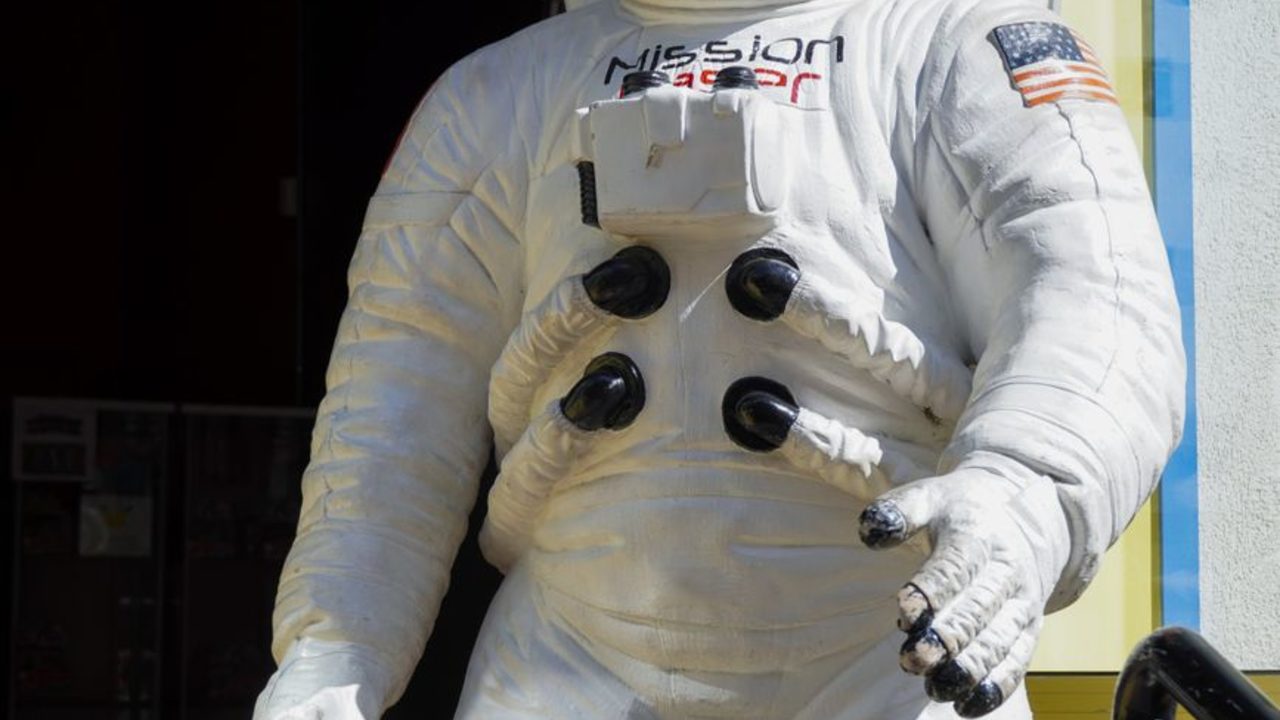
NASA is asking scientists to build a computer model of how an individual astronaut’s bone marrow and immune system react to spaceflight. The agency’s BPS Digital AVATAR Challenge offers $150,000 in total prizes, with a submission deadline of Feb. 12, 2027.

The goal, according to NASA, is to move toward health strategies tailored to each crew member as the agency prepares for long-duration missions in deep space.

How the challenge came about

What NASA wants built

The challenge asks the scientific community to apply digital twin technology, meaning an individualized computational model that is refined as new real-world data arrives. The twin NASA is asking for would simulate how the AVATAR bone marrow chip responds to the stresses of spaceflight.

NASA lists those stresses as microgravity, ionizing radiation, low magnetic fields and elevated carbon dioxide. Its Space Biology Program studies how living systems respond to them.

The proposed frameworks must be able to handle many different kinds of data and combine established computational biology methods with modern digital twin designs. They are expected to model each astronaut’s immune and bone marrow blood-forming responses and to generate tailored health predictions. NASA also wants comparisons that separate effects specific to one person from effects shared across the whole crew.

Entrants must also show how their model could be updated continuously as new data comes in, which NASA described as the iterative nature of a true digital twin.

Why it matters for future crews

Today, protecting astronauts relies on general approaches. NASA says the need for personalized, data-driven health strategies is growing as missions get longer and travel farther from Earth. A model that predicts how one person’s body will respond could help shape medical kits and countermeasures, the agency said, though the challenge itself is a call for ideas and does not guarantee such a tool will result.

The AVATAR chips are meant to produce personalized biological insights of that kind. A digital twin would add a way to simulate and predict responses on a computer, using the environmental, physiological and multi-omics data that the frameworks are expected to integrate.

What happens next

Registration is already open. Details on rules and eligibility are listed on the challenge page hosted on the crowdsourcing platform NASA uses for the program. Submissions close on Feb. 12, 2027, and the prize pool totals $150,000.

Around Prague, based on reporting by NASA
Share: Telegram WhatsApp

More science news

NASA Turns Baby Stars Into Music, From the Orion Nebula to Cosmic Cliffs
NASA has released a new album of “baby star” sounds, four pieces of audio built from real telescope data on places where stars are being born. The project comes from the agency’s Chandra X-ray Observa
A 50-Gram Mirror Returned 6,111 Laser Shots From Orbit to Track Space Junk
A British startup says a device weighing just 50 grams has passed its first test in orbit, returning thousands of laser pulses fired from the ground. The aim is to let operators keep tracking satellit
Voyager 1 Reaches One Light-Day From Earth, Nearly a Decade Before Voyager 2
On Nov. 18, NASA's Voyager 1 will be so far from Earth that a signal takes a full light-day, or 24 hours, to reach it, according to Space.com. The spacecraft will be 16,094,799,096 miles (25,902,068,3
Irish Man Charged Over Alleged $60 Million Attack on U.S. Military Plane
U.S. prosecutors have charged an Irish man with breaking into and destroying a U.S. military transport plane at Shannon Airport in County Clare, Ireland, in an attack they say caused about $60 million
Webb’s Mysterious Little Red Dots May Be Newborn Supermassive Black Holes
The small, bright red galaxies that puzzled astronomers after the James Webb Space Telescope began surveying deep space may be powered by newborn supermassive black holes, according to a new simulatio
Why the Edges of a Black Hole Jet Glow Brighter Than Its Center, According to New Simulation
Jets fired from supermassive black holes are among the brightest, longest-lasting sources of energy in the universe, yet one of their features has puzzled astronomers: they often look brighter at the

Related news

NASA has released a new album of “baby star” sounds, four pieces of audio built from real telescope data on places where stars are being born. The project comes from the agency’s Chandra X-ray Observatory, which sees the energetic X-rays th
A British startup says a device weighing just 50 grams has passed its first test in orbit, returning thousands of laser pulses fired from the ground. The aim is to let operators keep tracking satellites long after they stop working, a growi
On Nov. 18, NASA's Voyager 1 will be so far from Earth that a signal takes a full light-day, or 24 hours, to reach it, according to Space.com. The spacecraft will be 16,094,799,096 miles (25,902,068,356 kilometers) away. Its twin, Voyager 2
U.S. prosecutors have charged an Irish man with breaking into and destroying a U.S. military transport plane at Shannon Airport in County Clare, Ireland, in an attack they say caused about $60 million in damage. Daithi O’Corrain, 48, has no
The small, bright red galaxies that puzzled astronomers after the James Webb Space Telescope began surveying deep space may be powered by newborn supermassive black holes, according to a new simulation study. Universe Today reported that th
Jets fired from supermassive black holes are among the brightest, longest-lasting sources of energy in the universe, yet one of their features has puzzled astronomers: they often look brighter at the edges than in the middle. A new computer
Earth’s climate has swung between warm periods and cold ones over the past 800,000 years, and carbon dioxide in the atmosphere has played a part alongside changes in Earth’s orbit. A new study in Science Advances, by researchers at MIT and
Many of the black holes that crash into each other across the universe may have been born when massive stars collapsed without exploding, according to a new analysis of gravitational-wave data, Space.com reported. The researchers say the ev
Dark, fist-sized rocks on the floor of the Pacific Ocean turn out to be crowded apartment blocks for animals too small to see easily. According to ScienceDaily, which summarized a study from the University of Bremen's MARUM center, research
Betelgeuse, the red supergiant at the shoulder of the Orion constellation, may put on a spectacular show long before it explodes. According to Scientific American, a new preprint study suggests the star will swallow a recently revealed comp
A team of scientists in Wales has completed its first successful test flights of a high-altitude drone designed to fly into a volcanic plume, Scientific American reported. The long-term hope is to reach the plume of an eruption big enough t
NASA’s James Webb Space Telescope has found a link between powerful gas outflows from the cores of massive galaxies and the rapid shutdown of star formation, according to a new paper in the journal Astrophysics and Space Science, as reporte