Science & Space By

Voyager 1 Reaches One Light-Day From Earth, Nearly a Decade Before Voyager 2
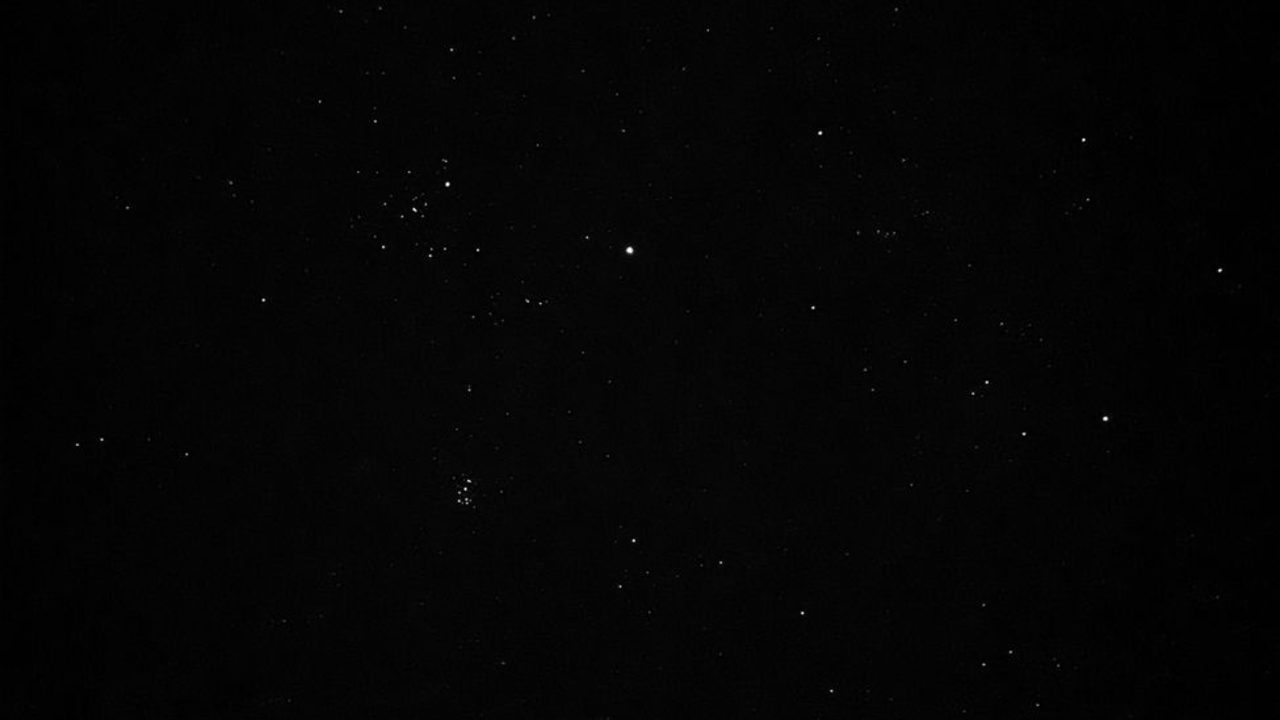
On Nov. 18, NASA's Voyager 1 will be so far from Earth that a signal takes a full light-day, or 24 hours, to reach it, according to Space.com. The spacecraft will be 16,094,799,096 miles (25,902,068,356 kilometers) away. Its twin, Voyager 2, is not expected to hit the mark until about 2035, even though Voyager 1 launched second.

NASA plans to mark the milestone by asking fans to shine Morse code signals at the sky.

How a later launch won the race

Space.com traced the gap to choices about speed and science made during the early planetary flybys of the twin missions' nearly 50-year journey:

What the gravity assists did

Gravity assists let a spacecraft gain speed without spending fuel. Because a planet is so much more massive than a spacecraft, the exchange of momentum does not measurably affect the planet, but it is a big deal for the spacecraft, the Planetary Society explained. Space.com reported that Voyager 2 did not have enough speed to leave the solar system until after its Jupiter flyby. With each encounter except Neptune, both spacecraft picked up speed.

The speed difference today

Voyager 2 picked up about 5 km/s at Saturn and about 2 km/s at Uranus, per the Planetary Society, but the Neptune maneuver cost it speed. The result, according to NASA, is that Voyager 1 is moving away at 3.5 astronomical units a year, one astronomical unit being the Earth-sun distance, while Voyager 2 moves at 3.1.

Why it matters: the last interstellar messengers

The two Voyagers are the only spacecraft sending back information from interstellar space. Space.com reported that both could keep working into the 2030s, as long as their nuclear power sources last.

To stretch that time, NASA's Jet Propulsion Laboratory, which manages the mission, has been switching off instruments as needed. It also recently ran a procedure it calls the Big Bang on both spacecraft to redistribute their power as well as possible, with the aim of maximizing the science they return for as long as possible.

Around Prague, based on reporting by Space.com

Share: Telegram WhatsApp

More science news

Irish Man Charged Over Alleged $60 Million Attack on U.S. Military Plane
U.S. prosecutors have charged an Irish man with breaking into and destroying a U.S. military transport plane at Shannon Airport in County Clare, Ireland, in an attack they say caused about $60 million
Webb’s Mysterious Little Red Dots May Be Newborn Supermassive Black Holes
The small, bright red galaxies that puzzled astronomers after the James Webb Space Telescope began surveying deep space may be powered by newborn supermassive black holes, according to a new simulatio
Why the Edges of a Black Hole Jet Glow Brighter Than Its Center, According to New Simulation
Jets fired from supermassive black holes are among the brightest, longest-lasting sources of energy in the universe, yet one of their features has puzzled astronomers: they often look brighter at the
Ice Age Oceans Stored Extra Carbon Because Sea Ice and Currents Worked Together
Earth’s climate has swung between warm periods and cold ones over the past 800,000 years, and carbon dioxide in the atmosphere has played a part alongside changes in Earth’s orbit. A new study in Scie
Black Holes 10 Times the Sun's Mass May Come From Stars That Never Exploded
Many of the black holes that crash into each other across the universe may have been born when massive stars collapsed without exploding, according to a new analysis of gravitational-wave data, Space.
Deep-Sea Rocks Hide Thousands of Tiny Animals, and Mining Could Wipe Out Their Homes
Dark, fist-sized rocks on the floor of the Pacific Ocean turn out to be crowded apartment blocks for animals too small to see easily. According to ScienceDaily, which summarized a study from the Unive

Related news

U.S. prosecutors have charged an Irish man with breaking into and destroying a U.S. military transport plane at Shannon Airport in County Clare, Ireland, in an attack they say caused about $60 million in damage. Daithi O’Corrain, 48, has no
The small, bright red galaxies that puzzled astronomers after the James Webb Space Telescope began surveying deep space may be powered by newborn supermassive black holes, according to a new simulation study. Universe Today reported that th
Jets fired from supermassive black holes are among the brightest, longest-lasting sources of energy in the universe, yet one of their features has puzzled astronomers: they often look brighter at the edges than in the middle. A new computer
Earth’s climate has swung between warm periods and cold ones over the past 800,000 years, and carbon dioxide in the atmosphere has played a part alongside changes in Earth’s orbit. A new study in Science Advances, by researchers at MIT and
Many of the black holes that crash into each other across the universe may have been born when massive stars collapsed without exploding, according to a new analysis of gravitational-wave data, Space.com reported. The researchers say the ev
Dark, fist-sized rocks on the floor of the Pacific Ocean turn out to be crowded apartment blocks for animals too small to see easily. According to ScienceDaily, which summarized a study from the University of Bremen's MARUM center, research
Betelgeuse, the red supergiant at the shoulder of the Orion constellation, may put on a spectacular show long before it explodes. According to Scientific American, a new preprint study suggests the star will swallow a recently revealed comp
A team of scientists in Wales has completed its first successful test flights of a high-altitude drone designed to fly into a volcanic plume, Scientific American reported. The long-term hope is to reach the plume of an eruption big enough t
NASA’s James Webb Space Telescope has found a link between powerful gas outflows from the cores of massive galaxies and the rapid shutdown of star formation, according to a new paper in the journal Astrophysics and Space Science, as reporte
A satellite has photographed a giant underwater cloud of herring sperm that appears to glow green off the coast of Vancouver Island in British Columbia, Live Science reported. The plume stretched about 4 miles (7 km) from end to end and was
When two black holes collide and merge, the newly formed black hole rings for a moment like a struck bell. A study published in Classical and Quantum Gravity says that ringing, observed in hundreds of mergers, matches what Albert Einstein's
One night-time photograph from the International Space Station packs lightning, a glowing city and a fleet of fishing boats into a single frame. According to NASA's Earth Observatory, an astronaut took the image with a Nikon Z9 camera as th