NASA Turns Baby Stars Into Music, From the Orion Nebula to Cosmic Cliffs
USD 22,18
Popular
NASA has released a new album of “baby star” sounds, four pieces of audio built from real telescope data on places where stars are being born. The project comes from the agency’s Chandra X-ray Observatory, which sees the energetic X-rays that young stars give off.
According to NASA, the sonifications cover the galaxy Messier 82, the Orion Nebula, part of the Carina Nebula and the cloud known as Rho Ophiuchi. Each one translates light that human eyes cannot see into pitches, plucks and drones.
What is a sonification?
A sonification converts data into sound. In these pieces, NASA mapped the brightness and position of objects in telescope images onto musical tones, so a listener can “hear” an image. Several of them combine Chandra’s X-ray data with infrared or optical views from other NASA telescopes, including Hubble and the James Webb Space Telescope.
What does each piece sound like?
The Messier 82 piece uses a radar-like scan that grows louder where sources are brighter. The X-ray data is heard in the highest range of frequencies, infrared data becomes a low drone with plucked sounds, and optical data turns into a range of pitches and textures. NASA calls Messier 82 a starburst galaxy, one where stars form at a rate tens or even hundreds of times higher than in the Milky Way. The agency said this burst of births may stem from a past collision with another galaxy.
In the Orion Nebula piece, the more than a thousand energetic young stars that Chandra sees become twinkling sounds. The diffuse X-ray glow is mapped to pure high tones, while Webb’s infrared view of the dust and gas used to build new stars is heard as lower tones, distorted strings and a digital harp.
The Carina Nebula piece focuses on a region nicknamed the “Cosmic Cliffs” because of the dramatic structure Webb sees in infrared. Chandra looks through the dust and gas to find individual baby stars, which are turned into short string sounds, while a faint X-ray glow gets longer string notes.
The Rho Ophiuchi piece uses high-pitched, glassy tones for the X-rays from infant stars that flare violently. Webb’s infrared view of the cloud is played as differently pitched sounds, with stars as metallic plucks. NASA noted a gap in the middle of the piece, because dark dust clouds there emit very little light.
Why does NASA study places where stars form?
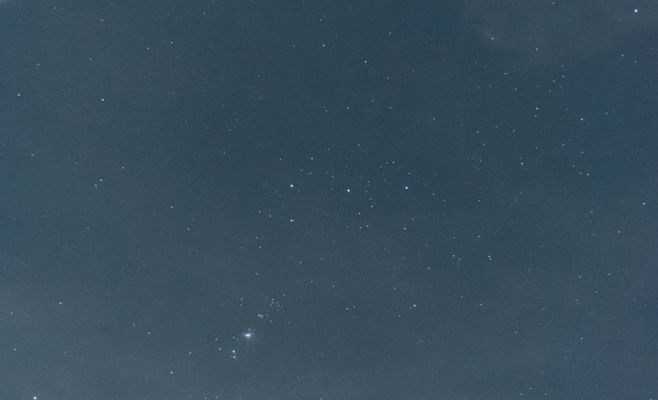
By looking at regions where stars are being born and where young stars are present, astronomers can better understand the life cycle of all stars, including the Sun, NASA said. The Orion Nebula is one of the closest and busiest star-forming regions to Earth. NASA says it can be seen just below the belt in the Orion constellation with a small telescope and dark skies.
What does this mean for the rest of us?
The audio gives anyone a way to experience astronomy data without reading a chart or looking at a picture. That includes people who are blind or have low vision, as well as anyone curious about how scientists map invisible light onto something familiar. The pieces are not recordings of anything in space; they are creative translations of measurements, and the choices about which sound represents which kind of light were made by the team.
Who made the album, and where can you hear more?
The sonification program is led by the Chandra X-ray Center. NASA credited visualization scientist Kimberly Arcand of the center, astrophysicist Matt Russo and musician Andrew Santaguida of SYSTEM Sounds, and consultant Christine Malec for the collaboration. More sonifications are available at chandra.si.edu/sound.
NASA’s Marshall Space Flight Center in Huntsville, Alabama, manages the Chandra program. The Smithsonian Astrophysical Observatory’s Chandra X-ray Center in Cambridge, Massachusetts, controls science operations, and flight operations run from Burlington, Massachusetts.
Around Prague, based on reporting by NASA