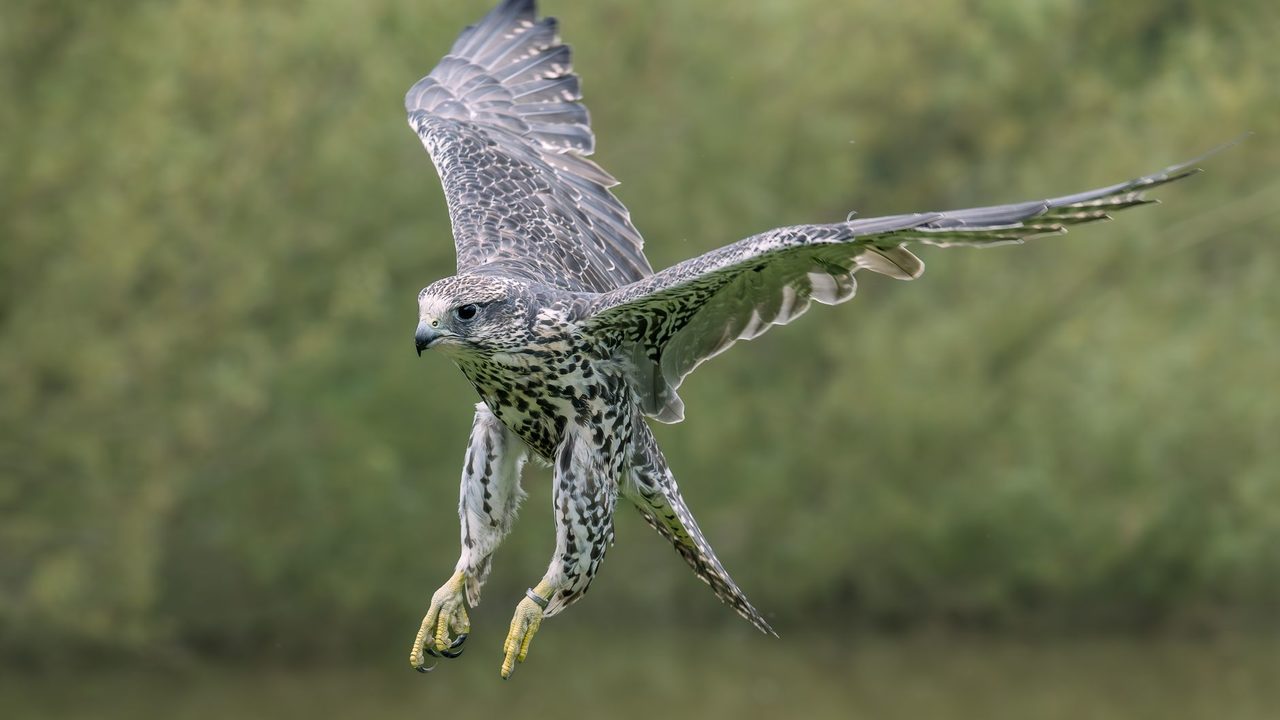
Peregrine Falcons, the Planet's Fastest Animal, Could Gain U.K. Habitat by 2080
USD 22,33
Popular
Popular Science reported that the same warming could shrink the suitable land for several other birds of prey.
The research was led by Connor Panter, a researcher at the University of Nottingham’s School of Geography. It is a reminder that a changing climate does not harm every species in the same way.
What did the study look at?
Panter examined how different climate futures could make parts of the U.K. more or less suitable for 16 species of breeding birds of prey. He compared a “middle-of-the-road” climate scenario with a “worst-case” one.
He told Popular Science that scientists’ understanding of how individual birds of prey will respond to a shifting climate is still fairly limited, even though these predators play important roles in their ecosystems.
How much more room could peregrine falcons get?
Today, there are 42,570 square miles of suitable habitat for peregrine falcons in the U.K., according to the study as described by Popular Science. Under the middle-of-the-road scenario, that area could grow by 40.6 percent by 2060. Under the worst-case scenario, it could grow by 73.5 percent by 2080.
These are projections of where conditions could suit the birds, based on modeled climate scenarios. They are not counts of falcons.
Which other birds could gain or lose?
Peregrines are not the only winners in the modeling. Hen harriers, golden eagles, little owls, long-eared owls, western barn owls and western marsh harriers could also see their suitable habitat increase.
For common buzzards, European sparrowhawks and tawny owls, the projections show little change in any scenario. Short-eared owls, red kites, merlins and Eurasian goshawks are likely to lose significant amounts of suitable land in Britain.
Does more habitat mean more falcons?
Not necessarily. Panter stressed that a larger suitable area does not automatically mean a species’ population will grow or spread. Whether peregrines can actually use newly suitable ground will depend on other factors, he said, including the availability of prey, nesting opportunities, threats from humans and interactions with other species.
Why does it matter?
The main message for conservation is that birds of prey living in the same areas may not respond to climate change in the same way. Panter said this could complicate efforts to protect them, because future plans will have to account for those differences rather than treating all raptors alike.
For people who watch birds or live near nesting sites, the findings suggest that the mix of raptors in different parts of the country could shift over the coming decades, with some species becoming more likely to find suitable conditions and others less so. The study describes possible outcomes under two scenarios, and the real picture will depend on how the climate and the birds’ surroundings actually change.
Read next
Falcon 9 Booster Flies for the 14th Time to Launch Secret Spy Satellites
Eagles in the Sahara Appear to Hunt Baboons as Heavy as Early Human Ancestors
Drone Survey Finds Erect-Crested Penguins Stable on One Island, Falling on Another
Around Prague, based on reporting by Popular Science