NASA Slammed Into an Asteroid. Now Hera Shows a Stadium-Sized Crater
USD 22,33
Popular
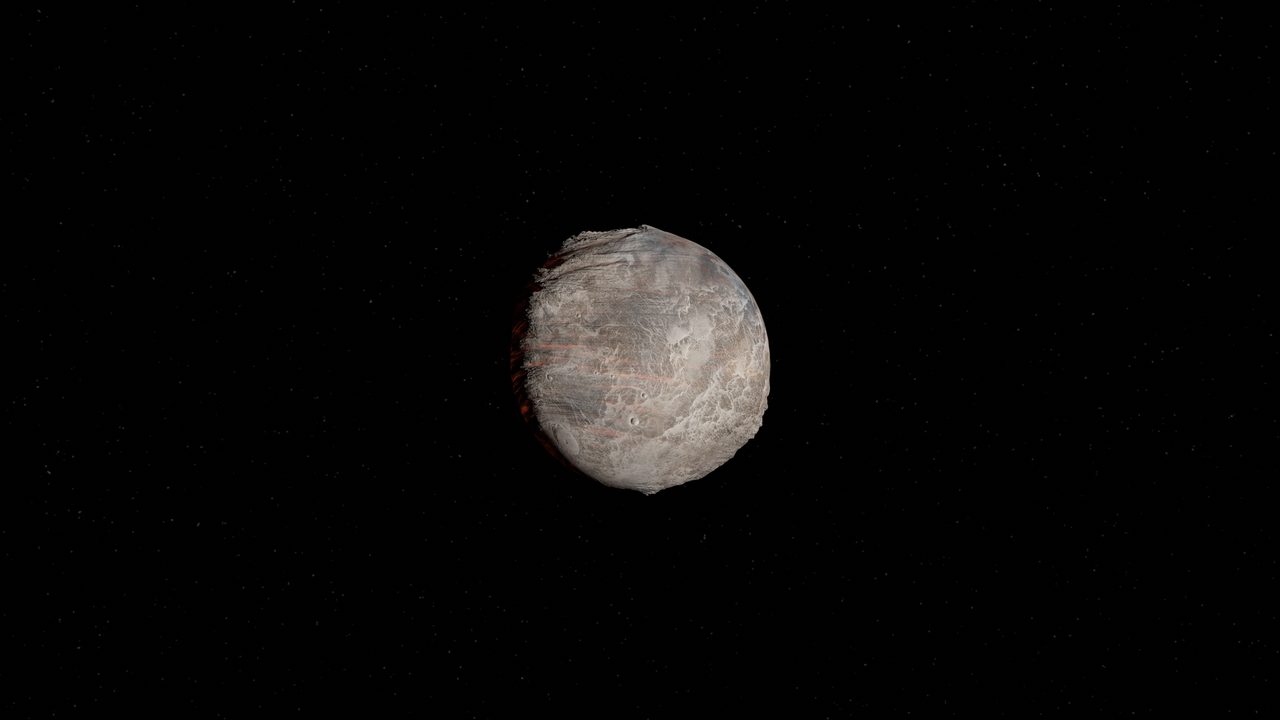
The European Space Agency's Hera spacecraft has reached the asteroid that NASA hit on purpose four years ago, and its first images show a crater roughly the size of a sports stadium, ScienceAlert reported. The scar stretches across the entire width of the small asteroid Dimorphos, and the rock no longer moves the way it did before the crash.
Hera arrived at the asteroid pair on Nov. 4, 2026. The findings are early, and the mission has only just begun its detailed survey.
What Hera found on Dimorphos
NASA's Double Asteroid Redirection Test, known as DART, was the first attempt to change an asteroid's path by ramming a spacecraft into it. The target was a pair of asteroids bound together by gravity: the larger Didymos, about 730 meters across, and the smaller Dimorphos, about 151 meters across. The collision took place on Sept. 26, 2022, about 11 million kilometers (6.8 million miles) from Earth.
Until now, nobody had a clear view of the damage. A small Italian spacecraft named LICIACube flew along with DART to photograph the impact, but a huge cloud of debris hid the surface from its cameras.
Hera's pictures settle the question. According to Patrick Michel, the mission's principal investigator, scientists had debated whether Dimorphos had gained a crater, changed shape or stayed the same. He said the answer, to the team's surprise, was all three. The face struck by DART has been flattened into a crater that spans the whole asteroid.
Other parts of the surface look much as they did before. By comparing Hera's images with those DART took before impact, scientists could recognize individual boulders that seem to have stayed where they were.
An asteroid that now tumbles
Before the impact, Dimorphos was thought to be tidally locked to Didymos, always showing the same face to its larger partner, much as the Moon does to Earth. That has changed. ESA mission scientist Michael Kueppers said that as Hera sent back more images, it became clear the impact has left Dimorphos tumbling wildly in its orbit.
Hera also spotted hundreds of boulders, each just a few meters in size, orbiting the two asteroids. Kueppers called this another big surprise and said the team will have to account for the rocks as the spacecraft moves closer in the coming weeks.
Some of the boulders may be leftovers from the collision. In 2023, the Hubble Space Telescope revealed a swarm of 37 boulders that appeared to have been knocked loose from Dimorphos. Later simulations suggested that some ejected rocks could stay bound to the pair long enough for Hera to meet them. Working out where the much larger crowd of boulders came from could help scientists reconstruct what happened after the crash.
Why it matters
DART was meant as a test of a technology that could one day protect Earth from an asteroid on a collision course. The mission had a minimum goal of shortening Dimorphos's orbit around Didymos by 73 seconds. The actual change was 33 minutes, and the pair's orbit around the Sun also changed.
What remained unknown was how the asteroid itself responded. Dimorphos is a rubble-pile asteroid, a loose collection of smaller rocks held together by very weak gravity rather than a single solid body. That makes it hard to predict how such an object reacts to an impact. Simulations published in 2024 suggested DART might not have left a distinct crater at all and could instead have rearranged the rocks into a different shape. Hera's images show a crater and a reshaped asteroid, while parts of the terrain appear untouched.
Understanding Dimorphos's mass and structure will help scientists judge how efficiently a spacecraft impact can push a body like this one.
What happens next
Hera is currently about 25 to 30 kilometers (16 to 19 miles) from the asteroid pair. In December, it will move in as close as 13 kilometers to capture sharper images.
In January, it will release two cubesats that will go closer still. Juventas will make the first radar measurements of an asteroid's interior, and Milani will measure the surrounding environment.
Read next
Dimorphos Crater: New Hera Photos Show What NASA's DART Did to Asteroid
Hera Probe Turns Heat Vision on the Asteroid NASA Slammed Into
Spacecraft Sent to Inspect NASA’s Asteroid Crash Site Now Sees Both Space Rocks
Around Prague, based on reporting by ScienceAlert