Science & Space By

Euclid Telescope Spots Record-Breaking Quasar From 630 Million Years After the Big Bang
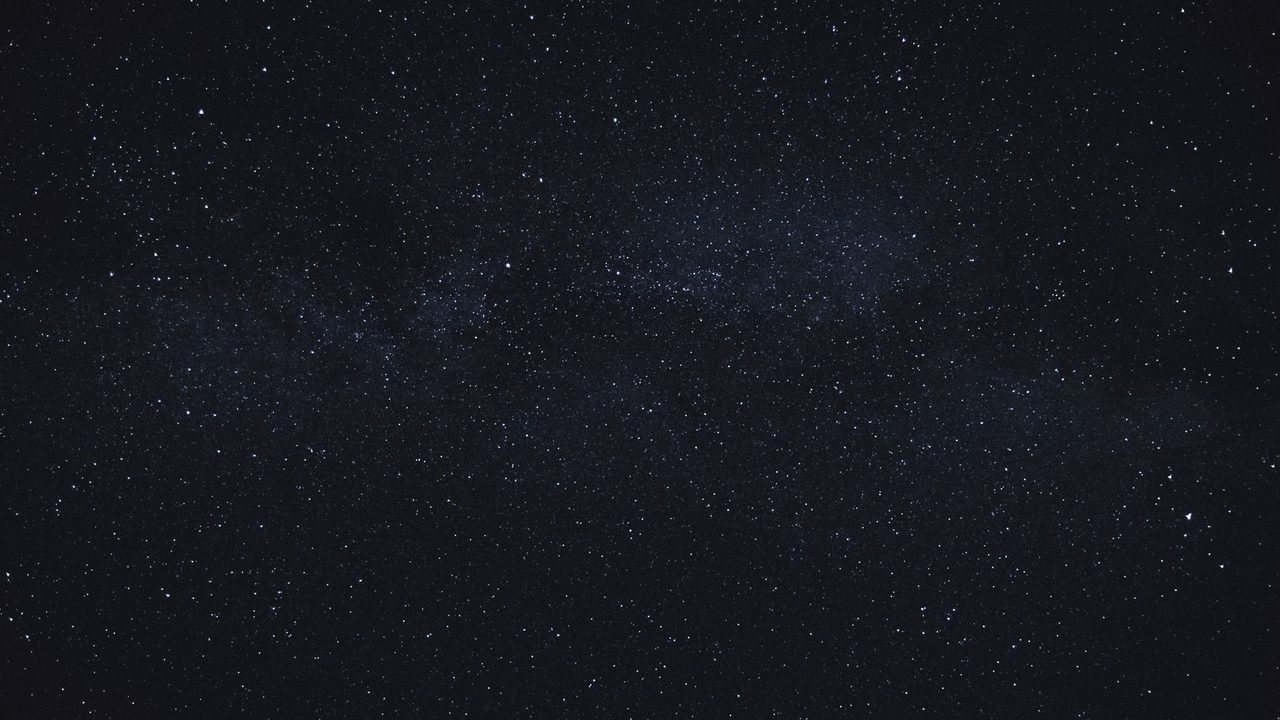
The Euclid space telescope has found the most distant and ancient quasar ever seen, Space.com reported. It is a blazing beacon powered by a supermassive black hole with 360 million times the mass of the sun.

The black hole is seen as it was just 630 million years after the Big Bang, which is 40 million years further back in time than the previous record holder. The finding adds to a long-running puzzle about how such enormous black holes grew so quickly.

What a quasar is and what Euclid saw

A quasar forms when a supermassive black hole is surrounded by vast amounts of gas and dust. The black hole's gravity pulls that material into a swirling accretion disk, which glows brightly and blasts out jets of plasma. Quasars in the centers of galaxies can briefly outshine all the stars in the galaxy around them.

The new object is designated J1504+6252 and nicknamed Dún Aonghasa. It was picked out from millions of objects in 18 months of Euclid data. Follow-up observations came from several ground-based and space-based telescopes, including the W.M. Keck Observatory, the Large Binocular Telescope Observatory and the Hubble Space Telescope. The James Webb Space Telescope made the final measurement of the black hole's mass.

The team published its research Tuesday, Nov. 24, in the journal Astronomy & Astrophysics.

Why it matters

Scientists had theorized that black holes need about 1 billion years of feeding and merging to reach supermassive size, meaning millions or billions of times the sun's mass. Dún Aonghasa is seen far earlier than that, which deepens the mystery of how black holes grew so large so soon after the universe began.

The object also stands out from other supermassive black holes seen at a similar early time. It is feeding relatively slowly. If it reached its size through rapid feeding, that stage of gorging on gas and dust has either ended or paused, according to Space.com. That complicates the picture of how these black holes grow.

Looking back 13.1 billion years to see the quasar also gives astronomers a view of a crucial period in cosmic history. The first stars and galaxies were taking shape then, and the clearing of cosmic gas was ending the universe's dark ages by letting light travel freely.

A telescope built for something else

Euclid launched in 2023, and its main job is to improve understanding of dark energy, the mysterious force accelerating the expansion of the universe, and dark matter. Together, these make up around 95% of the universe's matter-energy budget and are often called the dark universe, which is why the telescope has been nicknamed the dark universe detective. The new quasar suggests Euclid can also contribute to the study of black holes and how they grow.

Around Prague, based on reporting by Space.com, ScienceDaily
Share: Telegram WhatsApp

More science news

Peregrine Falcons, the Planet's Fastest Animal, Could Gain U.K. Habitat by 2080
Popular Science reported that the same warming could shrink the suitable land for several other birds of prey. The research was led by Connor Panter, a researcher at the University of Nottingham’s Sch
NASA Slammed Into an Asteroid. Now Hera Shows a Stadium-Sized Crater
The European Space Agency's Hera spacecraft has reached the asteroid that NASA hit on purpose four years ago, and its first images show a crater roughly the size of a sports stadium, ScienceAlert repo
Moon Craters Could Shield a Lunar Base From Its Nuclear Reactor, Study Finds
Engineers could use the Moon’s own terrain as a radiation shield for a future nuclear reactor, according to a new paper from researchers at Los Alamos, NASA Glenn, Oak Ridge, Idaho National Lab and Lo
AI Now Solves Nearly 90 Percent of Unpublished Physics Problems
A new benchmark built from physicists' own unpublished work suggests that leading AI models have become far more capable at theoretical physics than many researchers expected. According to Ars Technic
Voyager 1 Goes Quiet: What We Know as NASA Probe Hits One Light-Day From Earth
Voyager 1 has become the first human-made object to reach a distance of one light-day from Earth, but the milestone comes with a problem. NASA has confirmed that the 49-year-old probe is still sending
Dimorphos Crater: New Hera Photos Show What NASA's DART Did to Asteroid
New photos from the European Space Agency's Hera spacecraft show that NASA's 2022 DART impact left a stadium-sized crater on the asteroid Dimorphos, according to Reuters. The images give scientists th

Related news

Popular Science reported that the same warming could shrink the suitable land for several other birds of prey. The research was led by Connor Panter, a researcher at the University of Nottingham’s School of Geography. It is a reminder that
The European Space Agency's Hera spacecraft has reached the asteroid that NASA hit on purpose four years ago, and its first images show a crater roughly the size of a sports stadium, ScienceAlert reported. The scar stretches across the enti
Engineers could use the Moon’s own terrain as a radiation shield for a future nuclear reactor, according to a new paper from researchers at Los Alamos, NASA Glenn, Oak Ridge, Idaho National Lab and Lockheed Martin, as reported by Universe T
A new benchmark built from physicists' own unpublished work suggests that leading AI models have become far more capable at theoretical physics than many researchers expected. According to Ars Technica, one top model, GPT-6 Astra, could sol
Voyager 1 has become the first human-made object to reach a distance of one light-day from Earth, but the milestone comes with a problem. NASA has confirmed that the 49-year-old probe is still sending a carrier signal to Earth through the D
New photos from the European Space Agency's Hera spacecraft show that NASA's 2022 DART impact left a stadium-sized crater on the asteroid Dimorphos, according to Reuters. The images give scientists their first close look at what the collisi
The Beaver Moon that peaked Tuesday morning is the first of four straight supermoons, but the label is looser than it sounds. According to Smithsonian Magazine, "supermoon" is not an official astronomical term, so whether a given full moon
November's full moon, known as the Beaver Moon, rose on Nov. 24 as a supermoon, appearing larger and brighter than the smallest full moon of the year. Photographers from Asia to North America and across the Middle East captured it above sky
Canadian astronaut Joshua Kutryk has become a father for the third time while living aboard the International Space Station. He and his wife, Heather Kutryk, welcomed a daughter during his six-month mission, the Canadian Space Agency announ
After the Beaver Moon supermoon on 24 November, the next full moon is December's Cold Moon. It reaches full phase on Thursday, 24 December 2026, at 01:28 GMT, which makes it a Christmas Eve full moon in Europe. In the United States it falls
Astronomers in Japan have used old telescope data to estimate the size and surface temperature of the solid core of Comet 2P/Encke. They put the nucleus at about 7 kilometers by 3 kilometers (4.3 miles by 1.9 miles), with a surface temperat
The best meteor showers for observers in Prague in 2027 are the Quadrantids (night of 3 to 4 January), the Perseids (12 to 14 August) and, with a dark Moon, the Eta Aquariids (6 May) and Ursids (22 to 23 December). Dates and rates below com