Slime Mold Maze-Solving May Come Down to Saving Energy, Model Suggests
USD 22,28
Popular
Slime molds can find the shortest route through a maze without a brain or nervous system. A new mathematical study suggests the trick may owe more to energy economics than to anything resembling intelligence, according to ScienceAlert.
Researchers modeled the organism's fluid-carrying tubes and found that the cheapest arrangement is to keep the shortest connection and let the longer ones fade. The work was published in the Journal of the Royal Society Interface.
What is a slime mold, and why is it considered smart?
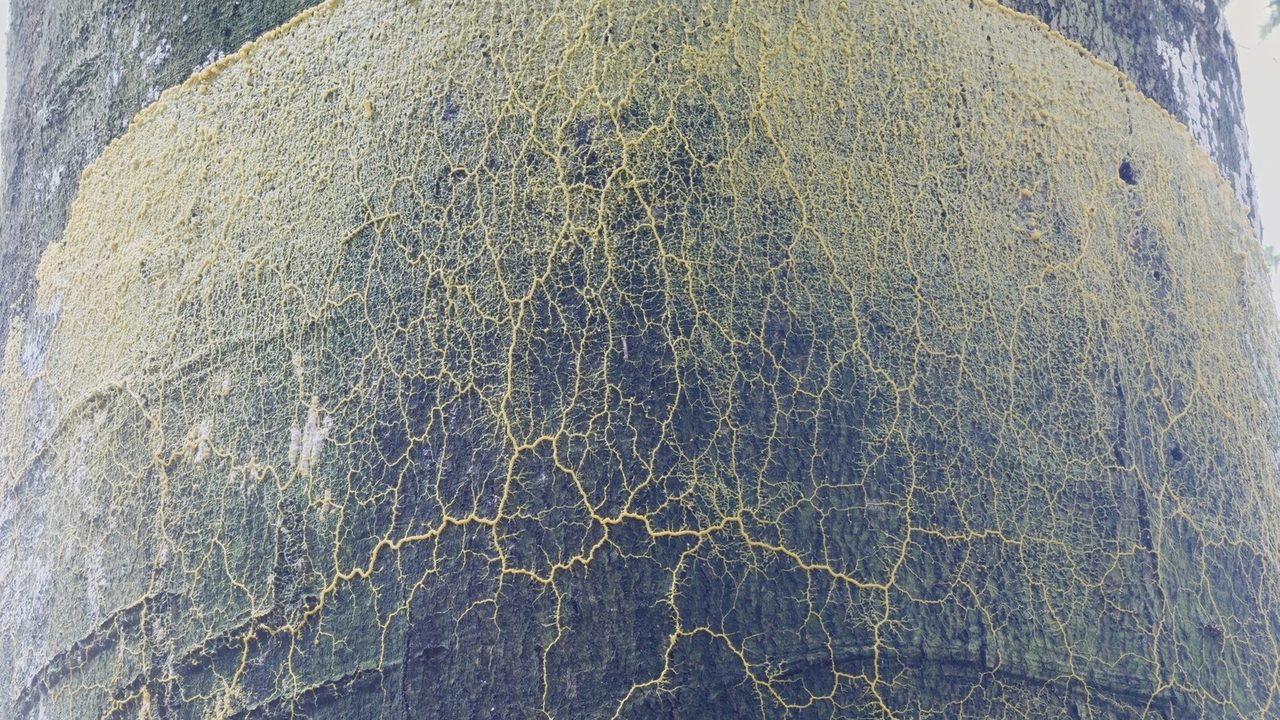
Slime molds are not true molds and are not fungi, ScienceAlert noted. They have no brain, yet they can work through mazes, learn and appear to make decisions. As the organism moves, it leaves behind yellow tubes along its path. Those tubes carry fluid through its body.
What experiment did the new study build on?
The researchers started from a maze experiment reported in Nature in 2000. A slime mold of the species Physarum polycephalum had already spread through the maze's passages when food was placed at two points. Over time, it pulled back from dead ends, and the tube joining the two food sources ended up following the shortest route.
How does the model explain that result?
Ricard Solé and Jordi Pla-Mauri of Pompeu Fabra University in Spain led the study. They built on an earlier model in which tubes that carry more fluid grow wider, while tubes that carry little shrink. That feedback can turn a web with many possible routes into one with a single main link.
The new work asks why that happens, and answers in terms of energy. The team represented two routes as the two sides of a ring joining the same pair of points. Pushing fluid through a narrow tube loses energy to friction, and widening the tube reduces that loss. But in the model, wider tubes cost more to maintain. The researchers calculated the tube widths that minimize the total cost of upkeep and fluid movement.
When one side of the ring was longer, the lowest-cost solution sent all the flow through the shorter tube and let the longer one vanish. When both sides were the same length, many splits of the flow reached the same minimum cost, so the outcome depended on the tubes' starting condition.
What happened in branching networks?
The team also tested the model on branching networks. A dead-end branch carrying no flow gradually disappeared. When the setup required fluid to reach several endpoints, the branches linking them to the source stayed in place.
Why it matters: what does this change about how we see slime mold?
The study hints that behavior that looks like problem-solving can emerge from a simple physical rule: do not waste energy. That gives researchers a concrete mechanism to examine instead of a loose idea of intelligence, according to ScienceAlert's account.
It is also a model that can be checked. In a ring setup, experimenters could keep both routes the same length, vary the starting tube widths and see whether those differences predict how the flow ends up shared. This is a mathematical study, and the article does not describe such a test as yet carried out.
What does the model not explain?
ScienceAlert reported several limits. People design the maze and choose where the food goes, so the layout already defines the problem the slime mold seems to solve. The model also applies only after the organism has formed a connected network in that layout.
It does not explain how a slime mold explores new ground or finds food in the first place. It also does not cover other behaviors seen in different experiments, including learning and habituation, which is a weakening response to a repeated stimulus.
What the model does account for is how a web spanning several passages can end up with one tube linking the food sources. The suggestion is that this owes less to thinking and more to avoiding wasted energy.
Read next
Physicists Beat a Quantum Fuzziness Limit by Using Hindsight, Study Claims
Black Holes Could Split Into Tiny Fragments if They Spin Fast Enough, Study Says
Floppy Molecules Let MIT Team Build Nanoparticle Crystals Never Seen Before
Around Prague, based on reporting by ScienceAlert
Cover photo: Garrett Taylor / Wikimedia Commons, CC BY 4.0, cropped